Choose a low, stable container
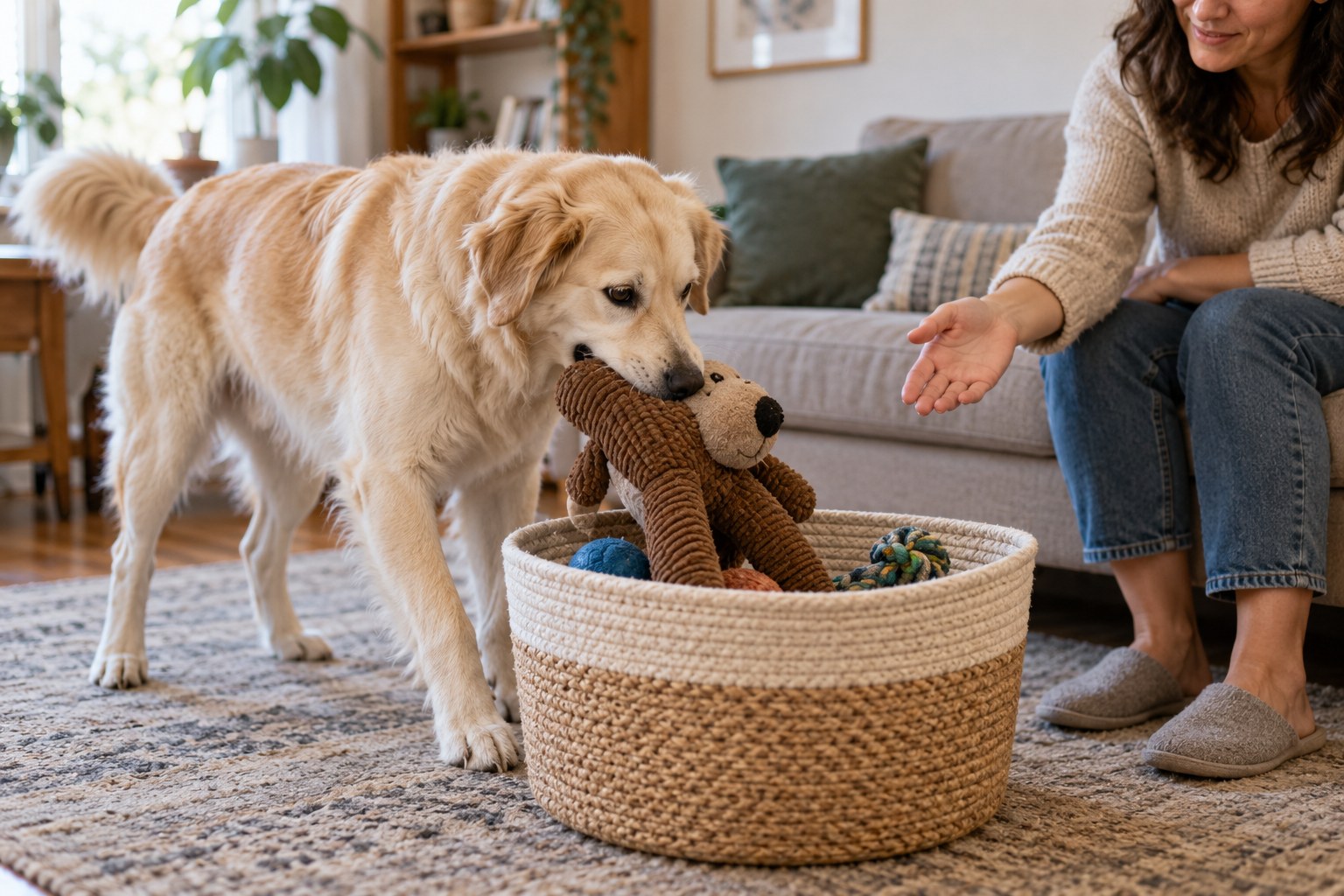
Use a basket or box with a wide opening and no sharp edges, loose weave or handles that could catch the dog. Place it on non-slip ground and start with one safe familiar toy. Teach near the container rather than asking the dog to cross a room immediately. A shallow tray may be easier at first. Make sure the dog can approach from a comfortable angle without leaning far over an edge or stepping inside.
Reward a release close to the target
If your dog already carries and drops a toy willingly, invite them beside the container and use the familiar release cue. Reward when the toy lands near or inside the opening. Begin generously with a close approximation, then make the target clearer through your position. Do not take the toy from the mouth and place it in the basket while expecting the dog to understand that as their own action. Teach voluntary release separately if needed.
Connect a short carry with the drop
Place the toy a small distance away and encourage the dog to pick it up if that is already a comfortable skill. Position yourself beside the basket and reward the return and release. Keep the distance short enough that the dog can remember the destination. If they prefer to play with the toy, allow a break or choose another time. The game should not become repeated retrieval from a dog who is trying to keep the object.
Keep expectations modest
One toy delivered to a low basket is a complete success. Add other objects only when they are safe and familiar, rather than expecting the dog to generalize to shoes or children's possessions. Continue rewarding useful attempts and put remaining toys away yourself. Check the basket between sessions for damaged toys or small objects that have been mixed in. This is a shared learning activity, not a household chore the dog is responsible for completing every evening.