Choose ground you can check closely
Begin on a clean mat, a clear floor with good grip or a small safe patch of short grass. Remove litter and keep other animals away from the search area. Use a few pieces of food that suit your dog's diet, counted within their ordinary allowance. Avoid spaces treated with unknown chemicals or places where food could attract conflict with other dogs. The first game should make the reward easy to locate, not test how long the dog will persist.
For a dog who mouths non-food objects indiscriminately, choose a surface where each piece is easy to see and supervise closely.
Let the first piece be obvious
Place one piece while your dog watches and say a simple phrase such as “find it.” Allow them to approach and collect it without pointing repeatedly at the ground. Add a second piece nearby after the first is found. Once the pattern makes sense, spread a few pieces a little farther apart. Keep the number small enough that you know when the area is clear. If your dog looks puzzled, make the placement more visible instead of adding more difficult hiding places.
A dog who prefers toys can begin with a familiar safe toy placed in plain view, though that creates a slightly different search game.
Increase the search, not the frustration
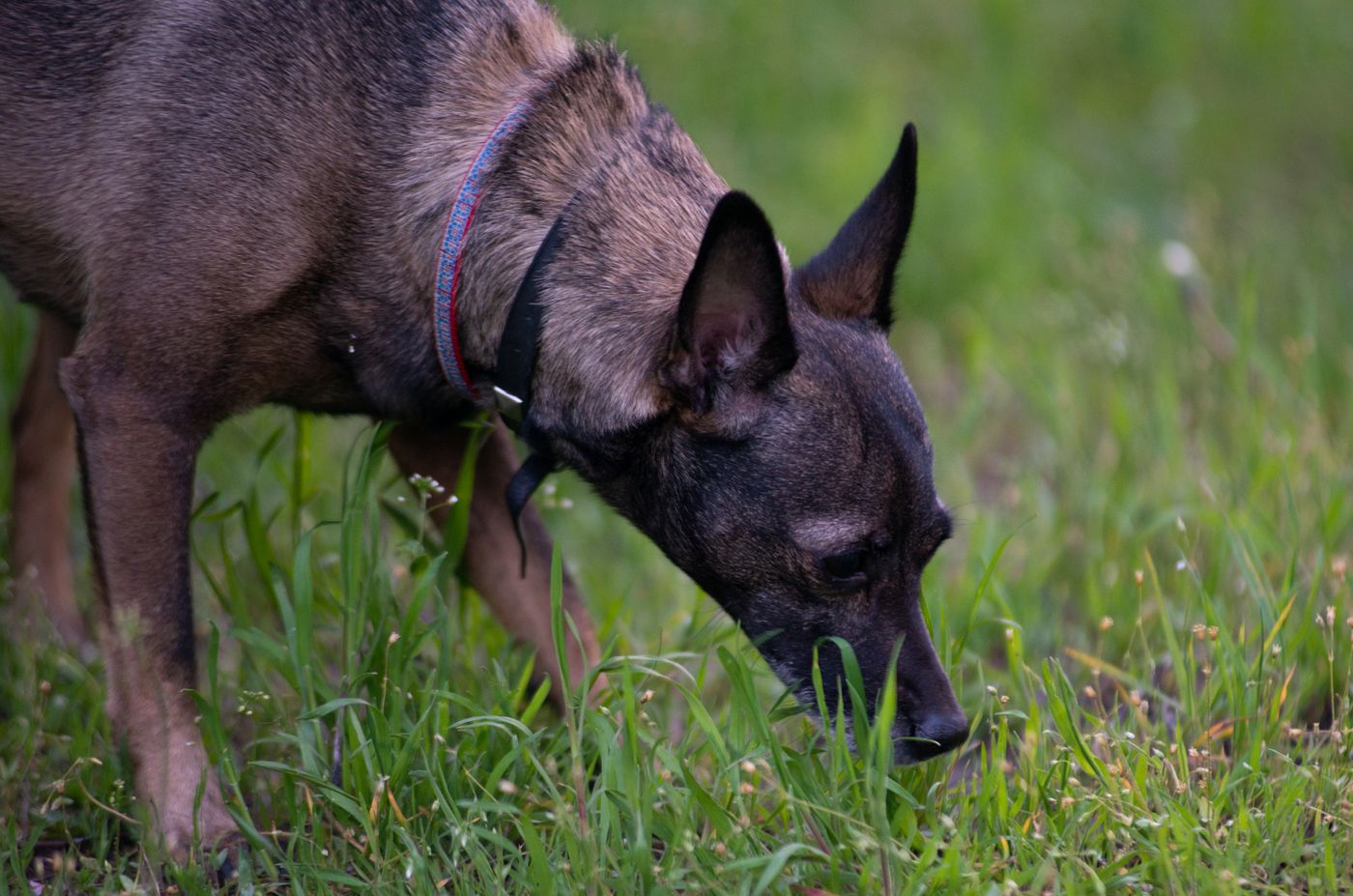
Move from visible pieces to shallow grass or a slightly wider area only after the easy version works. Do not bury food deeply or scatter it where the dog must eat soil and debris to reach it. Finish after a comfortable search and use a clear ending before leaving the area. If the dog begins gulping, guarding or searching frantically long after the game is over, simplify the setup and consider another activity. Successful enrichment leaves room for stopping as well as participating.