Inspect the toy before adding food
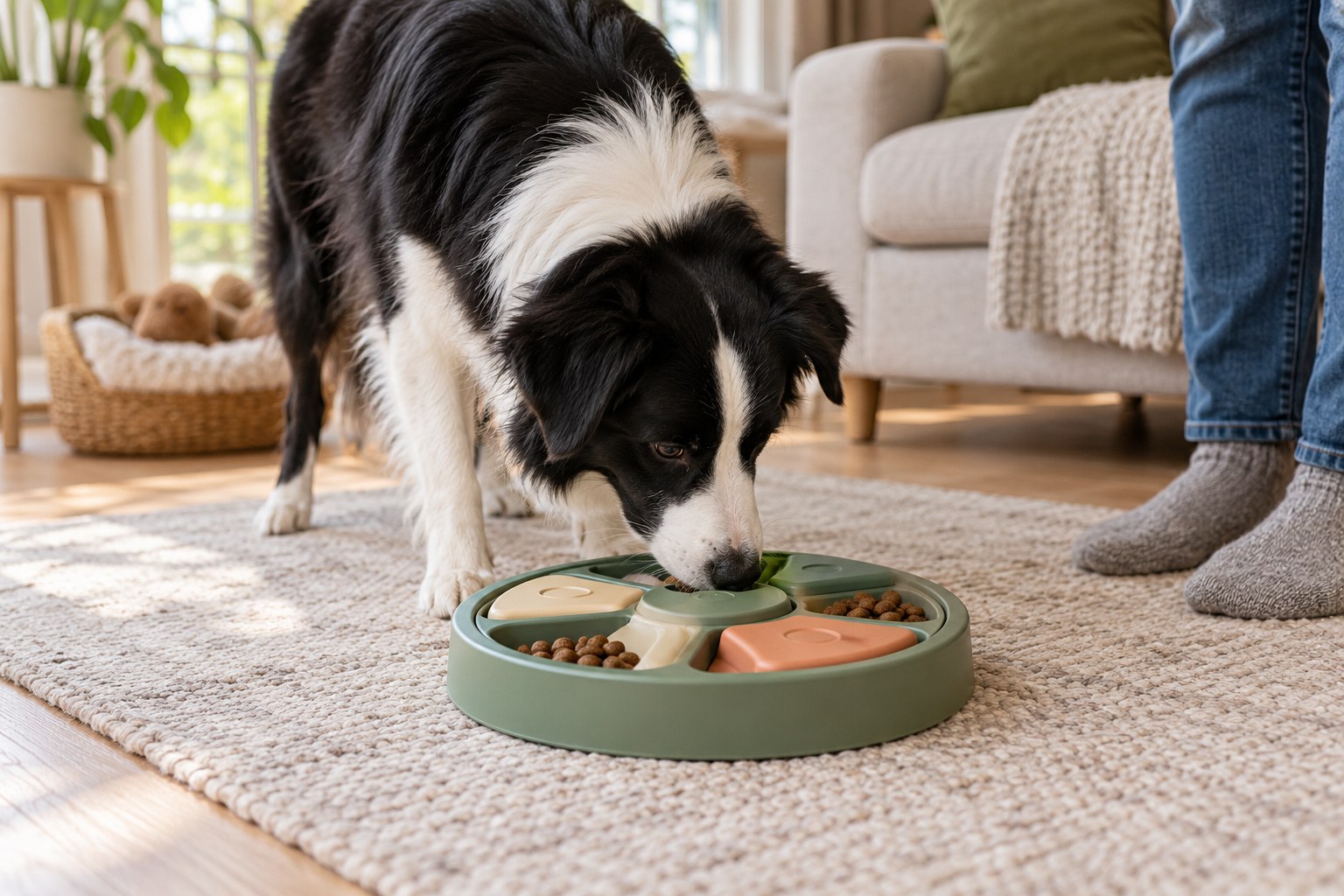
Choose a robust feeder appropriate to your dog's size and the way they use their mouth and paws. Read its instructions and check for loose pieces, cracks or places where parts could detach. Place it on stable non-slip ground away from other animals. Use suitable food from the dog's normal allowance. A product sold as enrichment still needs supervision, especially when you do not yet know whether your dog will investigate it gently or try to dismantle it.
Expose the easiest reward
Leave a compartment open or make the food clearly accessible, following the design's simplest setting. Let the dog collect it without needing to move several covers first. Repeat this easy discovery before adding one small obstacle. You can demonstrate a moving part while the dog watches, then make the reward available. Avoid holding the toy tightly beside the dog's mouth or crowding them with instructions. Give enough space to explore without losing your ability to supervise.
Change only one piece of the puzzle
Partly cover one compartment while leaving another easy. If the dog paws harder, bites the whole toy or walks away, reduce the difficulty rather than adding more food to an impossible setup. The activity is successful when the dog can work comfortably, not when it takes the longest possible time. A dog who prefers simple searching may find a clear mat search more suitable than a mechanical feeder with multiple moving parts.
Finish while the equipment is intact
When the food is gone, calmly put the toy away once the dog has disengaged. Inspect and clean it according to its care instructions, paying attention to hidden food residue. Do not leave damaged puzzles available as chew toys. Keep track of which setting worked so the next session starts clearly. Food toys are one optional activity within a day that also includes appropriate exercise, social contact and uninterrupted rest; they are not a cure for persistent distress.