Find out which toys have a purpose
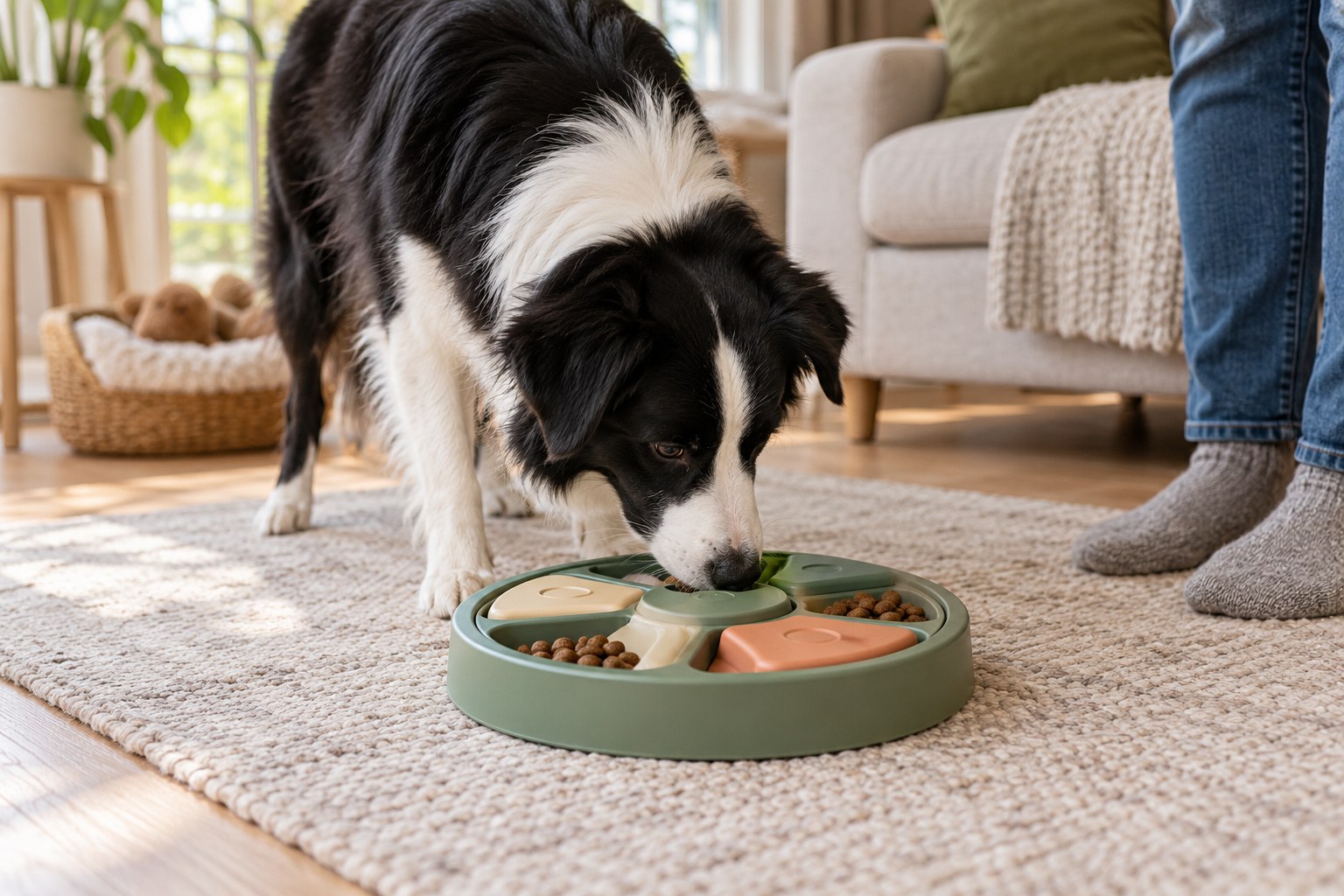
Lay out the current collection when your dog is elsewhere and inspect each item. Remove damaged toys, loose parts and anything unsuitable for the dog's size or chewing style. Sort the remaining items by how they are used: shared tug, supervised food play, carrying or quiet comfort. A toy is not automatically boring because it is untouched during a busy afternoon. Notice when and how your dog chooses it before deciding it belongs in storage.
Keep toys that require supervision out of unsupervised reach even if they are part of the current rotation.
Change a few items rather than everything
Leave a modest selection and store the rest in a clean dry place. Swap one or two items when interest fades instead of following a rigid schedule. Keep a well-loved comfort toy available if it remains safe. Sudden removal of every familiar object is unnecessary. Introduce a returning toy during a calm moment and let the dog investigate. You can offer a short game, but avoid waving it insistently or treating a lack of interest as a problem that must be fixed.
In homes with several dogs, offer valued toys separately if sharing creates hovering, guarding or competition.
Use your observations to improve the collection
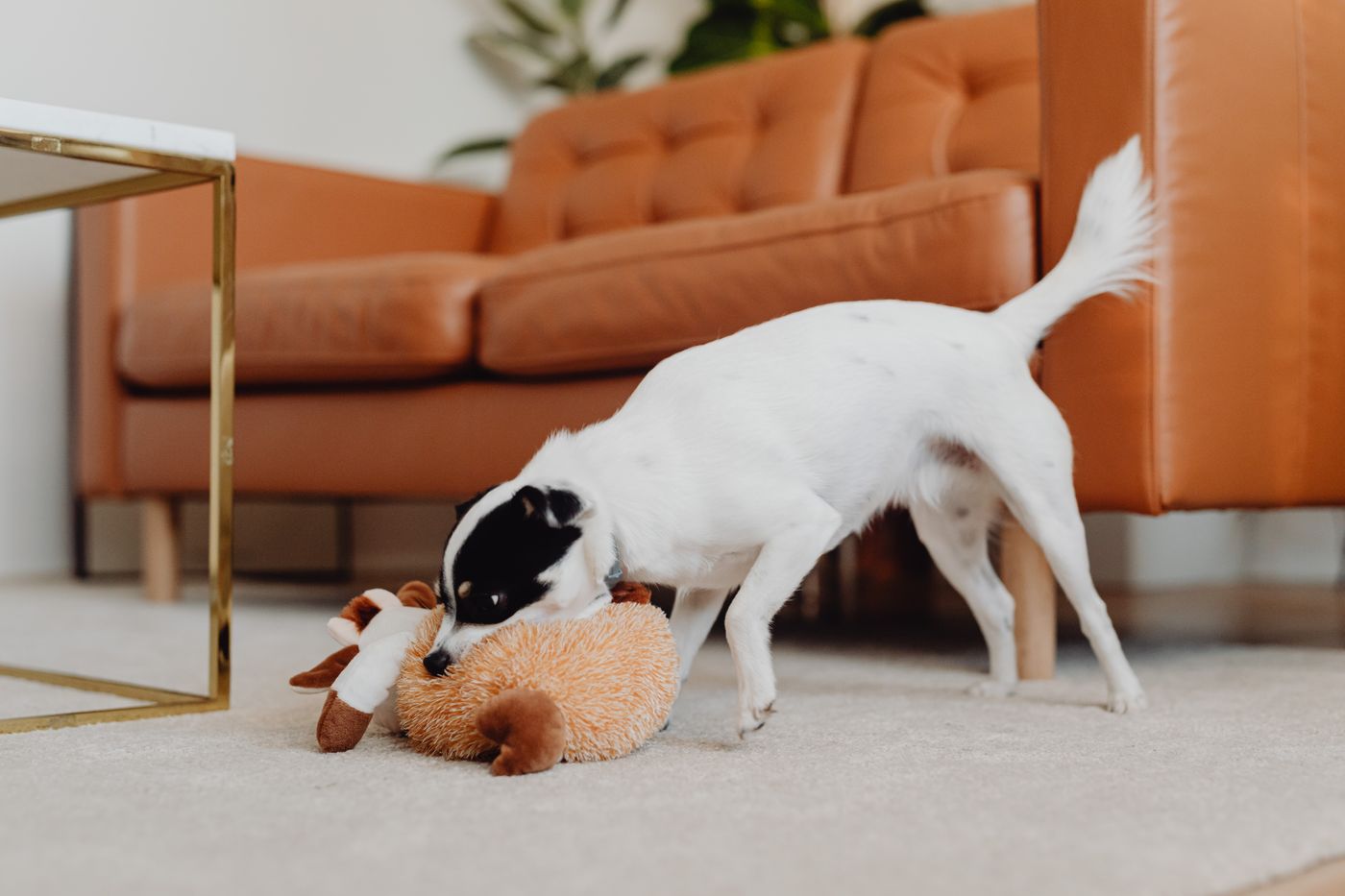
A dog who repeatedly chooses soft carrying toys may not need more balls. Another may enjoy a toy only when a person joins the game. Record these simple preferences before buying replacements. Wash items according to their care instructions and let them dry fully before storage. Rotation cannot make an unsafe or uncomfortable toy suitable, and novelty is not a substitute for interaction, sniffing and rest. If your dog ignores the entire selection, offer a different kind of activity rather than increasing the number of objects on the floor.