Prepare the box as carefully as a purchased toy
Use a clean shallow box with no staples, plastic windows, tape or attached labels the dog could swallow. Remove loose packing material and check the edges. Place it on a stable surface with space around it. Choose a box the dog can investigate without getting their head trapped. If your dog habitually tears off and eats cardboard, skip this activity and use a suitable durable feeder or a search on a clear mat instead.
Start with an open and obvious find
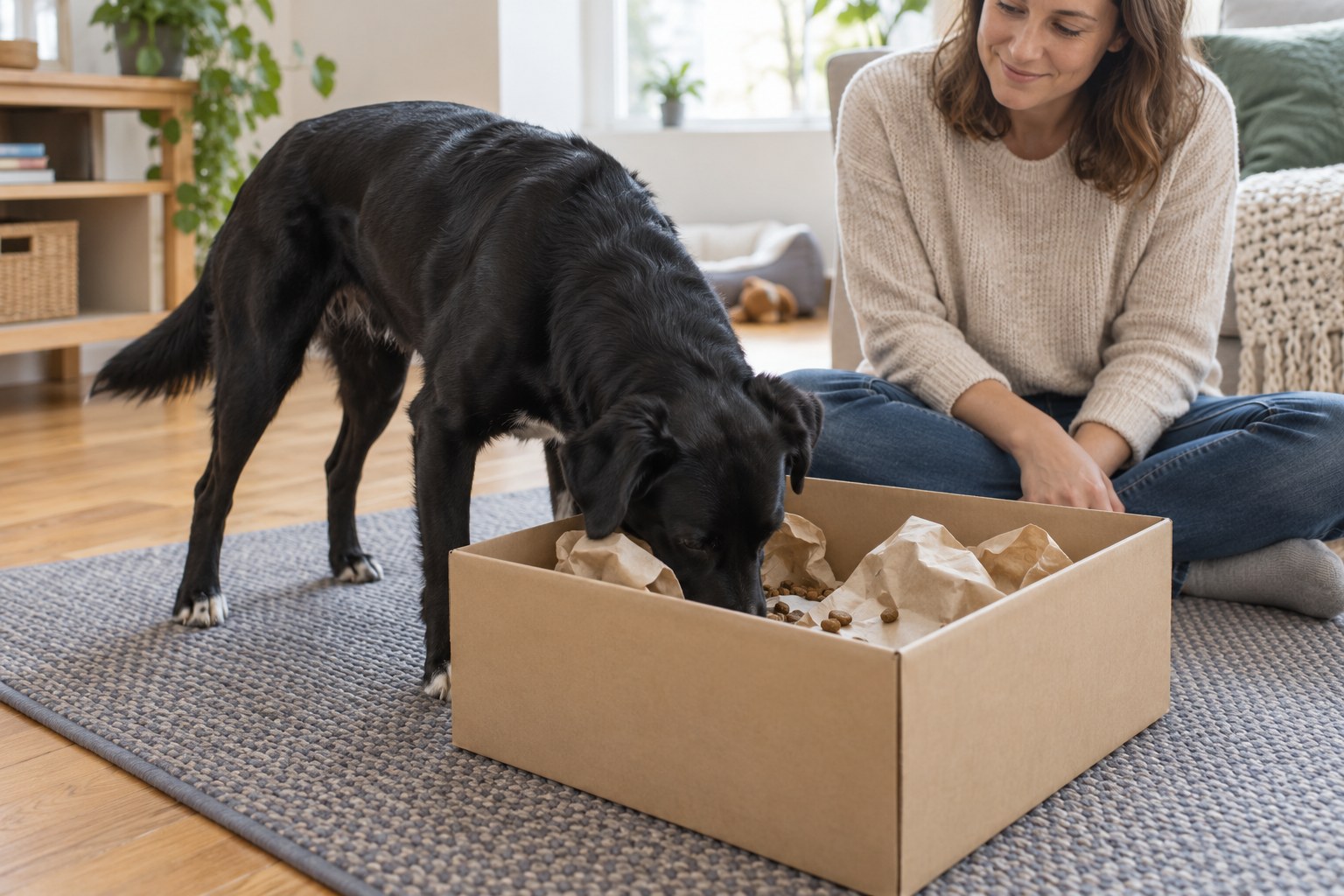
Place a few suitable pieces from the dog's ordinary food allowance in the empty open box while they watch. Allow them to approach and collect the food. There is no need to close the flaps or bury the reward on the first attempt. Stand nearby without reaching into the box as the dog searches. Keep other animals away so the activity does not become a competition over a confined food source.
Add only material your dog can use safely
For a dog who searches gently without eating packaging, a small amount of loosely placed plain paper may make the task more interesting. Keep food accessible and supervise every moment. Do not create tightly packed layers or add string, shredded plastic or small decorative pieces. If the dog begins chewing and swallowing material, end the game calmly and switch formats. More complicated construction is not automatically better enrichment, especially when it obscures whether the dog is searching or consuming the container.
Remove the remains and reset the space
After the search, let the dog move away before collecting the box and counting any remaining food pieces. Dispose of damaged packaging rather than leaving it as an unsupervised toy. Check the surrounding floor for scraps. A brief easy search can be enough; you do not need to keep refilling until the box is destroyed. Note whether the dog enjoyed locating food, investigating the container or simply carrying it, and choose the next activity accordingly.