Map the route through the entrance
Stand outside and imagine entering with the dog, a lead and wet clothing. Identify where the outside door closes, where equipment comes off and where the dog can wait comfortably. Keep those actions within a small clear area rather than expecting the dog to remain still while you cross the house for a towel.
Use a secure washable non-slip surface suited to the flooring. Check that the door can open fully without pushing the mat into a ridge. Remove shoes, bags and loose cleaning supplies from the route. A tidy entrance should also leave people room to turn safely.
Prepare gentle cleanup
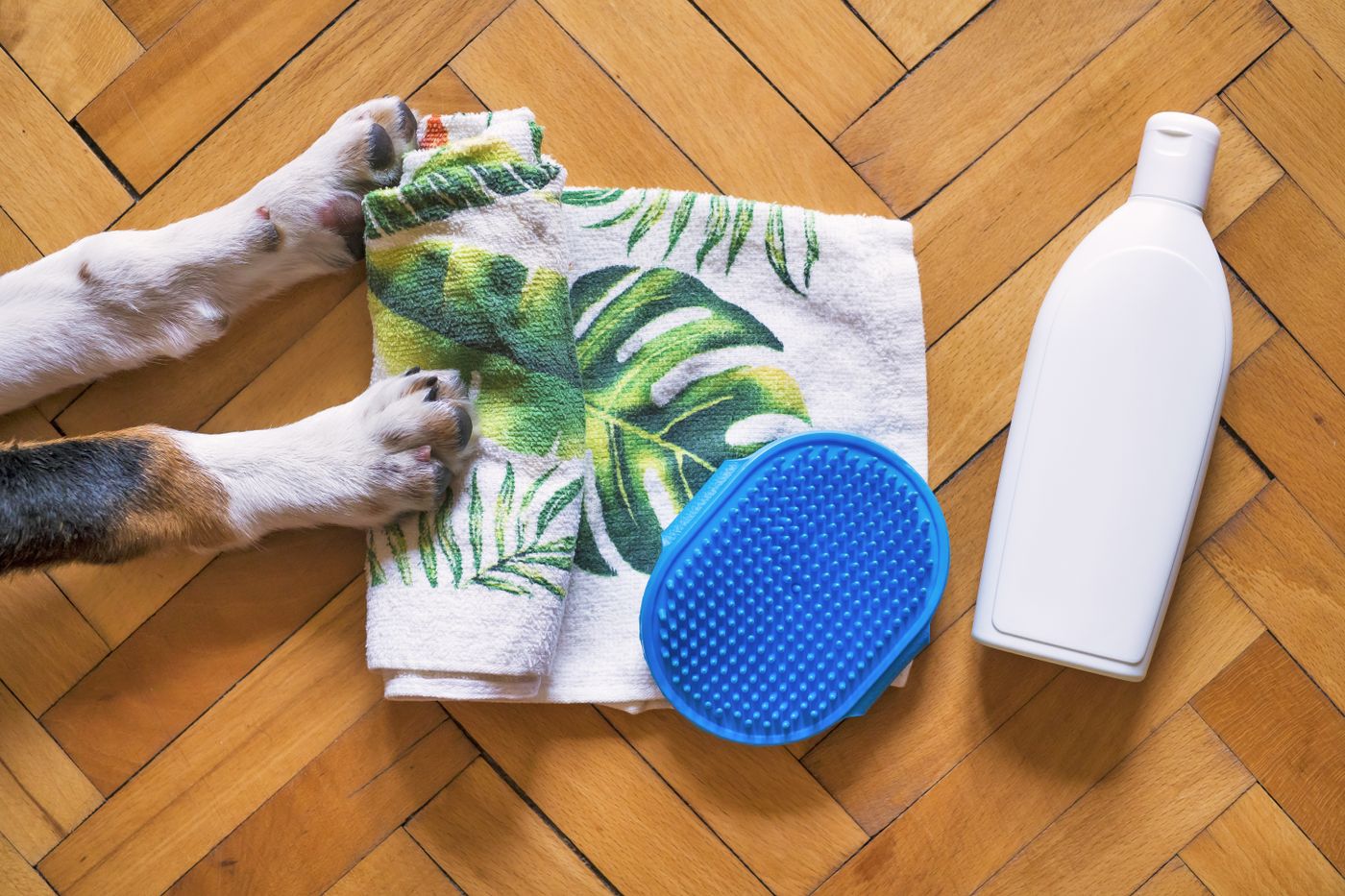
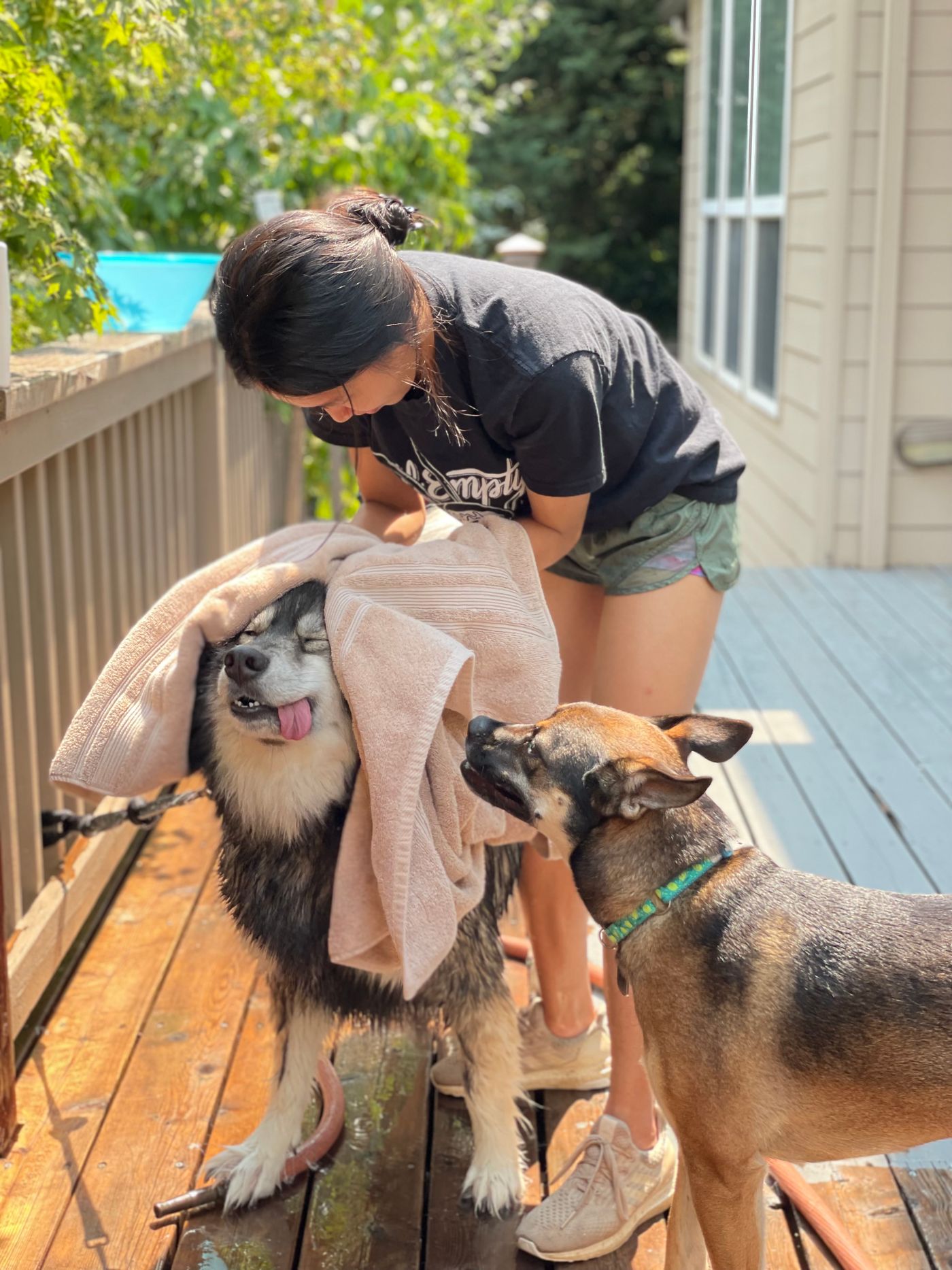
Keep clean towels or suitable cloths within reach but beyond chewing access. Introduce wiping and towel contact separately during quiet practice, so a wet return is not the first lesson. Allow pauses and natural changes of position. You may be able to remove ordinary surface mud without lifting every paw or washing the whole dog.
Have a place for damp gear and used towels that does not contaminate the clean supplies. Close the outside door before removing secure equipment. If the dog needs a moment to settle, the washable area should make that possible without immediate pressure to protect the rest of the floor.
Design for the next person using it
Keep the arrangement simple enough that another carer can follow it. Label the clean and used towel storage if needed, and make replacement supplies obvious. Do not leave buckets of water, cleaning chemicals or trailing cords in the entrance after finishing.
After a rainy week, review what actually caused difficulty. Perhaps the mat slides, the towel hook is too far away or the dog finds the doorway cramped. Change one practical detail rather than adding more equipment. Clean and dry the station regularly so it remains a comfortable place to stand. The best entrance system reduces urgency for both dog and person; it should not become a holding area where the dog is restrained until every footprint has disappeared.