Begin with warmth and footing
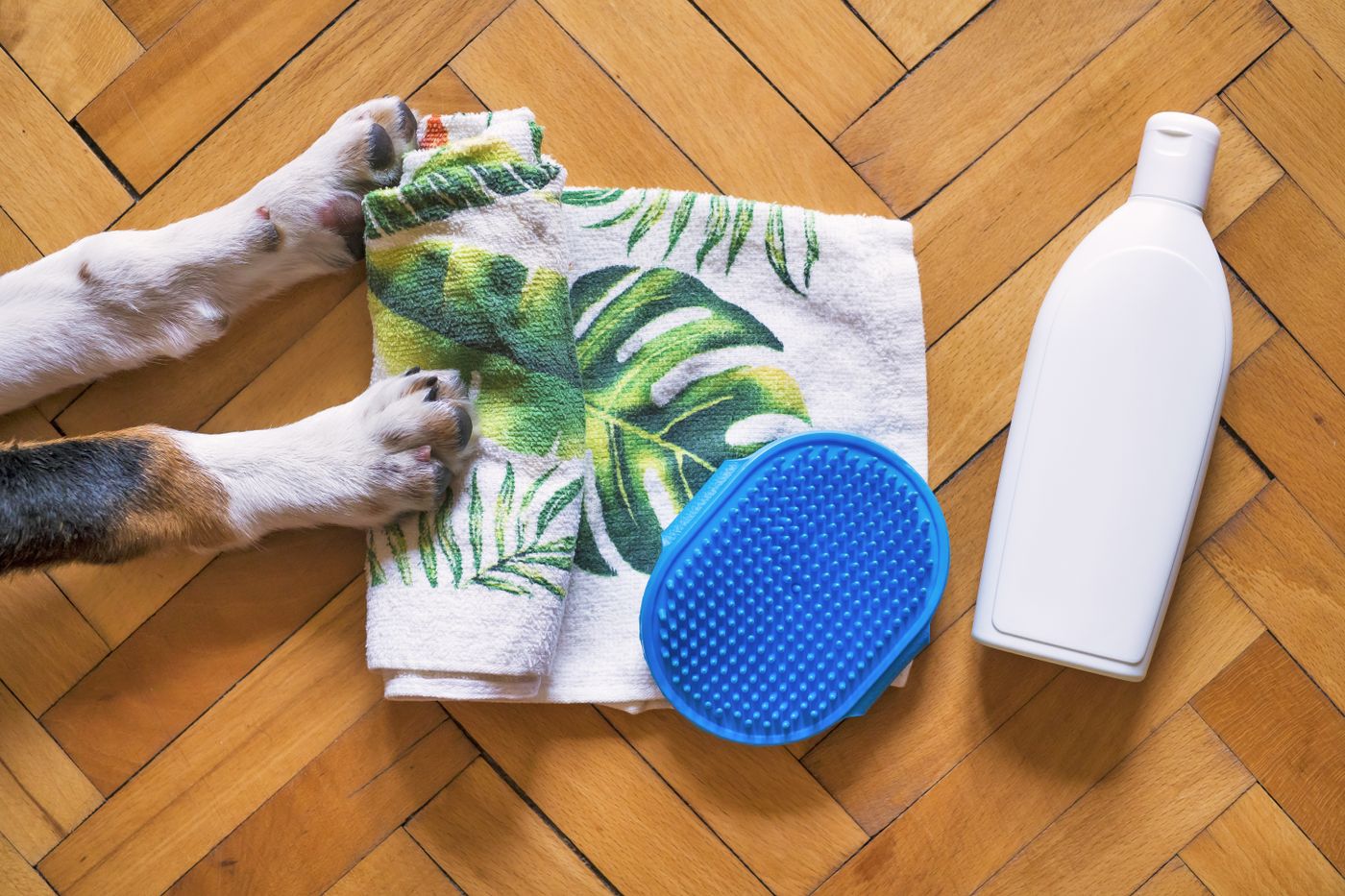
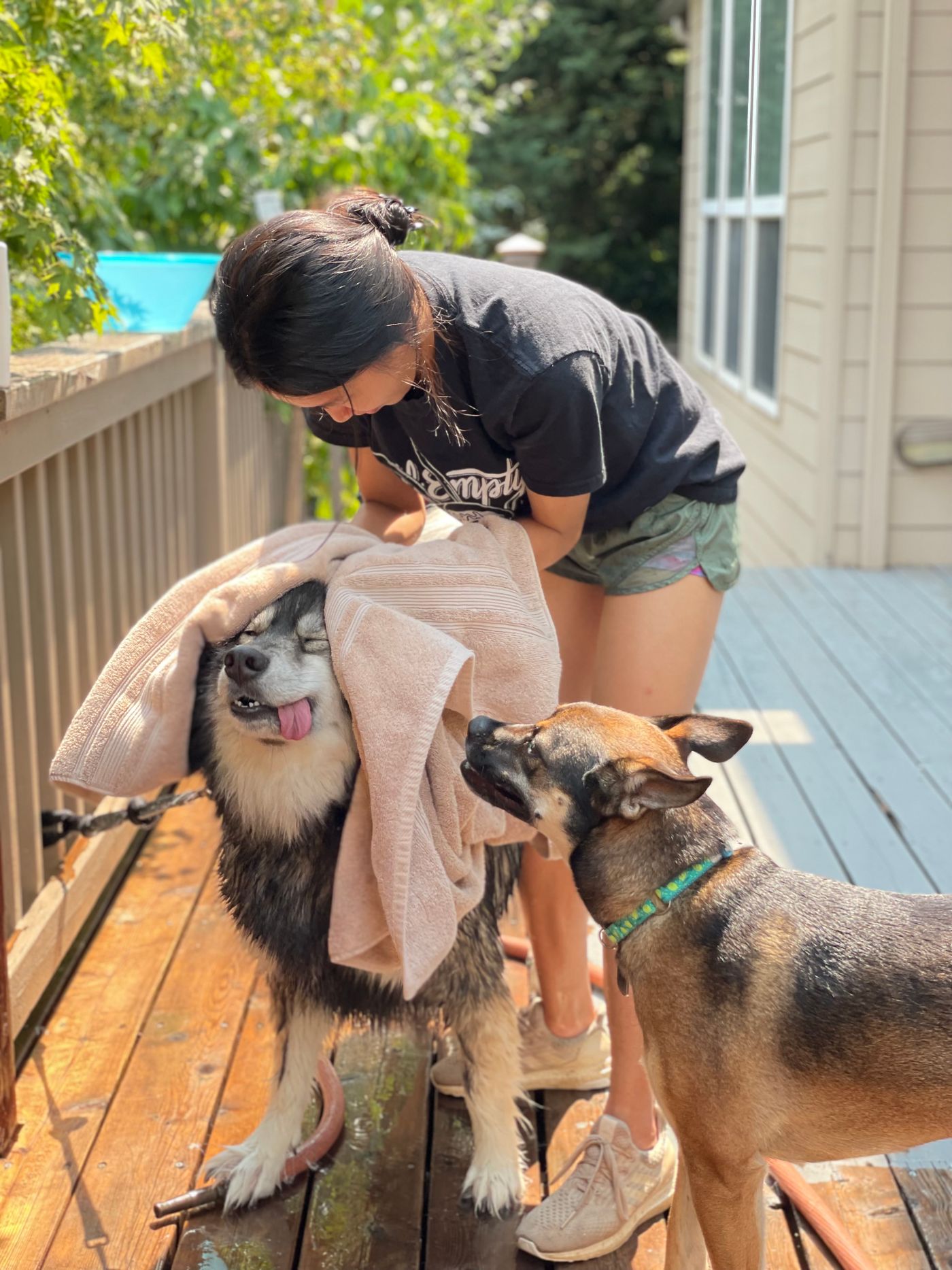
Bring the dog into a comfortable area with a non-slip surface and a dry towel ready. Keep the transition calm, especially if the outing was tiring. Blot or gently press moisture from the coat where the dog accepts contact rather than rubbing vigorously in every direction. Friction can make some long coats harder to manage.
Change to a dry towel when the first becomes saturated. Let the dog change position and pause between areas. Avoid trapping them in a tight wrap or covering their face. If the dog is cold, uncomfortable or unable to settle, adjust the environment and seek advice when wellbeing concerns persist.
Notice high-friction areas
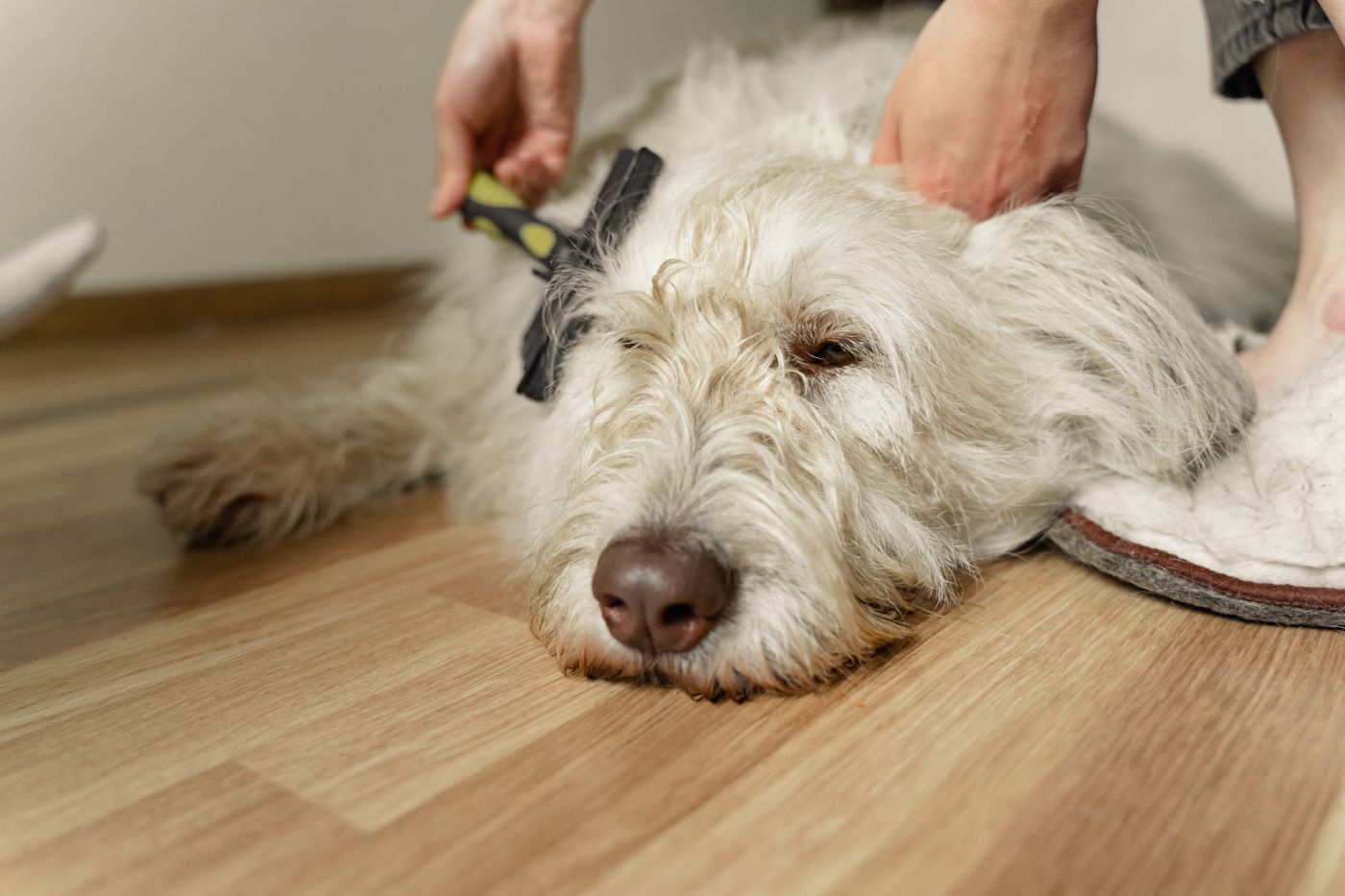
Once comfortable, look gently around places where straps or movement bring hair together, such as beneath a harness and behind the legs. Remove outdoor equipment when safely indoors and check both the coat and the straps. Do not pull the hair apart to inspect skin if the area resists or seems painful.
Use only a coat-appropriate technique that you have learned from a competent groomer. A small loose tangle and a tight mat close to the skin are different tasks. If you cannot work comfortably without tugging, stop. Cutting beside skin you cannot clearly see risks injury and is not a useful shortcut.
Improve the next wet return
Keep a spare dry layer near the entry and plan enough time after wet walks for gentle care. Check whether equipment fit or accumulated dirt is contributing to friction. Ask a groomer about a practical maintenance routine for the coat rather than assuming every long-haired dog needs the same brush or schedule.
Allow bedding and towels to dry fully before reuse. If you use any drying equipment, follow appropriate professional and manufacturer guidance; heat and noise can create their own problems. Observe the dog's comfort throughout. The goal is a dry, comfortable coat and skin, not a perfectly styled appearance immediately after every rainy outing.