Prepare the surface and the tool
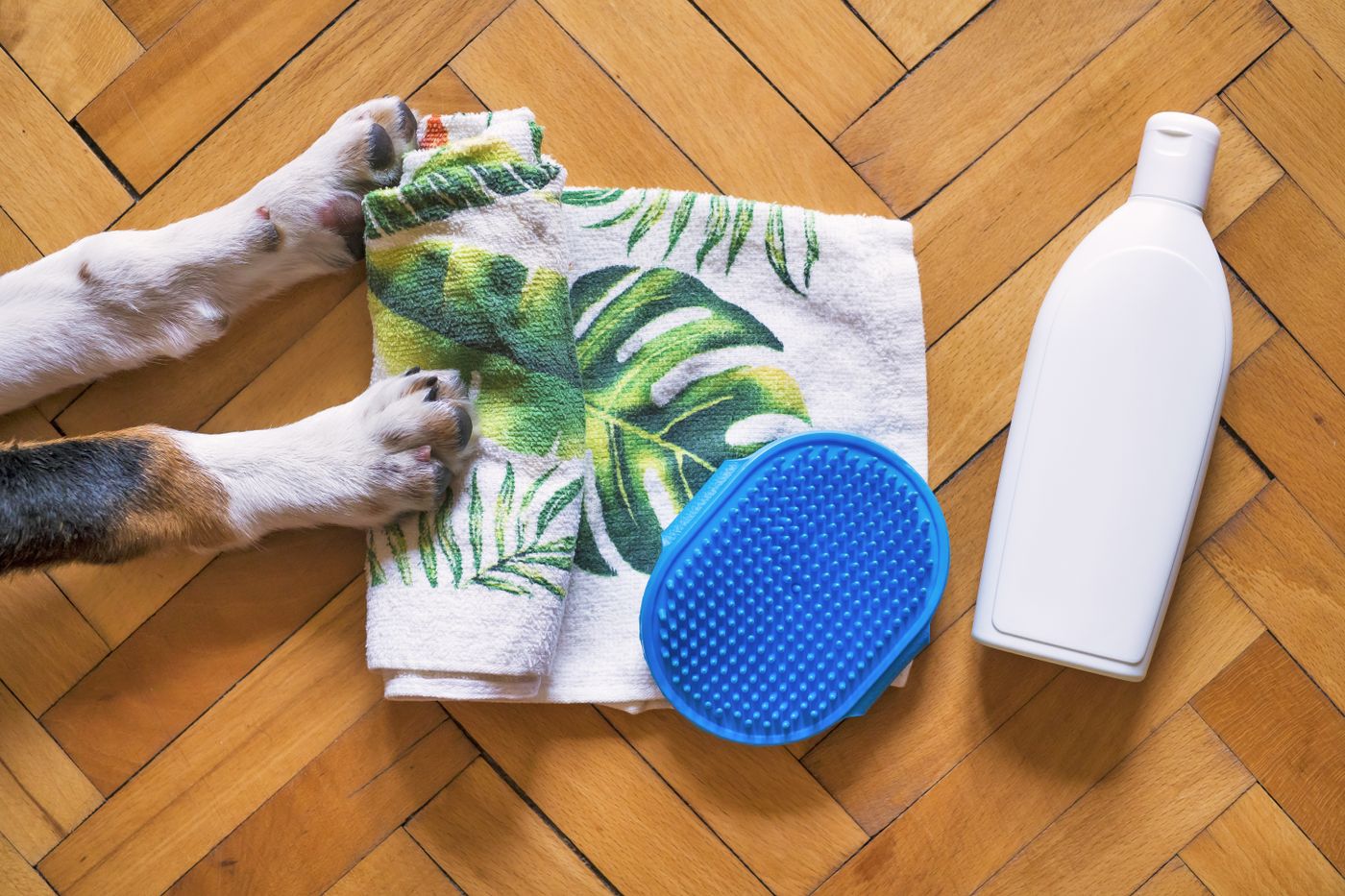
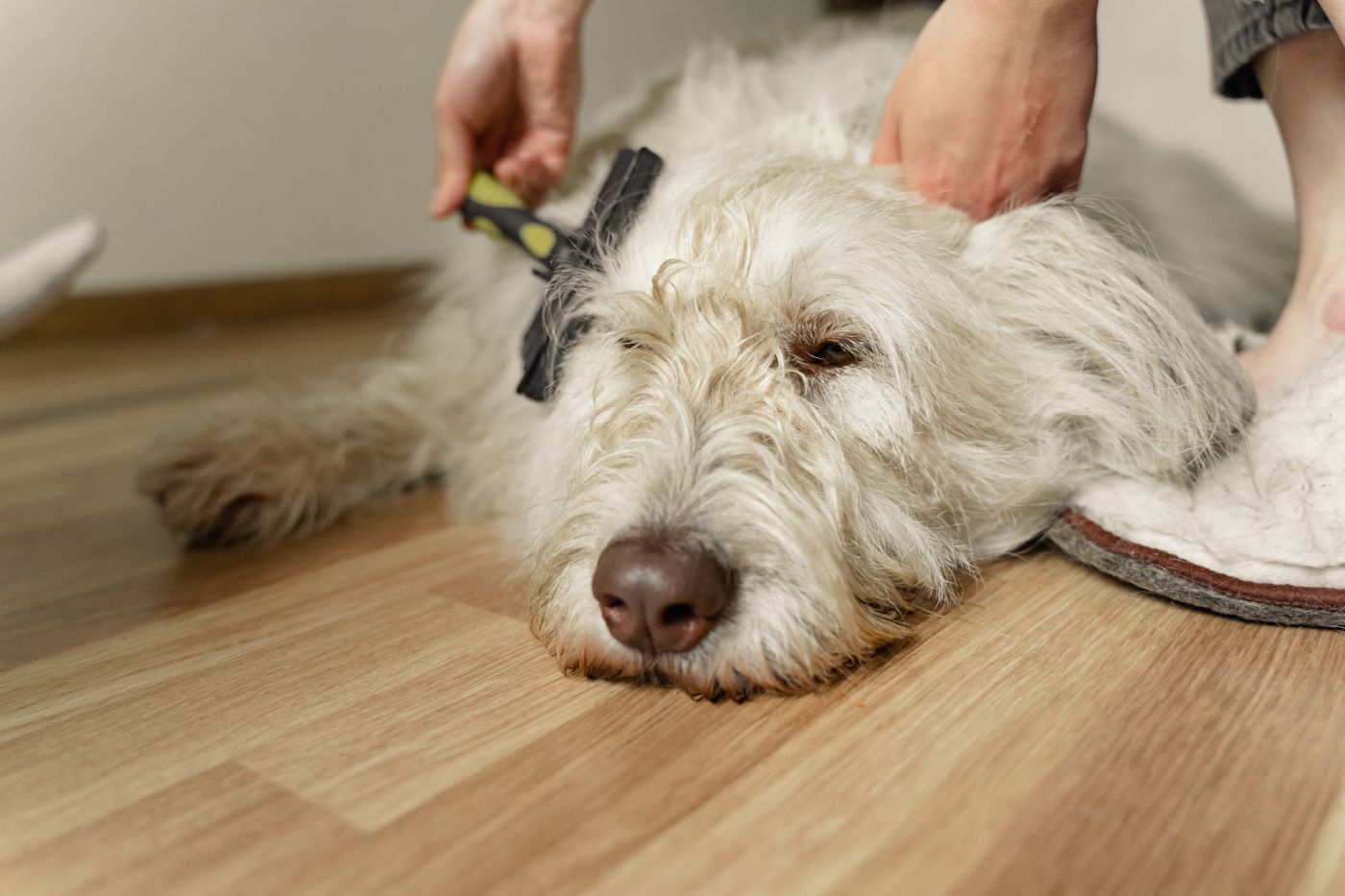
Choose a stable non-slip place where the dog can stand or lie comfortably. Keep the brush within reach and remove distractions that make you rush. Select a tool appropriate to the actual coat, asking a competent groomer for help if you are unsure. A brush that looks gentle can still pull or scrape when used on the wrong hair type.
Begin at a quiet moment rather than immediately after a difficult outing. Allow the dog to investigate the equipment without pushing it towards their face. If even seeing the brush causes concern, start with a smaller introduction before attempting contact.
Make the first contact easy
Touch a comfortable body area briefly with the tool, remove it and offer a suitable reward. Build towards one gentle stroke when the dog remains relaxed. Avoid beginning with sensitive feet, a tangled patch or the underside of the body just because those areas need the most work.
Pause between strokes and notice whether the dog chooses to stay. Turning away, tension or attempts to leave are reasons to stop and reassess. Do not keep feeding while brushing through discomfort. The reward should support a manageable experience, not distract from pulling that the dog cannot escape.
Separate maintenance from difficult coat work
Short comfortable practice can develop into useful routine care, but established mats or painful areas may need professional attention. Do not tug until a tangle releases or cut close to the skin with household scissors. Ask a groomer or veterinarian for the appropriate next step when the coat or skin raises concern.
Keep a simple note of areas handled comfortably and those that need a gentler introduction. End with an easy action rather than pushing to finish the entire dog. Clean the tool after use according to its instructions and check for damaged teeth or bristles. Consistent comfortable sessions are more useful than an occasional long session that leaves both of you reluctant to begin again.