Choose a toy that leaves room for hands
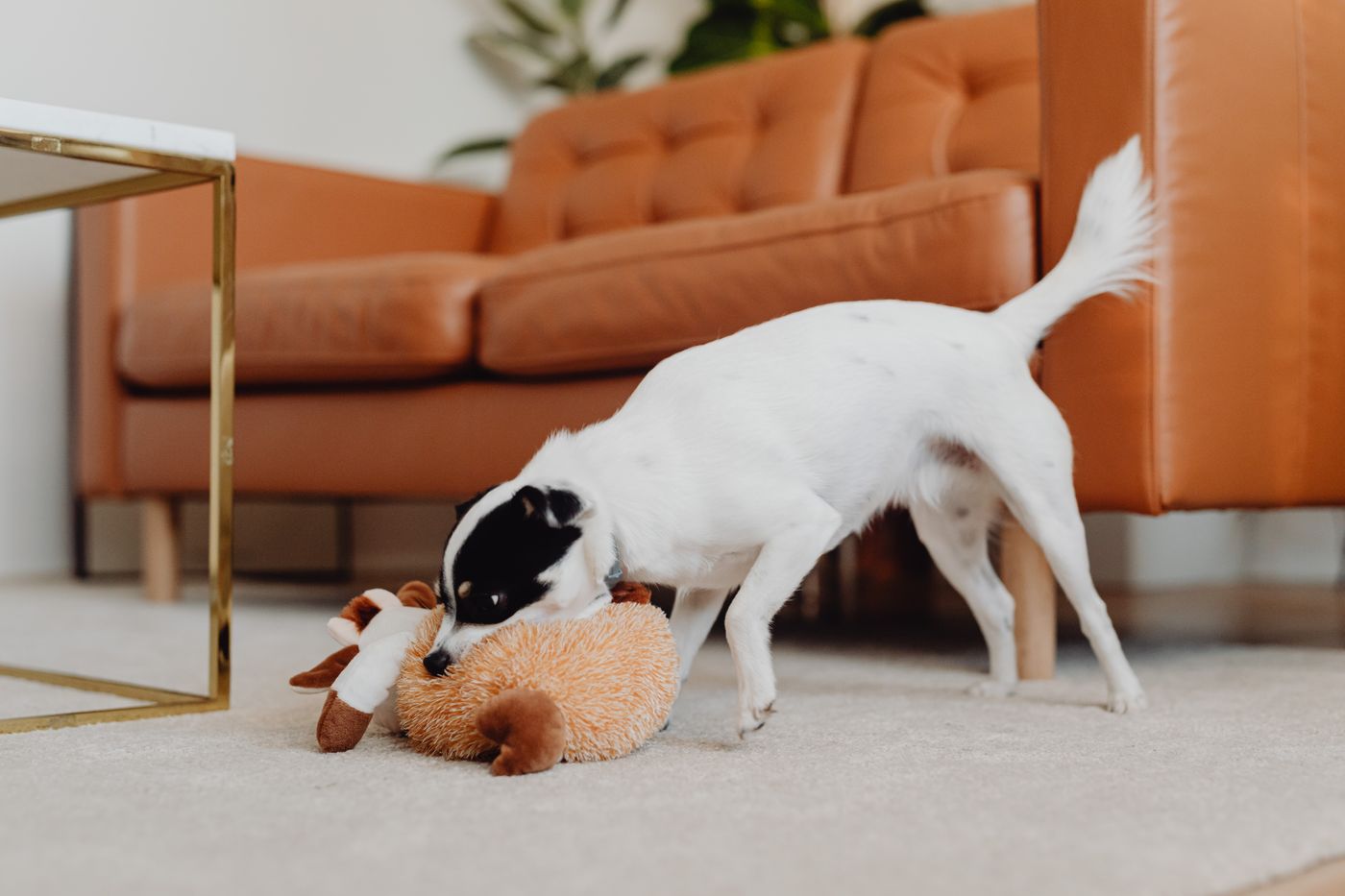
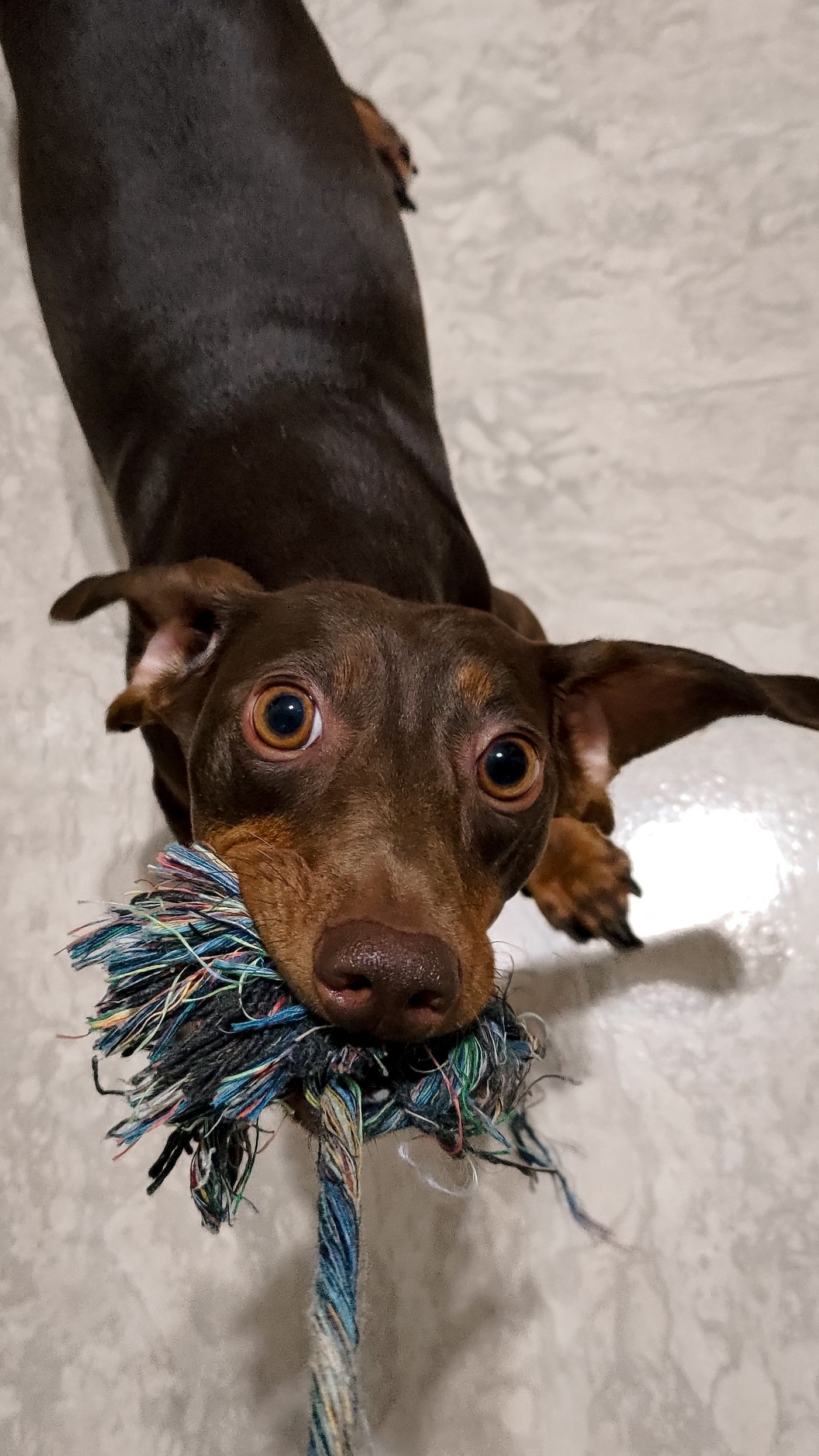
Use an intact tug toy long enough to keep your hands comfortably away from the dog's mouth. Match its size and texture to the individual dog, and inspect it for fraying or loose parts. Work on non-slip ground with clear space around you. Avoid using clothing, tiny toys or objects that invite teeth close to fingers. Dogs with relevant health or mobility concerns need an activity choice discussed with their veterinary team.
Let the dog take the offered toy
Present the toy at a comfortable height and allow the dog to choose whether to grip it. Keep movement low and gentle rather than lifting, spinning or hanging the dog from the toy. Follow the dog's natural position without forcing sharp neck turns. If they do not engage, try another activity instead of tapping the toy against their face. Enthusiasm is useful only while both participants can keep the game controlled and comfortable.
Practice a pause before the game becomes intense
After a brief exchange, reduce movement and use a familiar voluntary drop cue or a safe trade. Reward release and offer another short round if the dog remains interested. Avoid prying the mouth open or turning the pause into a test of strength. Teach the trade separately with an easy object if it is not yet understood. Keep other dogs out of the activity when their presence creates competition for the toy.
Stop on changes in comfort or control
Pause if teeth contact skin, the dog becomes increasingly tense or your own movements become hurried. Give space and reset rather than shouting or grabbing the collar. End while the toy is intact and the dog can move into another ordinary activity. If the dog guards the toy or finds releasing distressing, seek appropriate professional guidance and choose a less competitive format meanwhile. Tug should be a shared choice, not a contest someone must win.