Use small areas for different purposes
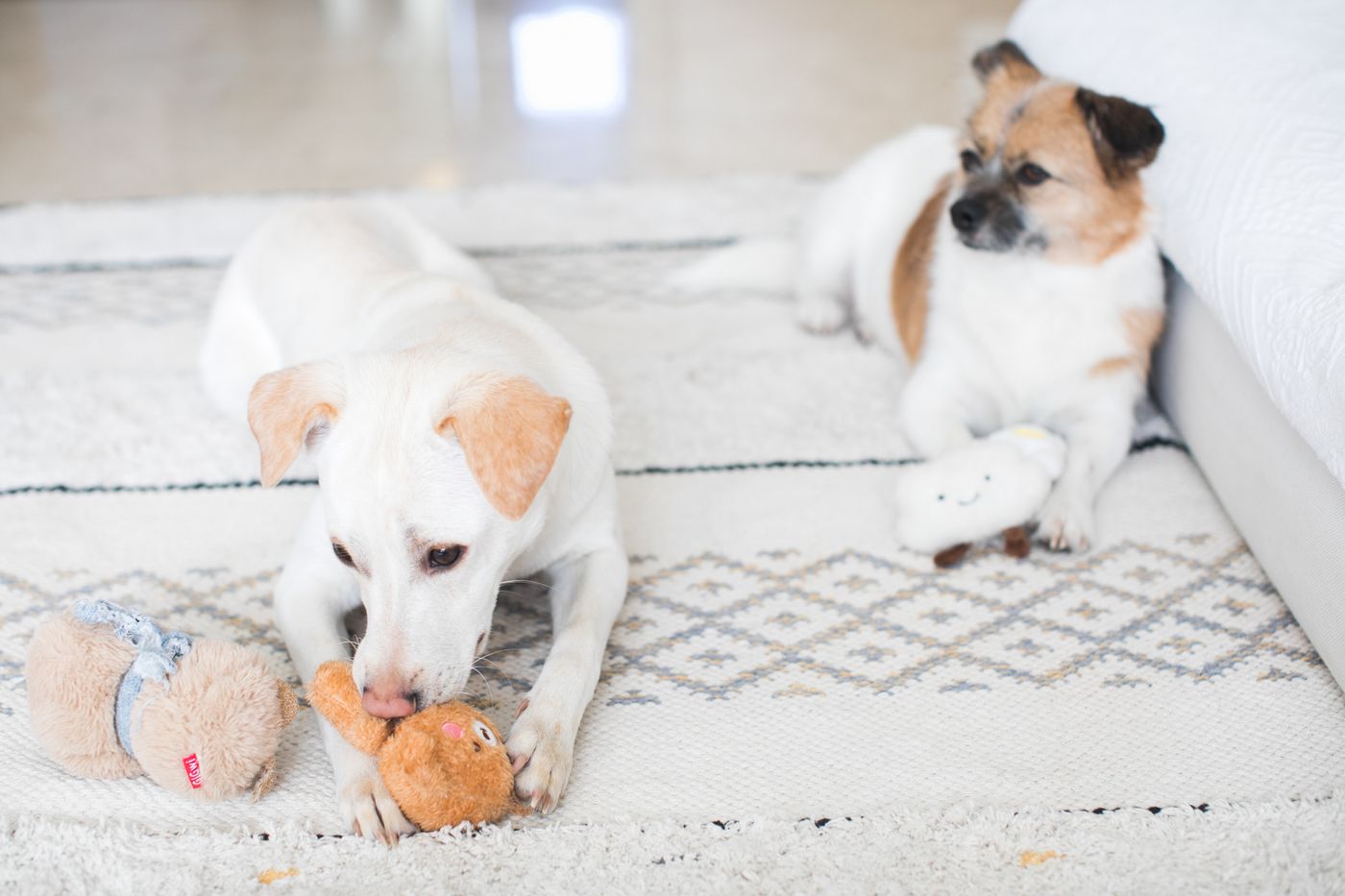
Keep a comfortable resting spot separate from the patch where you offer active games. A clear mat beside a table may be enough for a short food search, while a stable corner can hold an easy puzzle. Move cables and small objects out of reach before beginning. Avoid blocking the route to water or the door. Clear boundaries help you set up and finish without converting the whole apartment into a permanent obstacle course.
Favor discovery over speed
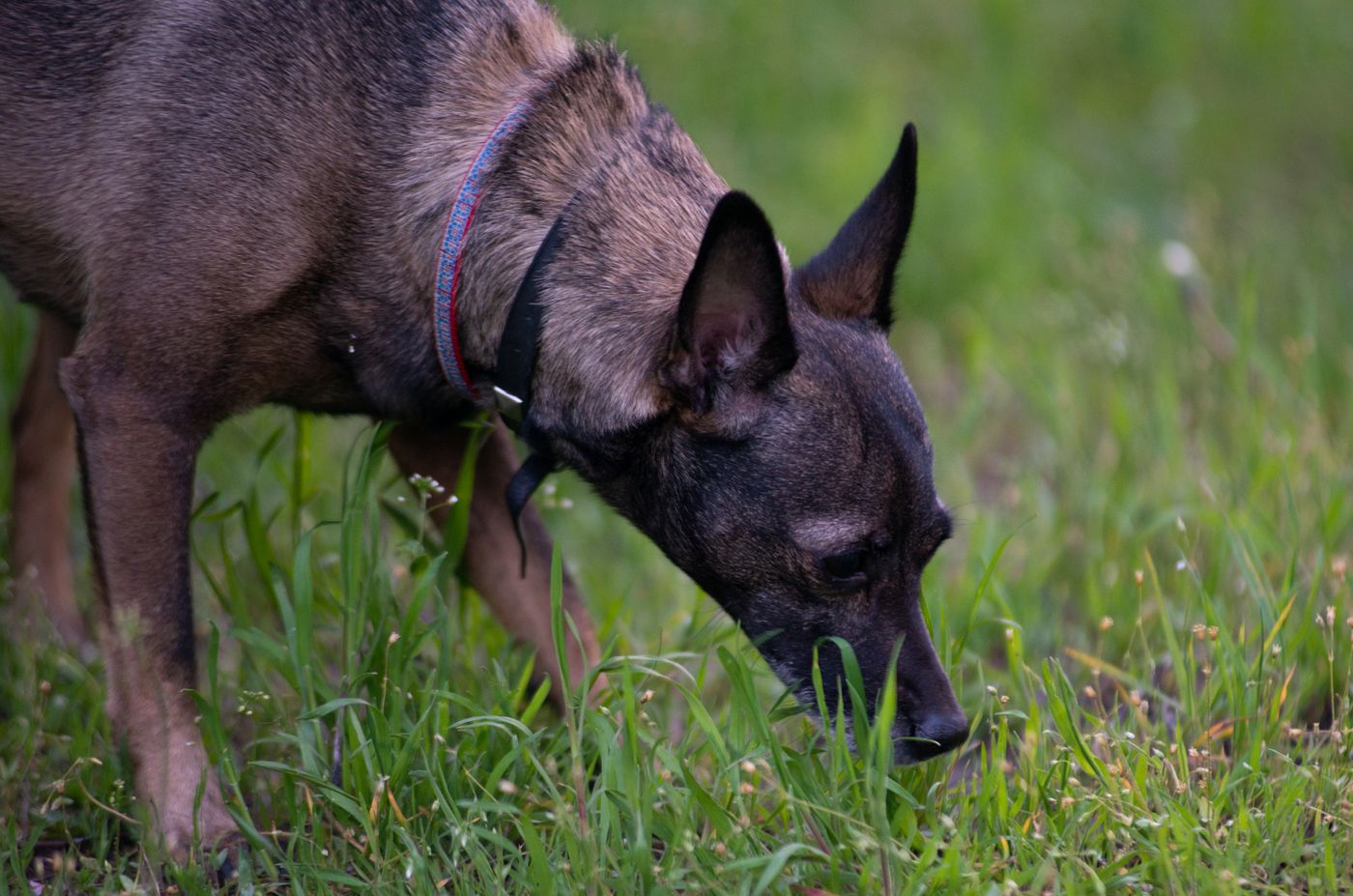
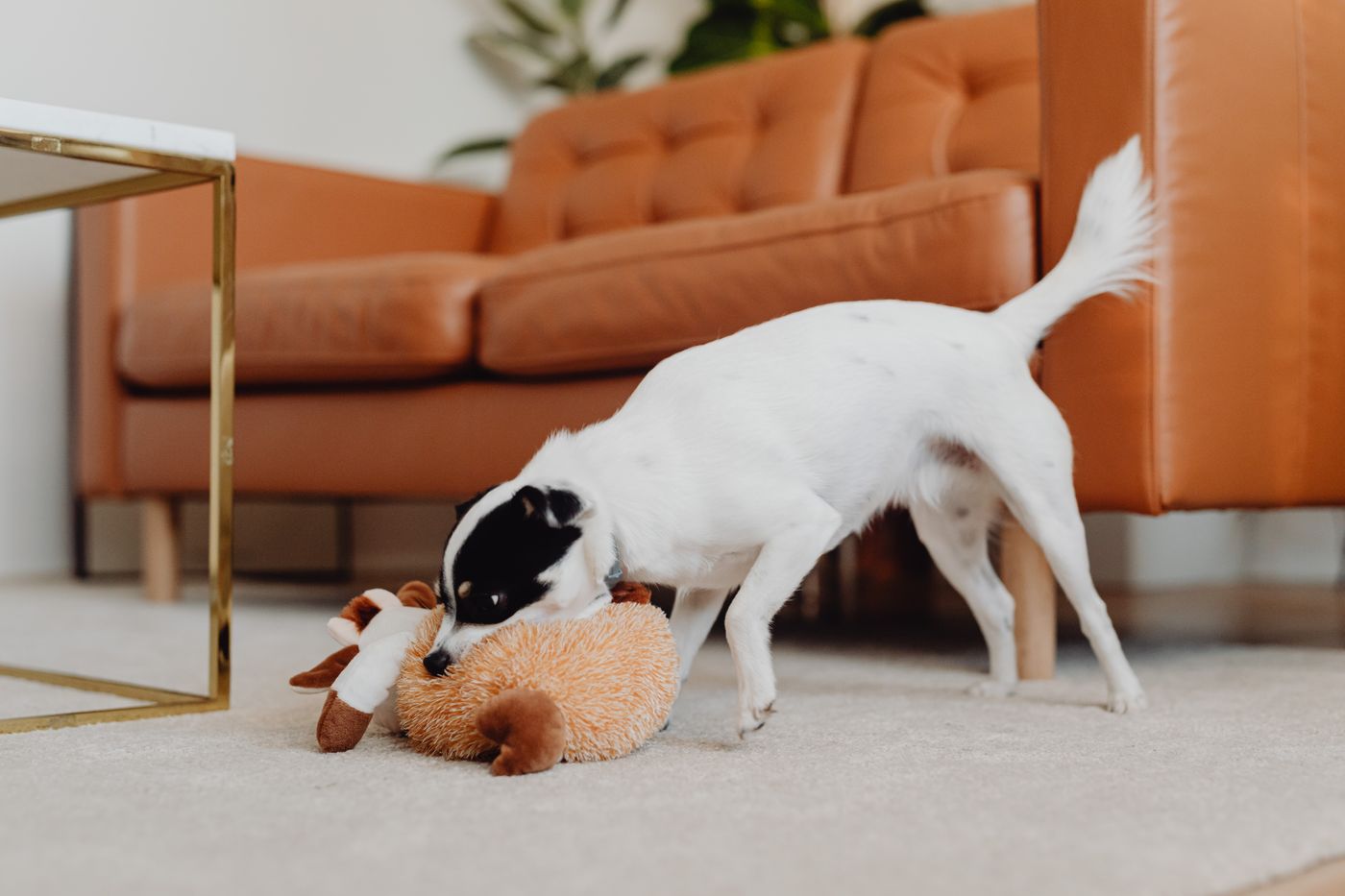
Offer a few visible food finds, a familiar hand target or a gentle toy exchange. Count suitable food within the normal allowance and supervise toys according to their design. Repeated fetch across a narrow room can involve abrupt turns and slippery stops, so choose a slower format. A dog can investigate an ordinary object at length without needing more objects added. Keep the activity simple enough that you can observe comfort and stop before frustration builds.
Use views selectively
Some dogs enjoy looking out from a safe resting position, while others become increasingly alert at passing movement. Watch the actual response before treating a window as enrichment. Keep access secure and avoid unstable furniture placed beside an open window. If the view causes persistent barking or scanning, offer a quieter resting location or limit the visual stimulus. Enrichment should improve the dog's experience, not simply keep them occupied by something they cannot disengage from.
Keep outdoor needs and rest in the plan
Indoor games complement suitable outings; they do not replace toilet access, appropriate exercise and the chance to explore safely. Build a routine that fits your dog and arrange help when your schedule requires it. Quiet time matters as much as activity in a small shared home. Put supervised toys away after use and allow the dog to settle without repeated invitations. A few well-chosen options are more sustainable than trying to provide constant entertainment throughout the day.