Start when the paws are already clean
Practise in a quiet area with secure footing, away from the pressure of protecting a freshly cleaned floor. Sit or stand where you can reach without leaning heavily over the dog. Begin with a brief comfortable touch near a leg, then remove your hand and reward. You are learning what contact the dog accepts before adding a wiping cloth.
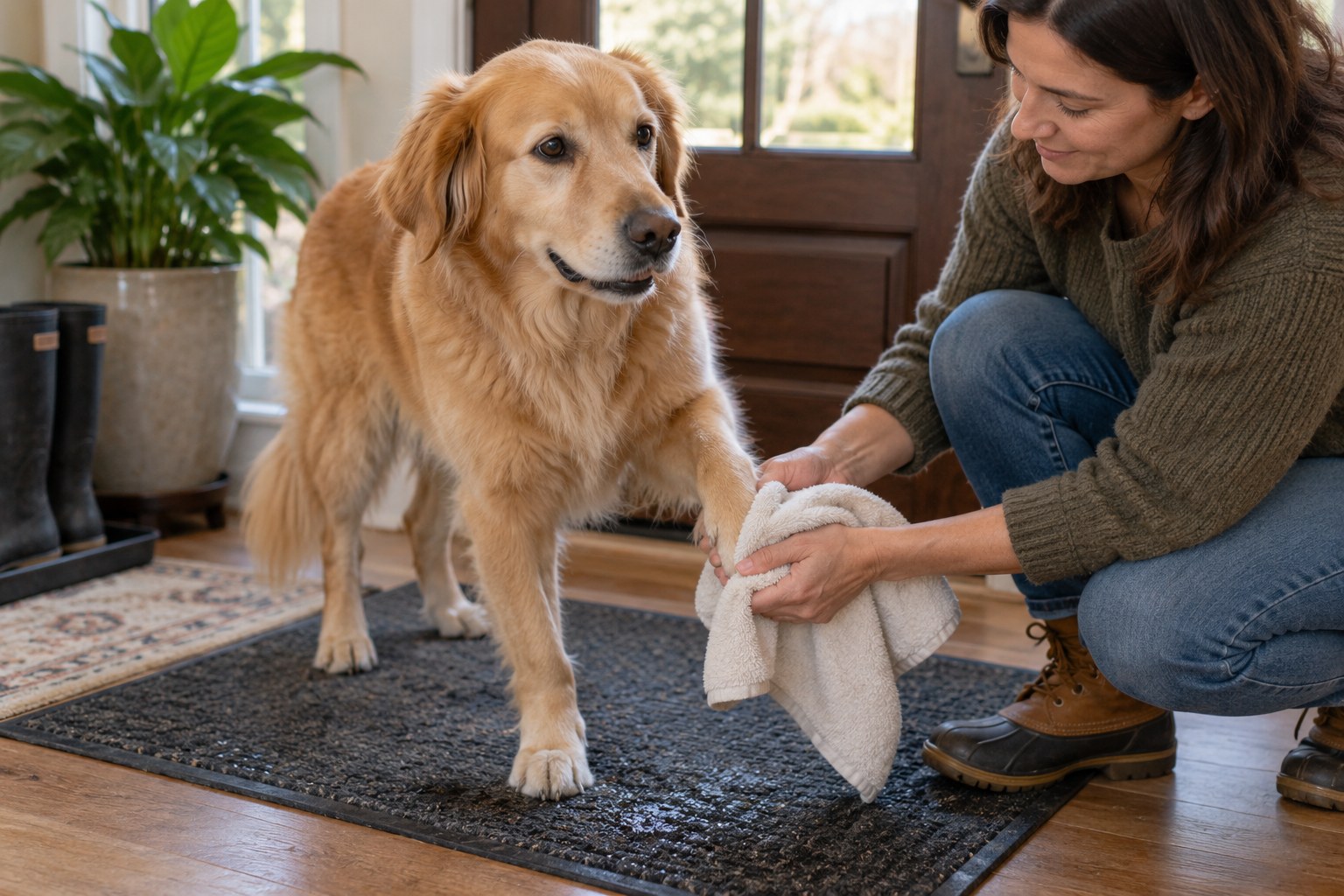
Do not pull a foot into an awkward angle or hold the leg while the dog struggles to balance. Some dogs are more comfortable with their paw resting on the floor while you wipe the accessible surface. Choose a position that supports the individual rather than copying a demonstration exactly.
Add the cloth in small steps
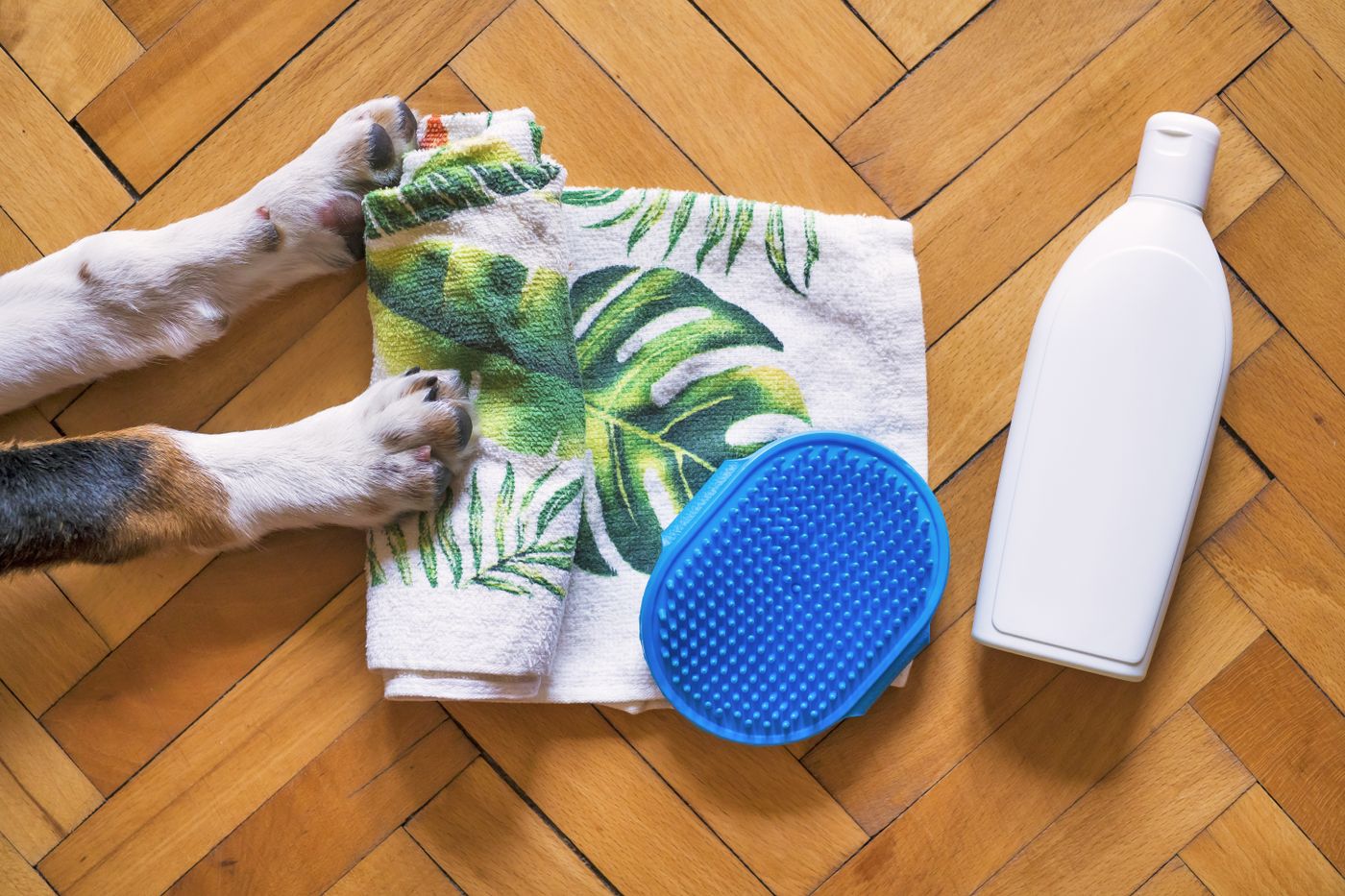
Introduce a soft suitable damp cloth and allow investigation. Try one gentle touch or wipe, then pause. Build gradually across different feet rather than expecting equal comfort everywhere. Keep the pressure light and stop if the dog withdraws, stiffens or repeatedly turns to watch your hand.
Ordinary surface dirt does not justify scrubbing sensitive skin. Avoid digging between toes or using household cleaners on paws. If something is embedded, painful or otherwise concerning, ask a veterinarian for guidance. A cooperative wiping routine is not a substitute for assessing an injury.
Prepare an easier real-world return
Keep a washable mat and towels near the entrance so you can allow a pause without worrying about every footprint. Clean one area at a time and let the dog stand naturally between attempts. A second adult should not hold the dog tightly just to make the process quicker.
Notice whether equipment removal, cold weather or excitement changes tolerance after a walk. You may need a brief settling moment before cleanup. Keep rewarding comfortable participation and finish when the necessary gentle cleaning is done. If paw handling is persistently difficult, discuss a gradual plan with an appropriate professional, especially if the response is new or differs strongly between feet.