Choose the surface and throw together
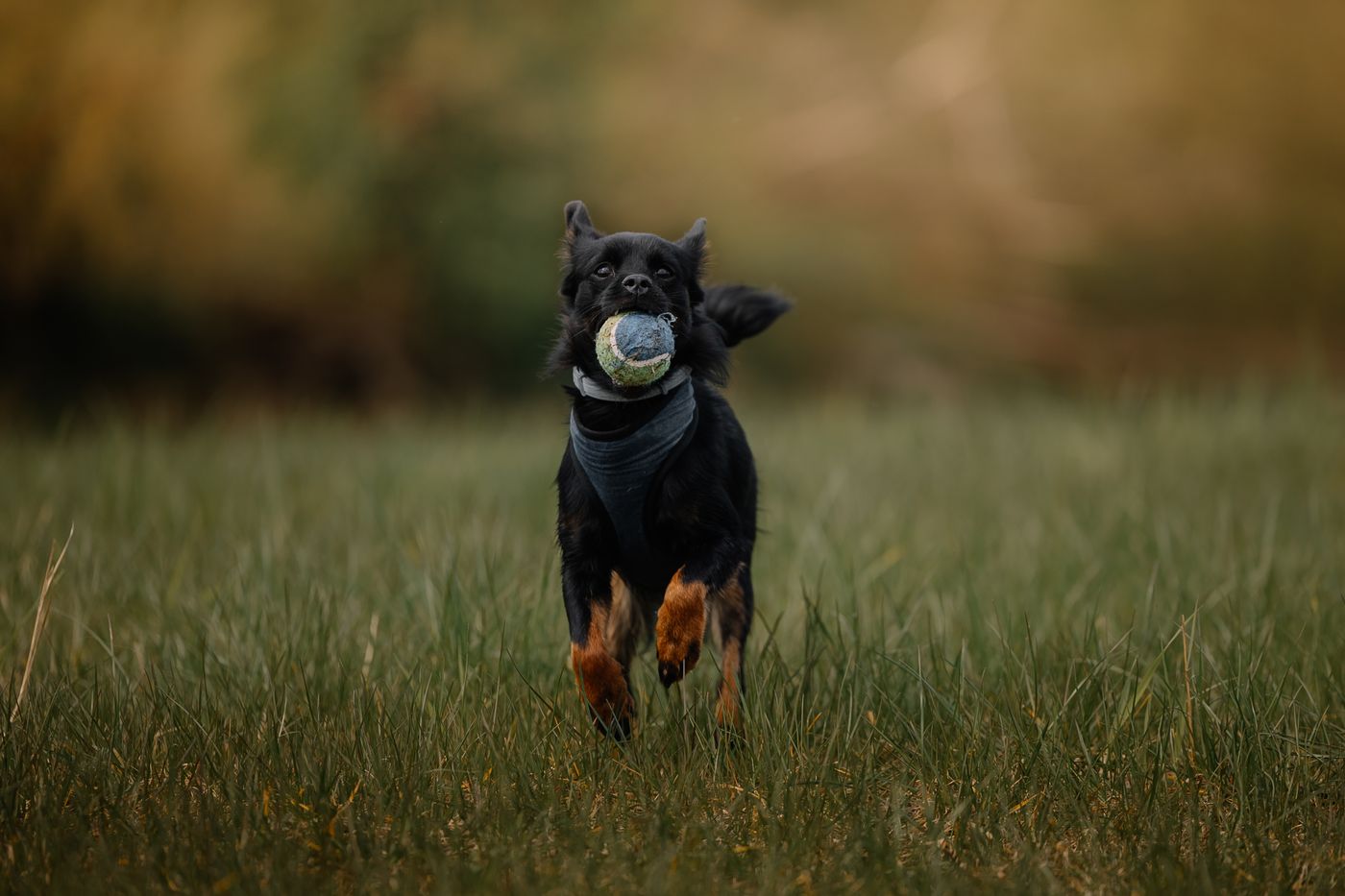
Use a clear level area with reliable footing and enough room to stop safely. Avoid slippery ground, steep slopes and crowded paths. Select a suitable intact toy and begin with a short low roll or toss. High bouncing throws can invite awkward leaps and landings, so there is no need to make height part of the challenge. Consider your dog's individual health and mobility when deciding whether chasing is an appropriate activity at all.
Reward the return without demanding a perfect delivery
Some dogs enjoy chasing but prefer to keep or carry the toy. You can offer a voluntary trade and another easy throw, or choose a game that does not require retrieval. Avoid chasing the dog to recover the object, which may create a different game from the one you intended. Keep the exchange friendly and stop if competition develops. A short return close to you is a useful beginning without insisting that the toy lands precisely in your hand.
Build pauses into the game from the start
After a small number of comfortable retrieves, stop throwing and offer a quieter activity or rest. Do not use the dog's willingness to chase again as the only measure of suitable intensity. Notice movement, weather and the rest of the day's activity. Keep water available and avoid extending the game merely because the dog keeps presenting the toy. You remain responsible for choosing a reasonable format and ending rather than outsourcing every limit to enthusiasm.
Offer alternatives to another throw
A simple hidden-toy search, carrying the toy on a calm walk or a gentle tug exchange can change the pace. Use a clear finish phrase and put the throwing equipment away when the game ends. If your dog struggles to disengage, shorten future sessions and introduce predictable pauses much earlier. Persistent distress around stopping or a sudden change in movement deserves appropriate professional attention rather than trying to exhaust the dog more thoroughly.