Design for a comfortable walking line
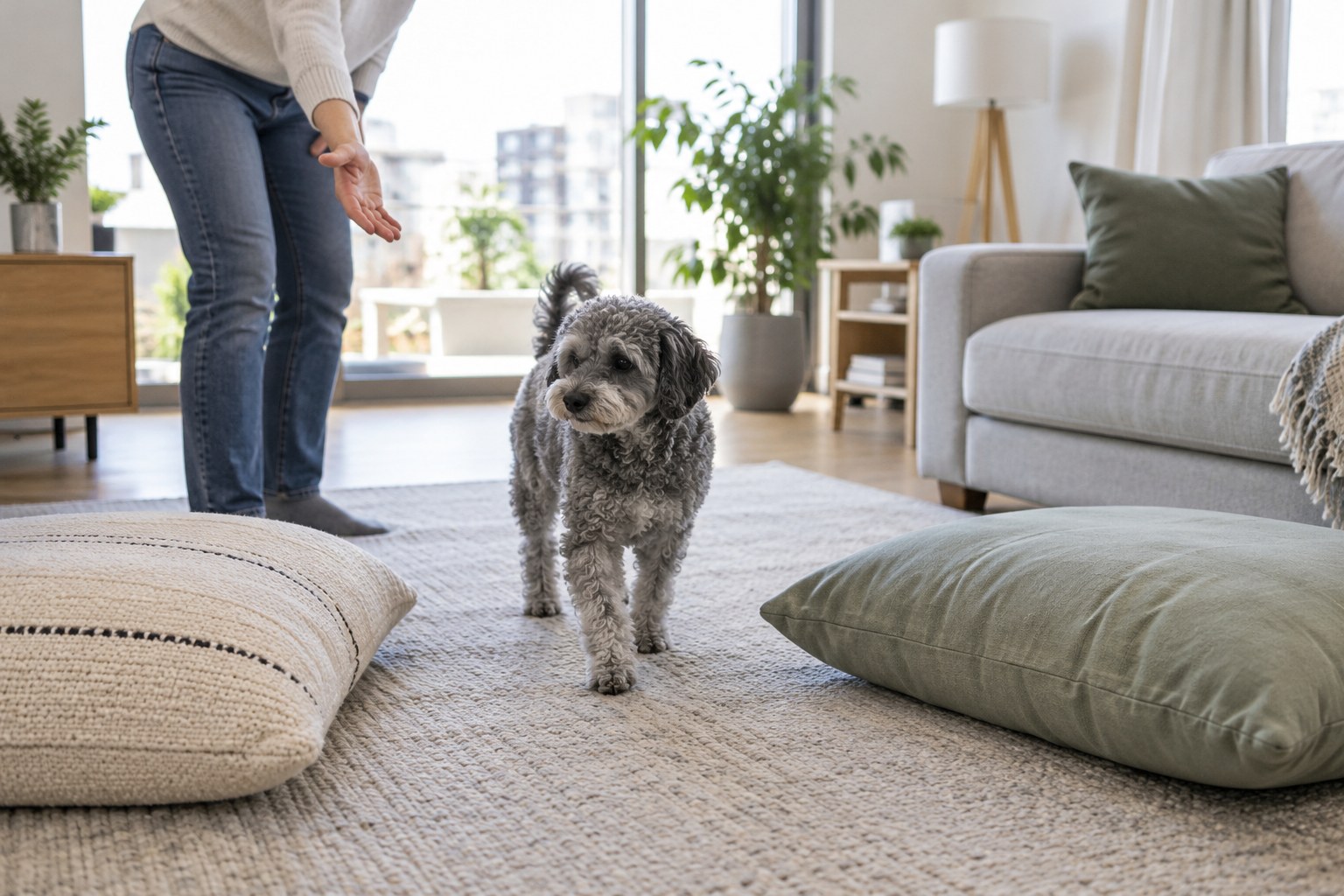
Choose a room with non-slip flooring and remove loose rugs that slide, trailing cables and breakable items. Use a few stable objects with broad space between them, such as chairs positioned so the dog can walk around rather than squeeze under. Keep the route visible from beginning to end. Avoid balancing surfaces, stacked cushions and narrow gaps. The dog should be able to turn back or leave without getting caught between furniture.
Walk through one section together
Invite your dog to follow a familiar hand target or your gentle movement around the first object. Reward a few comfortable steps. You do not need to lead them through the entire layout immediately. Keep your pace slow and leave the dog room to choose their own footing. If they stop to investigate the object, allow it. A game that becomes mostly sniffing can still be useful without completing the route you planned.
Change the path without adding height
Once the first curve is familiar, add a second wide turn or move the starting position. Keep the obstacles stable and the route broad. Reward clear movement rather than speed. A dog who cuts between objects may simply be choosing the most obvious path; make your invitation clearer instead of blocking the body. Stop if the dog slips, repeatedly hesitates or appears uncomfortable. This activity is not a rehabilitation exercise unless a qualified professional has prescribed a specific plan.
Put the room back after the game
A few easy passes are enough before changing activity. Move the objects back so the dog does not encounter an unexpected obstacle later when the room is dim or busy. Check whether any furniture shifted during practice. For small homes, one comfortable arc around a single object may be more appropriate than a full course. The point is a shared low-pressure movement task, not fitting the largest possible number of obstacles into the available floor space.