Make the towel an ordinary object
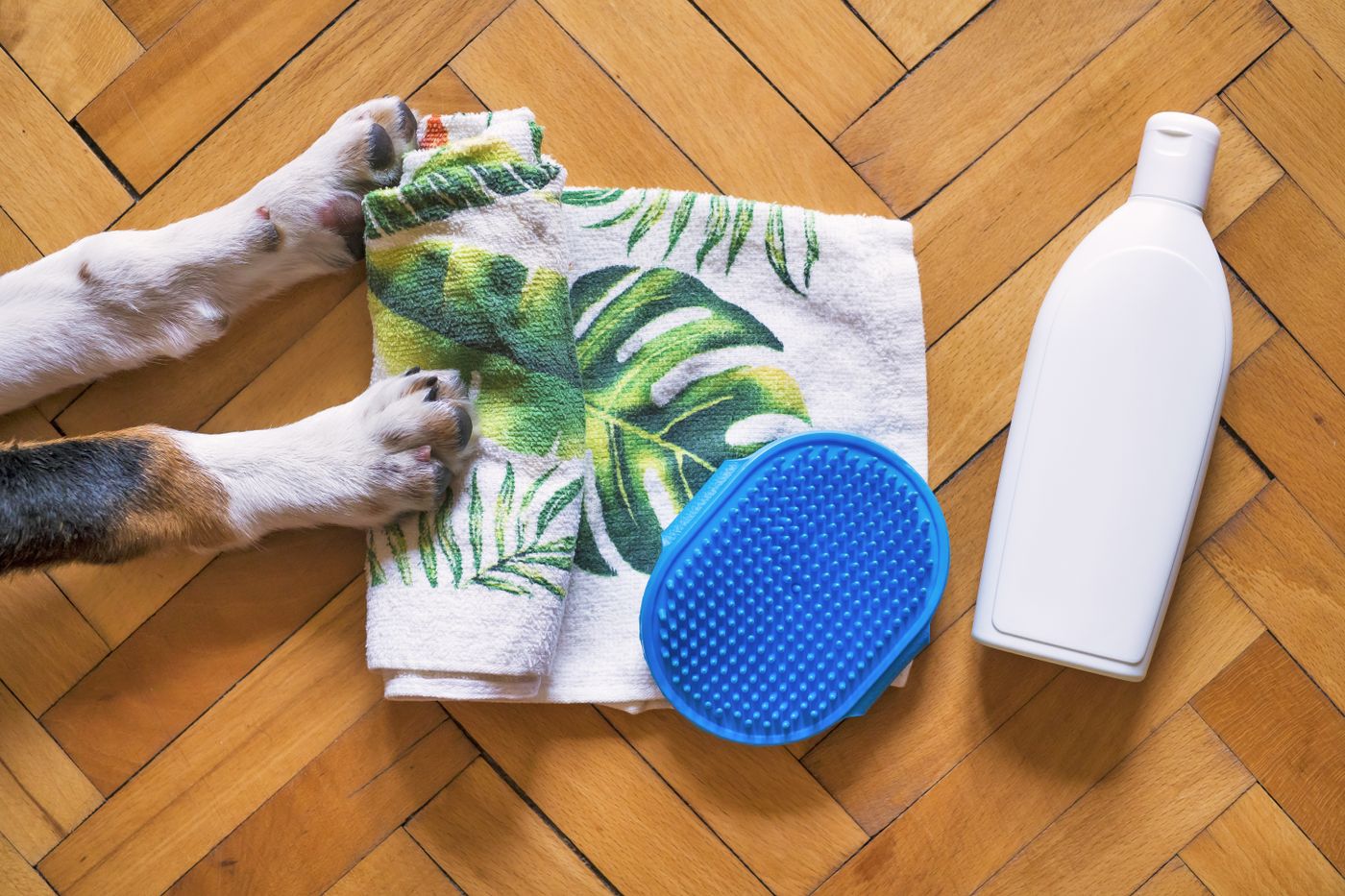
Choose a soft clean towel without loose threads or damaged edges. Place it nearby during a quiet period and let the dog investigate. You do not need to wave it, drape it over their head or make it into an exciting game. The first goal is simply comfortable familiarity with an object you will later use for care.
Keep the session away from the busy doorway if that area already predicts excitement. Have a suitable reward ready and choose a surface where the dog can stand securely. If they take the towel in their mouth, avoid turning the introduction into a tugging contest; put it away calmly and rethink the setup.
Introduce brief contact
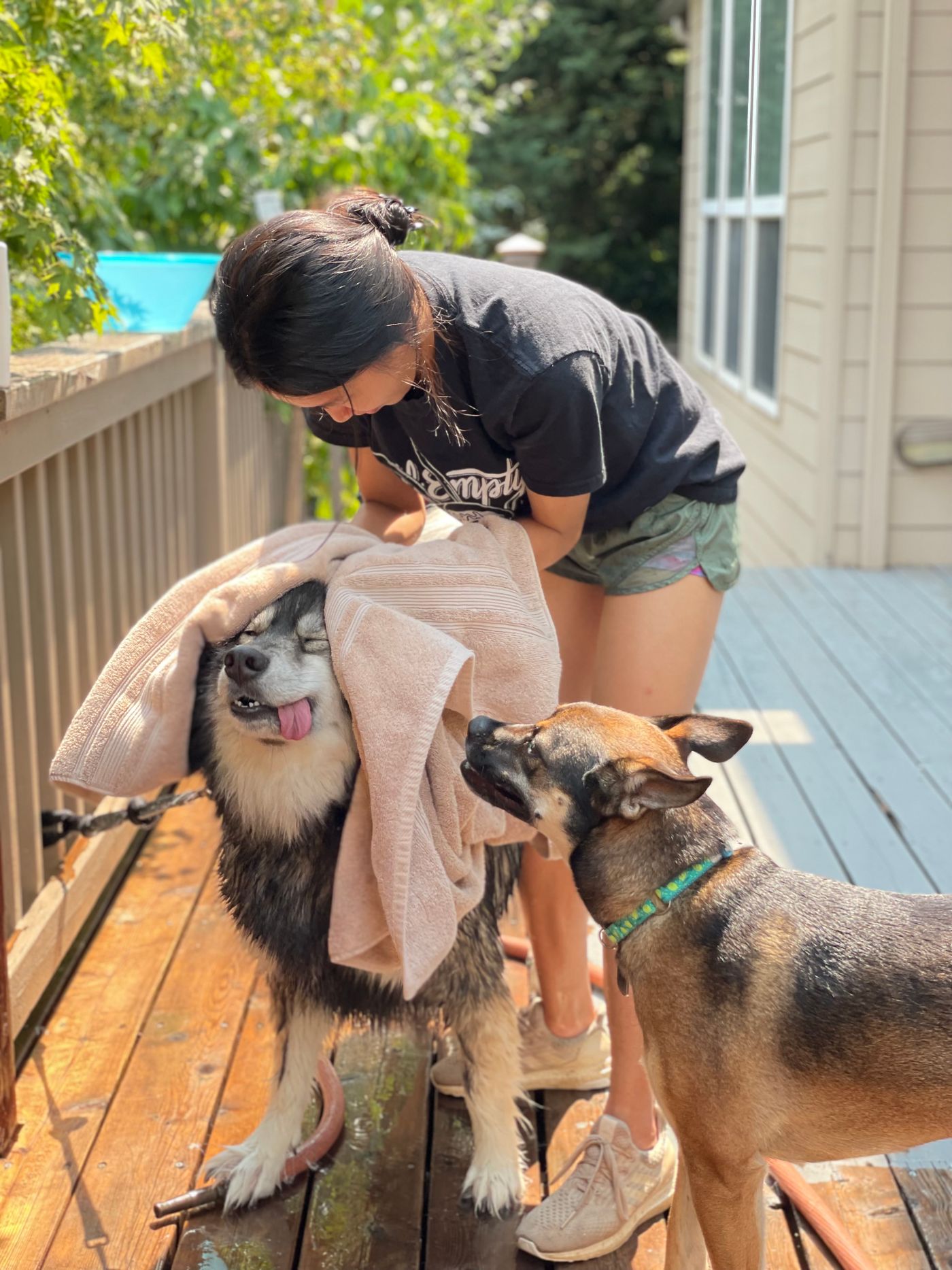
Touch an easy area such as the side of the body for a moment, then remove the towel and reward comfortable participation. Pause long enough for the dog to choose whether to remain. Build towards a gentle blotting movement before asking for contact around more sensitive areas.
Notice the whole body. Pulling away, stiffening or repeatedly turning towards your hand means the step may be too much. Stop rather than wrapping the dog tightly to finish. You can return later with a smaller movement or a different position. Ordinary care should be predictable enough that the dog is not surprised by each touch.
Transfer the skill to real cleanup
Keep the first practical use modest, perhaps drying a small damp area after an easy outing. Have more than one towel available so you do not rub with a saturated cloth. Leave the face uncovered and allow position changes. The familiar practice should help, but a cold, tired or excited dog may need an easier version that day.
Wash and dry towels according to their care instructions, keeping them separate from dirty cleaning cloths. Store them beyond chewing reach. If handling remains difficult or suddenly becomes uncomfortable, seek appropriate advice. Familiarity with a towel is useful preparation, but it does not remove the need to respect the dog's response during each use.