Plan the boundary before serving
Choose distinct feeding places with enough separation for the dogs involved. Different rooms or secure barriers may be more effective than bowls placed at opposite ends of a small kitchen. Consider sightlines as well as distance: a dog watching another eat through a gap may still create pressure.
Arrange doors or gates before carrying food into the area. Check that each dog has comfortable footing and a route into their own space. If a barrier is unfamiliar or worrying, introduce it separately at a quiet time rather than combining confinement, food and another dog in one first experience.
Stay attentive without hovering
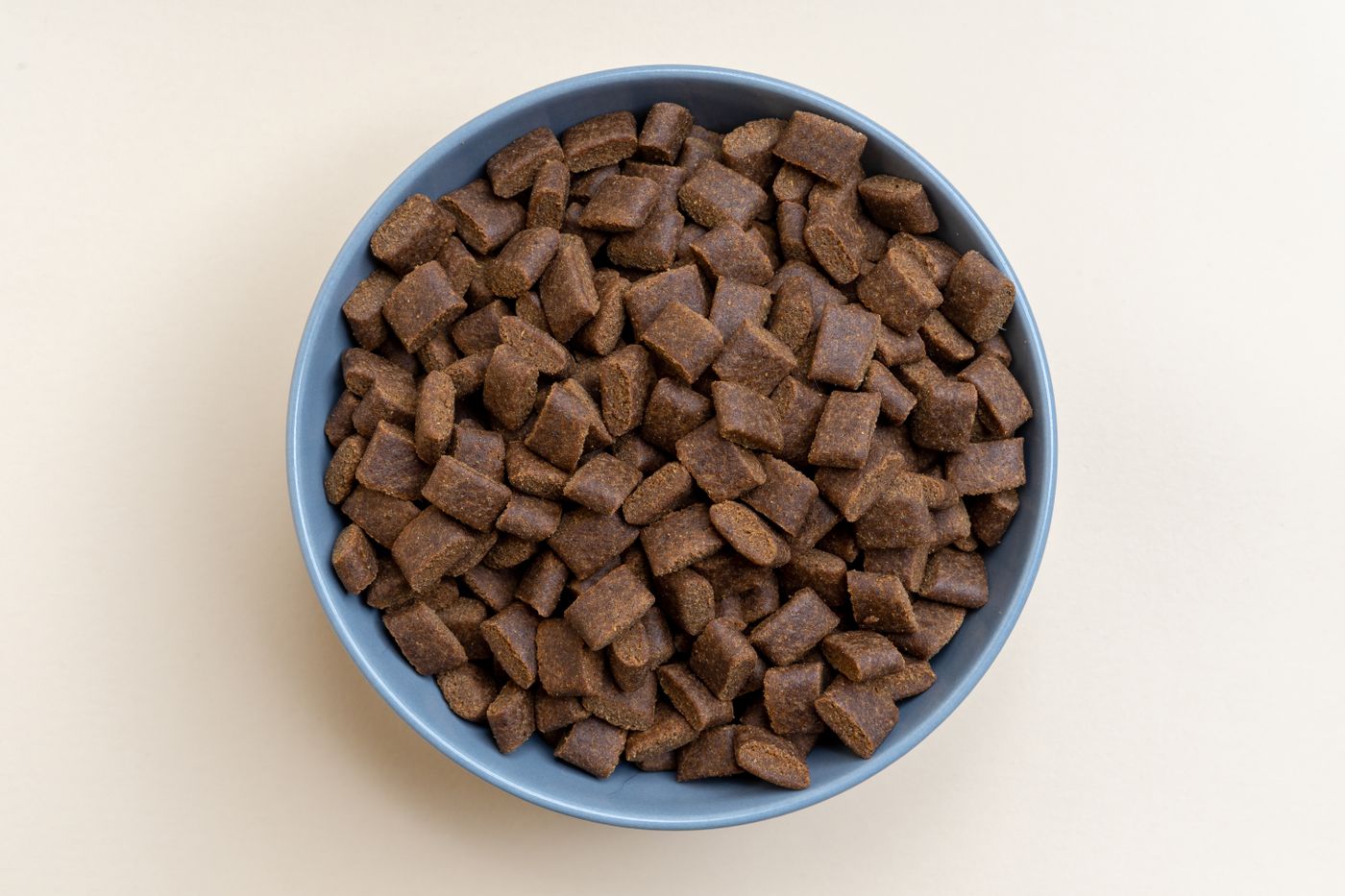
Serve meals calmly and supervise the arrangement. Keep children away from the feeding spaces. Do not assume that dogs who play together will automatically feel comfortable sharing food or finishing at different speeds. An empty bowl does not mean the faster eater should be released to inspect the other meal.
Wait until each dog has finished and moved away before removing bowls and reopening shared access. If one dog leaves food, manage that space so another cannot rush in. Avoid encouraging swapping, competition or taking turns from a single bowl as a relationship exercise.
Include treats and feeding toys in the plan
The same separation may be needed for food-filled toys and valued chews, not only meals. These items can last longer and be carried into other rooms, so supervise and remove them safely when the activity ends. Do not leave dogs together with valued food items simply because ordinary breakfast has been uneventful.
Respond to tension without testing again
If you see freezing, hovering, blocking or growling, increase management and seek qualified advice. Do not punish the warning or stage another meal to test the response. Record the circumstances for a veterinarian or behaviour professional if needed. A workable setup should reduce competition before it develops, with each dog able to eat at their own comfortable pace.