Plan around the meetings you cannot interrupt
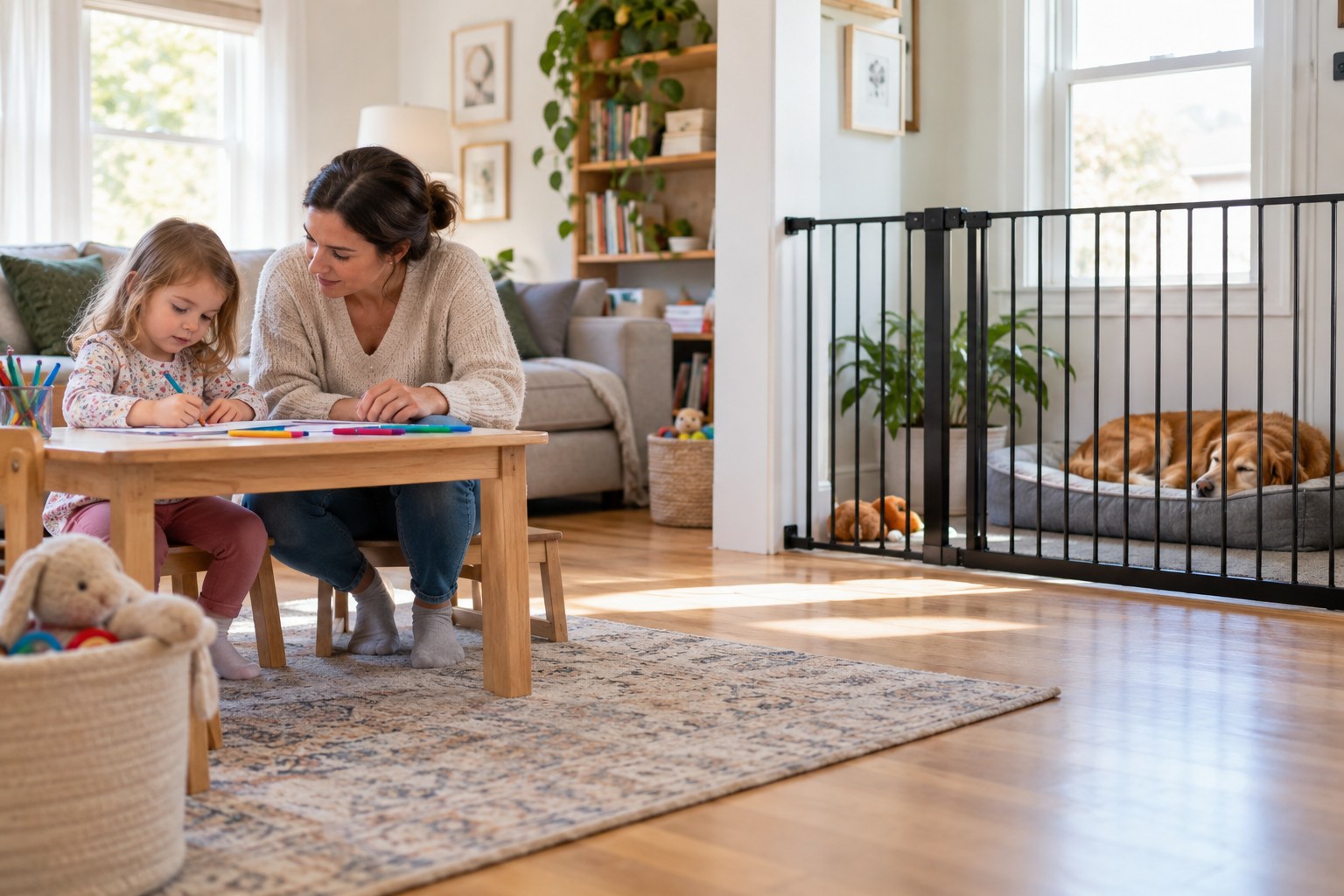
Look at your calendar before the day starts. Arrange a suitable toilet outing and essential care before a long call, then choose a resting area where your dog can remain comfortable. Keep water available and remove cables or work materials that could create a problem while your attention is on the screen.
Do not schedule the dog’s needs entirely around unexpected gaps between meetings. A written pause in the calendar is more reliable than hoping the afternoon stays quiet. If the workload prevents adequate care, arrange help rather than treating the dog’s interruptions as a training failure.
Make nearby rest an ordinary option
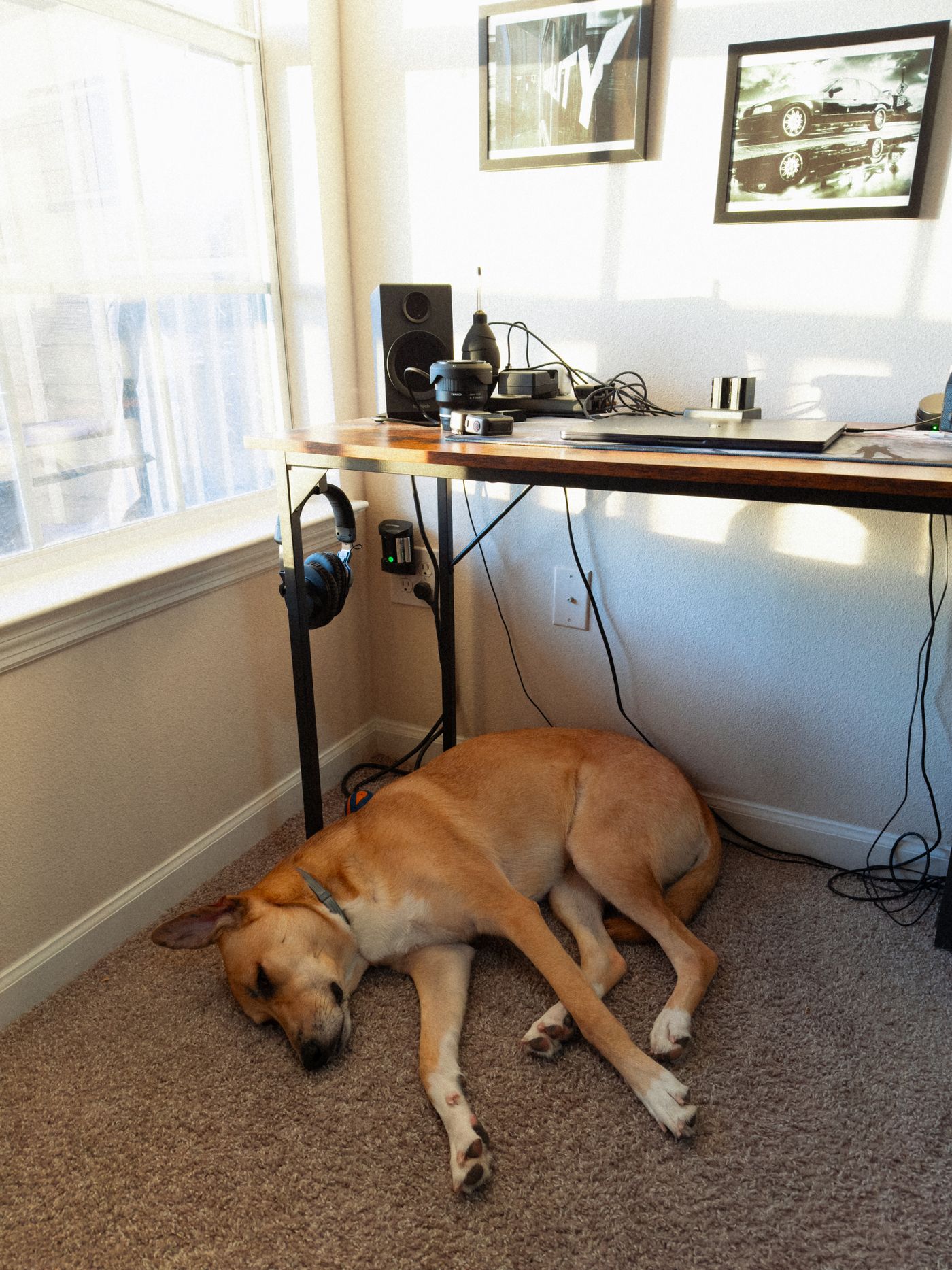
A bed beside or near the workspace may help a dog that enjoys company, provided it is not in the path of a rolling chair. Reward voluntary settling when appropriate and then let rest remain undisturbed. Constantly checking, talking or offering another activity can interrupt the quiet moment you wanted to create.
Use enrichment only when you can provide the supervision that activity needs. A food toy is not automatically suitable for an unattended video meeting, especially if the dog damages or swallows pieces. Choose familiar, safe arrangements and pause work when a change in the dog’s behaviour needs attention.
Keep breaks purposeful and sustainable
Use a break for a toilet opportunity, an appropriate walk or a short shared game rather than trying to exhaust the dog between calls. The right activity depends on the dog and the rest of the day. Leave time for a calm transition back to work instead of ending every pause in a rush.
If the dog struggles whenever you are unavailable, look at the whole routine and seek individual advice where needed. Being physically home does not resolve every separation or attention-related difficulty. Make arrangements that will also work on days when you leave the house, so a return to office work does not suddenly remove all familiar care and company.