Choose a route you understand in daylight
Use paths where you know the kerbs, crossings and likely bottlenecks. A route that looks quiet after dark may have poor sight lines or no easy passing space. Avoid unfamiliar shortcuts and places where you cannot judge the ground clearly. Your own comfort with the setting matters as well as the dog’s.
Think about the return time before leaving. A park entrance may close or a lit route may become deserted. Choose a short alternative in advance so you are not making route decisions while also trying to see the dog, handle the lead and check a map.
Arrange light without creating a distraction
Use suitable visible or reflective equipment and check that it does not alter the fit of the dog’s harness or collar. A light attached to equipment should not dangle where the dog can chew it or where it interferes with movement. Check batteries before the walk, not at the darkest section.
Carry a light that helps you see the ground while keeping a secure grip on the lead. Avoid shining it directly into the dog’s eyes or towards other walkers. Reflective gear makes sense alongside careful route choice; it does not make a road crossing safe without the usual observation and judgement.
Give surprises more room
Allow extra distance from shadows, unexpected noises and people emerging from entrances. A dog may respond differently to a familiar object when the lighting changes. Pause or move away rather than pulling the dog closer to demonstrate that nothing is there.
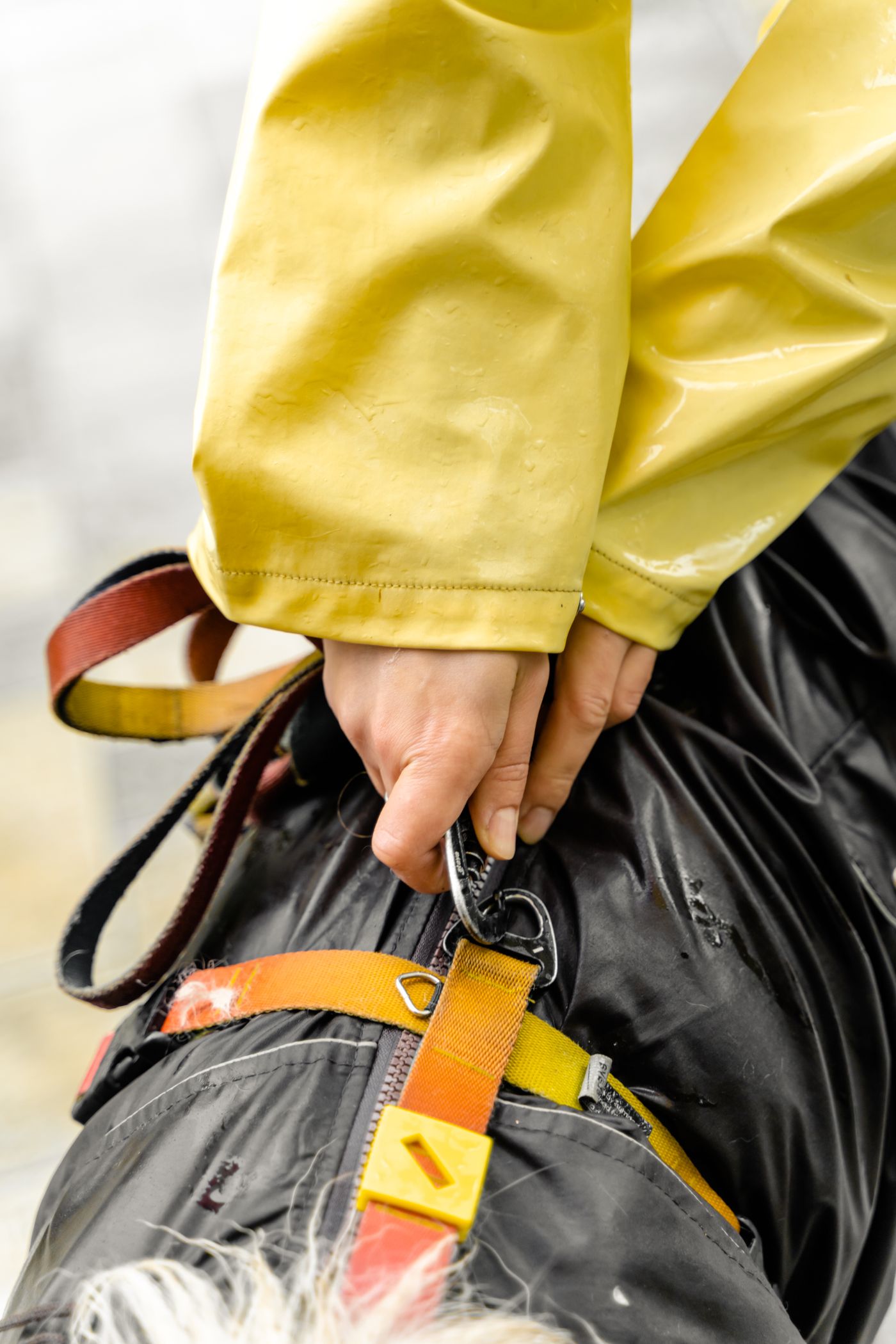
Keep the lead at a length you can manage without tangling around street furniture or passing people. Let the dog sniff appropriate places that you can inspect, while avoiding litter or vegetation you cannot see well. If the walk feels increasingly difficult, head back by the simplest route. Afterwards, check which areas were genuinely useful and adjust tomorrow’s timing where possible. A predictable short outing can be more comfortable than recreating a daytime walk in much poorer visibility.