
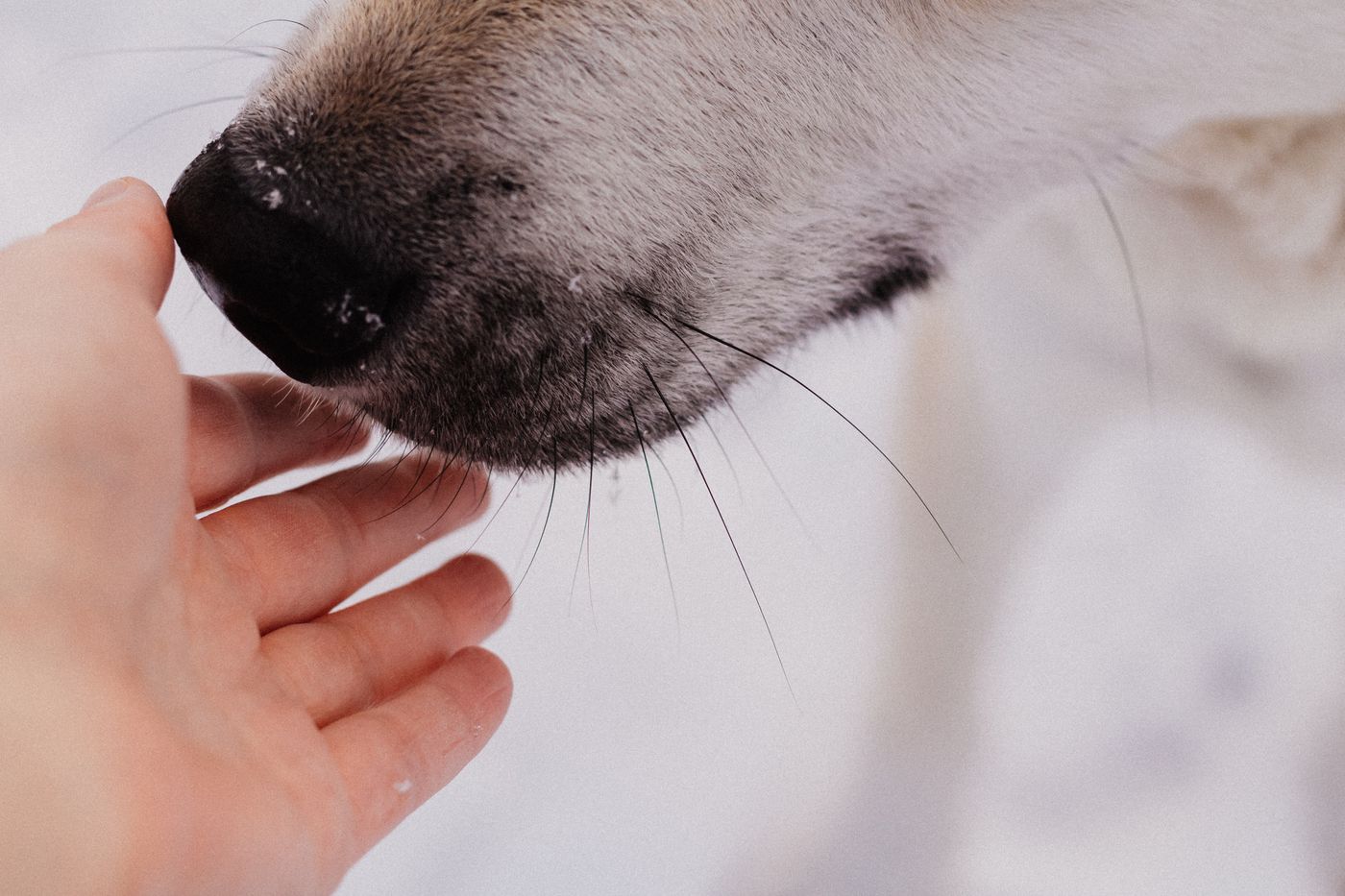
Make the first target easy to discover
Hold an empty open hand a short distance beside your dog's nose, with your fingers relaxed. Keep it still and low enough to reach comfortably. Many dogs will investigate a nearby hand; mark a voluntary nose touch and reward from your other hand. Present the target briefly, then remove it. Do not chase the dog's face or push the palm forward until contact becomes unavoidable. The touch should be the dog's action.
Reward contact rather than hovering
After a few easy successes, notice the difference between looking at your palm and actually touching it. Mark the nose contact clearly. If your dog does not investigate, move the hand away and try an easier position later. A hand held above the head may encourage jumping, while one placed too close can feel intrusive. Keep your fingers clear of the mouth and use an open palm rather than inviting nibbling at hidden food.
Add the cue after the pattern is familiar
Once the dog readily touches your offered hand, say a short cue such as “touch” just before presenting it. Continue rewarding the response. Change only one part of the setup at a time: offer the other hand, move it slightly to one side or take a small step. Keep the target reachable. Asking for a long approach before the dog understands the nearby version makes the new word less informative.
Use the skill for friendly invitations
A hand target can help invite your dog a step away from a doorway or toward a useful standing position. Practice these uses in easy settings first. It should not lure the dog into something they find frightening, such as trapping them for unwanted handling. If your dog declines, reconsider the situation rather than tapping their nose or repeating the cue rapidly. Maintain the skill with occasional simple rewarded touches outside demanding moments.


