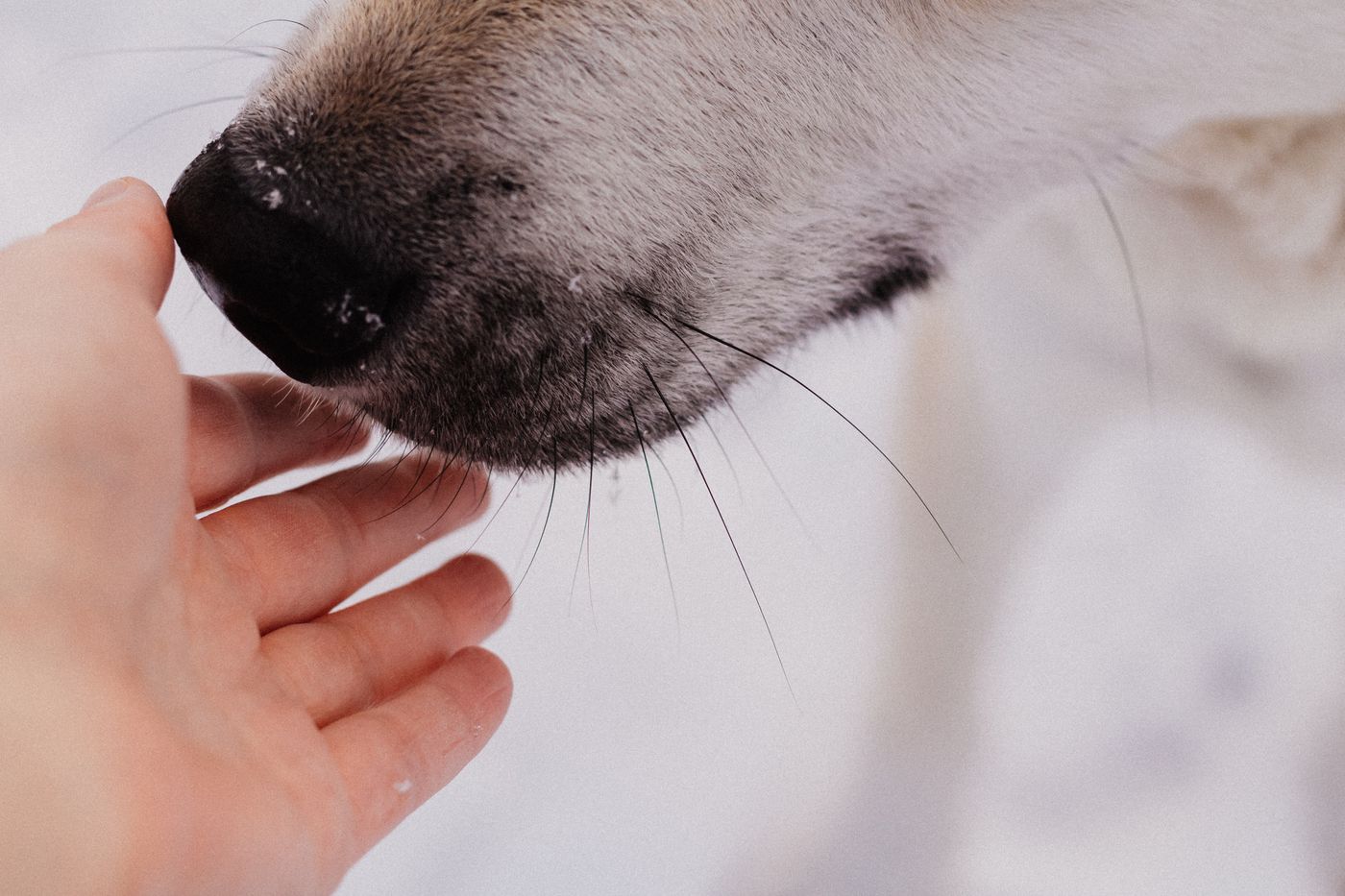
Watch the response, not the packet
Offer a small piece of your dog's usual suitable food in a quiet room. Notice whether they take it readily and return with interest. On another occasion, offer a brief game with a familiar toy. Compare these responses without waving several choices in the dog's face at once. A reward should be comfortable to receive; enthusiastic petting is a poor choice when the dog moves away from your hand. For dogs with dietary restrictions, work within the plan agreed with their vet.
Match the reward to the job
For repeated easy steps, small food rewards can be quick to deliver without interrupting the exercise. A toy may suit a dog who enjoys a short play break, but a vigorous game can make a quiet settling exercise harder. Access to a safe sniffing patch can reward walking with you. The useful question is whether your choice helps the dog repeat the behavior you are teaching, not whether it looks generous to a person.
Expect the setting to matter
A dog who readily takes ordinary food indoors may find a busy pavement too distracting. Move somewhere easier before reaching for increasingly exciting rewards. Refusing food does not automatically mean stubbornness or that a better treat will solve the situation. Check distance from activity, footing and general comfort. Keep a brief note such as “usual food worked in the garden; traffic corner was too much” so you can change the next practice location.
Keep rewards available and predictable
Prepare a small portion before starting so the useful moment does not pass while you search a cupboard. Count food used in practice within the dog's ordinary allowance rather than adding unlimited extras. Once a skill becomes familiar, enjoyable access and other suitable rewards can join food, but avoid abruptly removing everything the dog values. Continue noticing preferences: the toy loved yesterday may be less appealing when your dog is ready for a nap.