
Prepare a comfortable destination nearby
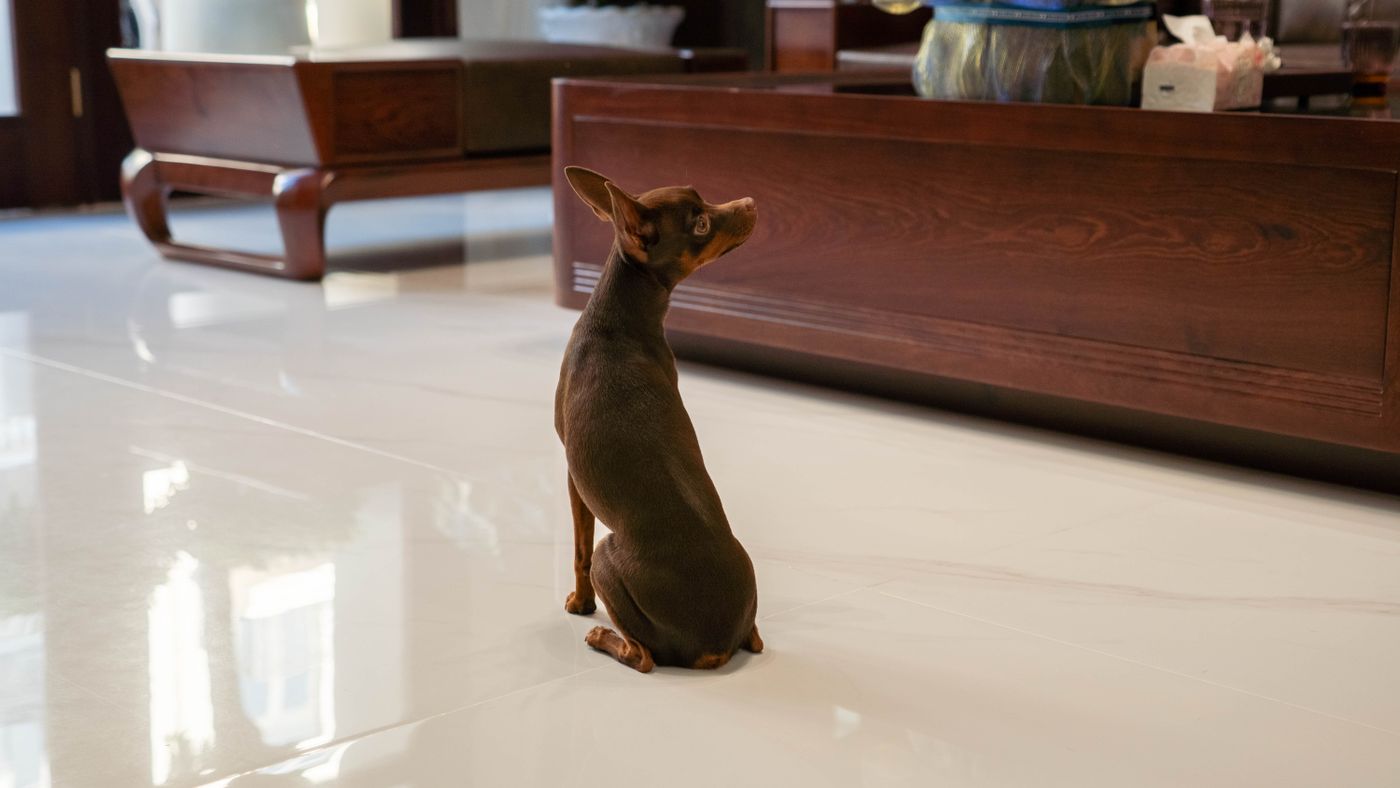
Place a stable mat or dog bed close to the sofa, with clear non-slip footing between the two. Teach approaching that spot while the dog is already on the floor. Reward arriving and spending a brief comfortable moment there. This gives “off” somewhere useful to lead, rather than merely removing access to a favored place. Check that getting down is physically comfortable; a dog who hesitates or seems awkward may need veterinary advice and a different arrangement.
Invite movement while the situation is calm
Practice when the dog is awake and relaxed, not deeply asleep or worried about being approached. Use a familiar hand target or a suitable reward to invite movement toward the floor destination. Mark and reward once all paws are safely down. Avoid pulling a collar, pushing the body or tipping cushions. If the dog does not move willingly, stop and review the setup rather than escalating the request into a confrontation.
Add a cue and keep the outcome worthwhile
When the movement is easy to predict, say a short cue such as “off” before the familiar invitation. Gradually reduce the visible lure while continuing to reward the response. Sometimes invite the dog back onto permitted furniture afterward, so getting down does not always mean permanent exclusion. If furniture is not available to the dog, maintain a consistent comfortable alternative and manage access when unsupervised. Training becomes confusing when household rules change with the person present.
Use management when a quick answer is needed
Before visitors arrive or cleaning begins, arrange the room so the dog can rest elsewhere without being repeatedly moved. If the dog stiffens, growls or protects the sofa, give space and seek qualified behavior support rather than rehearsing exchanges at close range. Do not punish a warning or ask children to move the dog. Adults should handle arrangements and keep a safe distance while developing an appropriate plan.


