
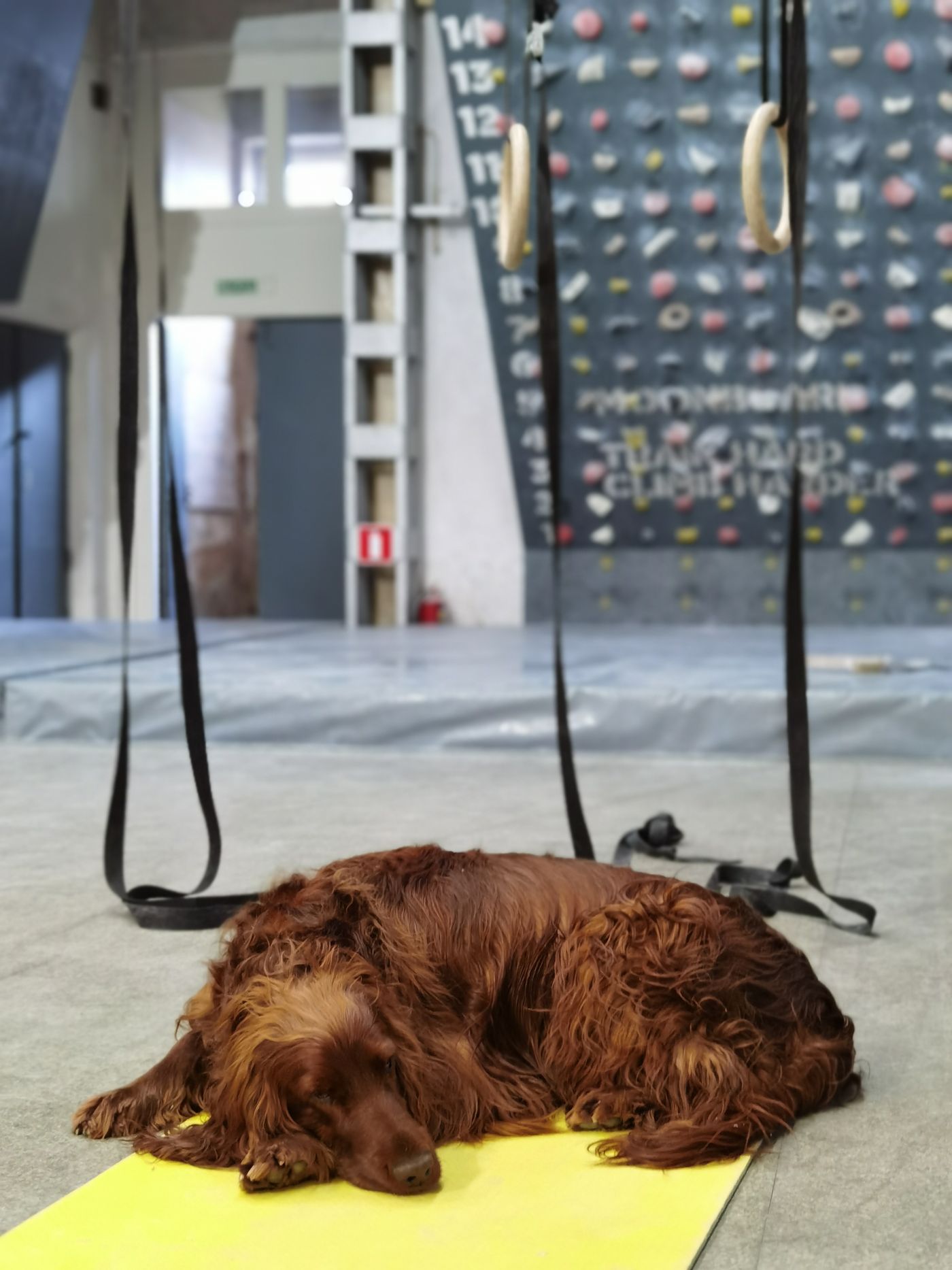
Choose a portable surface that stays put
Use a mat large enough for your dog to lie comfortably, with a base that does not slide on the floor. Place it in a quiet area with room to step off in any direction. Reward looking at or approaching the mat, then paws on it. Let the dog leave between attempts. Do not physically place them on the surface or block every exit; voluntary returns help the mat become a useful destination.
Reward ordinary relaxed moments
When your dog readily stands on the mat, wait for a comfortable sit or down if they offer one. Place a reward calmly between the paws or where it can be reached without scrambling up. Build brief pauses rather than demanding perfect stillness. A dog looking alertly at you for the next instruction is participating, but may not yet be relaxing. Keep your movements quiet and avoid turning every small shift into another exciting event.
Add a small amount of everyday activity
Once a brief rest is familiar, sit nearby with a book or take a small step and return. Reward continued comfort without stretching the exercise beyond what the dog can manage. If they leave, consider whether they need water, a toilet opportunity or simply a break. Start the next attempt more easily. The mat should not prevent normal needs or become a place where frustration builds while everything interesting happens elsewhere.
Take the familiar mat to an easy new place
Begin with another quiet room before trying a cafe or busy family visit. Lower your expectations in the new location and keep the first session short. Position the mat away from foot traffic and doorways so people do not repeatedly step over the dog. If the environment is too much, leave rather than keeping the dog there on a tight lead. A mat is a learned comfort cue, not a guarantee of relaxation everywhere.


