
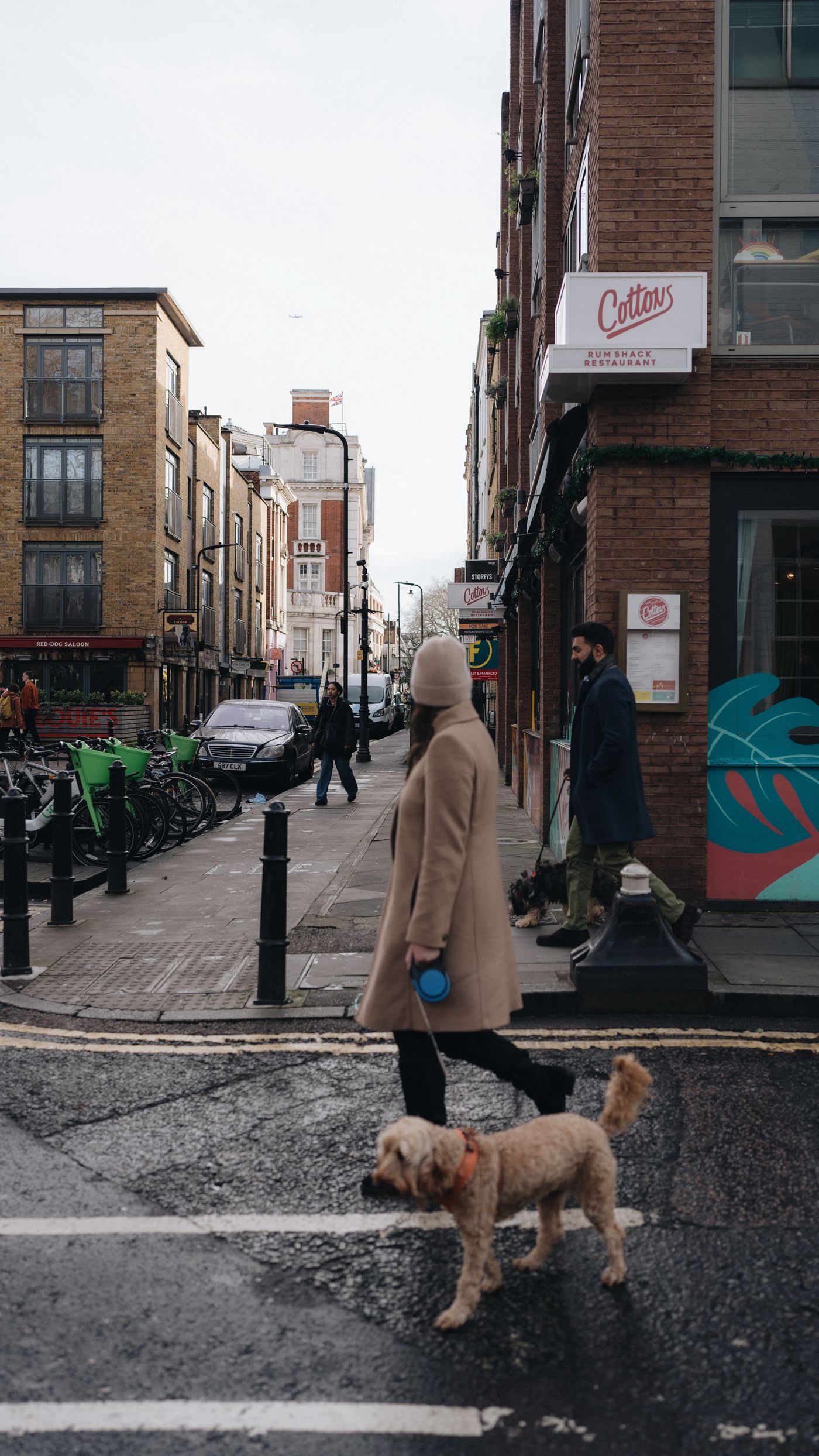
Practice the turn away from distractions
Begin on a broad quiet path or in a secure open area. With your dog nearby and the lead slack, say a cheerful phrase such as “this way,” turn gently and take a few steps. Reward when the dog follows. Keep the angle easy at first rather than making a sudden tight pivot. Your pace should invite movement, not jerk the dog off balance. Check that the space behind you is clear before moving.
Let your body make the cue clearer
Use the same small sequence: word, turn, several steps, reward. A slight bend in your route can be easier than a full reversal while the dog is learning. Reward at your side so the new direction becomes worth following. Practice turns in both directions when the space allows, taking care not to tangle the lead. Avoid waving food directly against the dog's face until they move; give the learned cue an opportunity to work.
Use the turn before pressure builds
If you notice a crowded pavement ahead, turn while your dog can still respond comfortably. A familiar maneuver is easier than inventing one when another dog is already very close. Keep your attention on safe footing and traffic as well as the dog. Where a full turn is impractical, step into a wider area or cross only when safe. The training supports your route choice; it does not replace awareness of the surroundings.
Keep the cue from becoming an emergency alarm
Include ordinary rewarded turns during easy outings so the phrase does not always predict something worrying. If your dog cannot follow, create distance as safely as possible without repeated shouting, then choose an easier practice setup later. Dogs who repeatedly struggle around traffic, people or animals may need individual professional support. Do not use the turning exercise to move closer to a trigger again immediately and test whether the dog can cope this time.


