
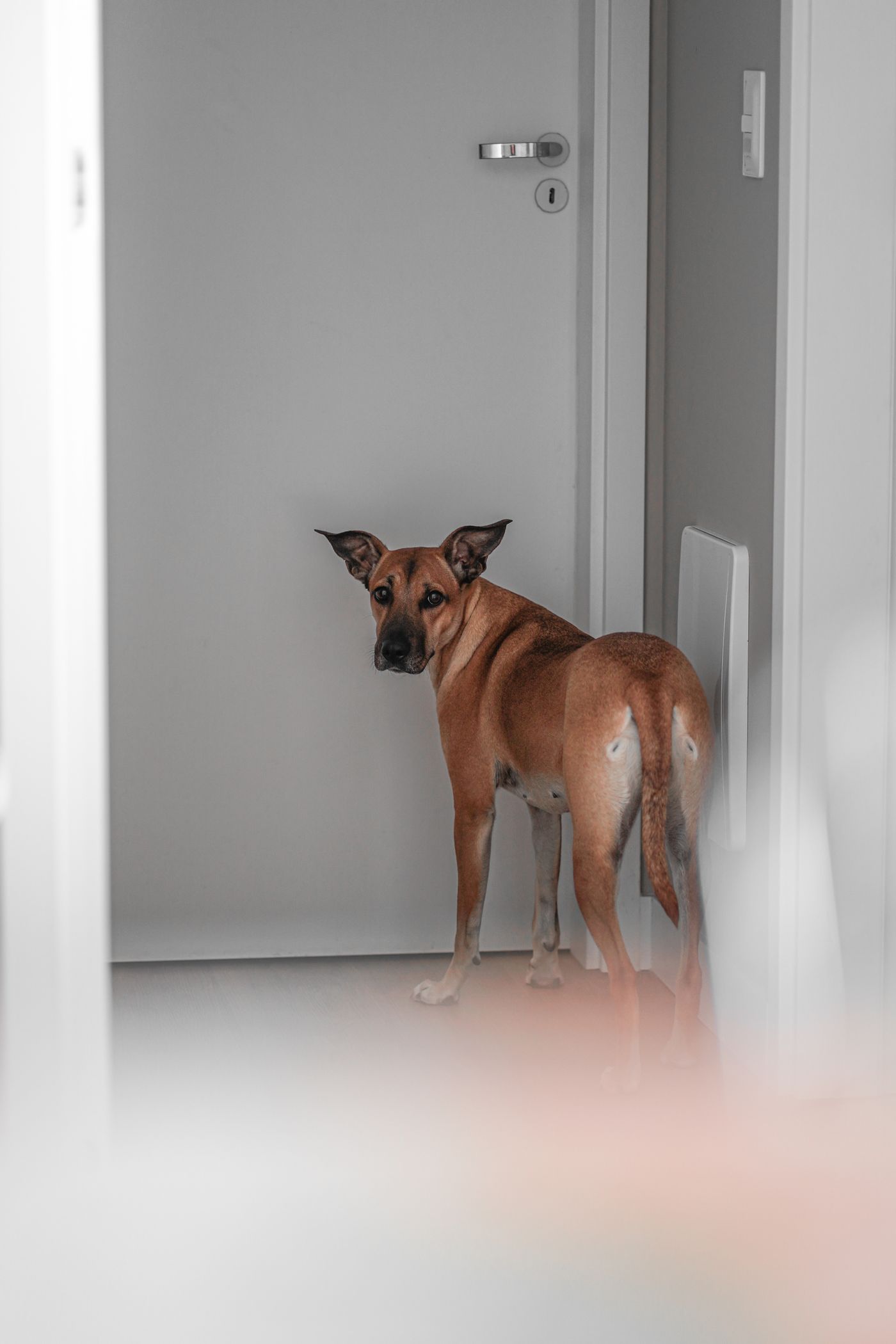
Use an internal door for the first lesson
Choose a quiet doorway within the home, where a mistake will not lead to a road or open garden. Stand with your dog at a comfortable distance and reward a moment of stillness. Move your hand toward the handle, return it and reward again. This breaks the departure into small pieces. The dog can stand or sit; focus on the pause rather than arranging a precise posture beside the frame.
Open only as much as the dog can manage
Try a tiny movement of the door, then reward before the dog moves through. Gradually make the gap larger while keeping the pause brief. If the dog approaches, reset calmly and make the next attempt easier. Avoid swinging the door toward their face or paws to block movement. The exercise should not turn the doorway into a repeated surprise or a contest over who can get through first.
Give a clear invitation to move
Use a release or walking cue when you are ready to pass through together. Reward on the other side or continue into an ordinary activity. Practice both waiting and moving so the dog understands the complete sequence. Do not leave them guessing while you repeatedly touch the handle for no reason. A few organized repetitions are enough before returning the doorway to normal use. Add carrying a light bag only after the simple version works.
Keep external departures physically secure
At an outside door, fit appropriate walking equipment before opening and use a barrier when necessary. Check who is handling the dog and where other household members are moving. Deliveries, visitors and dropped objects can disrupt even familiar routines. Do not test a stay with the lead removed beside traffic. If the departure is hectic, use a separate secure space while you organize it, then bring the dog through in a calmer moment.


