
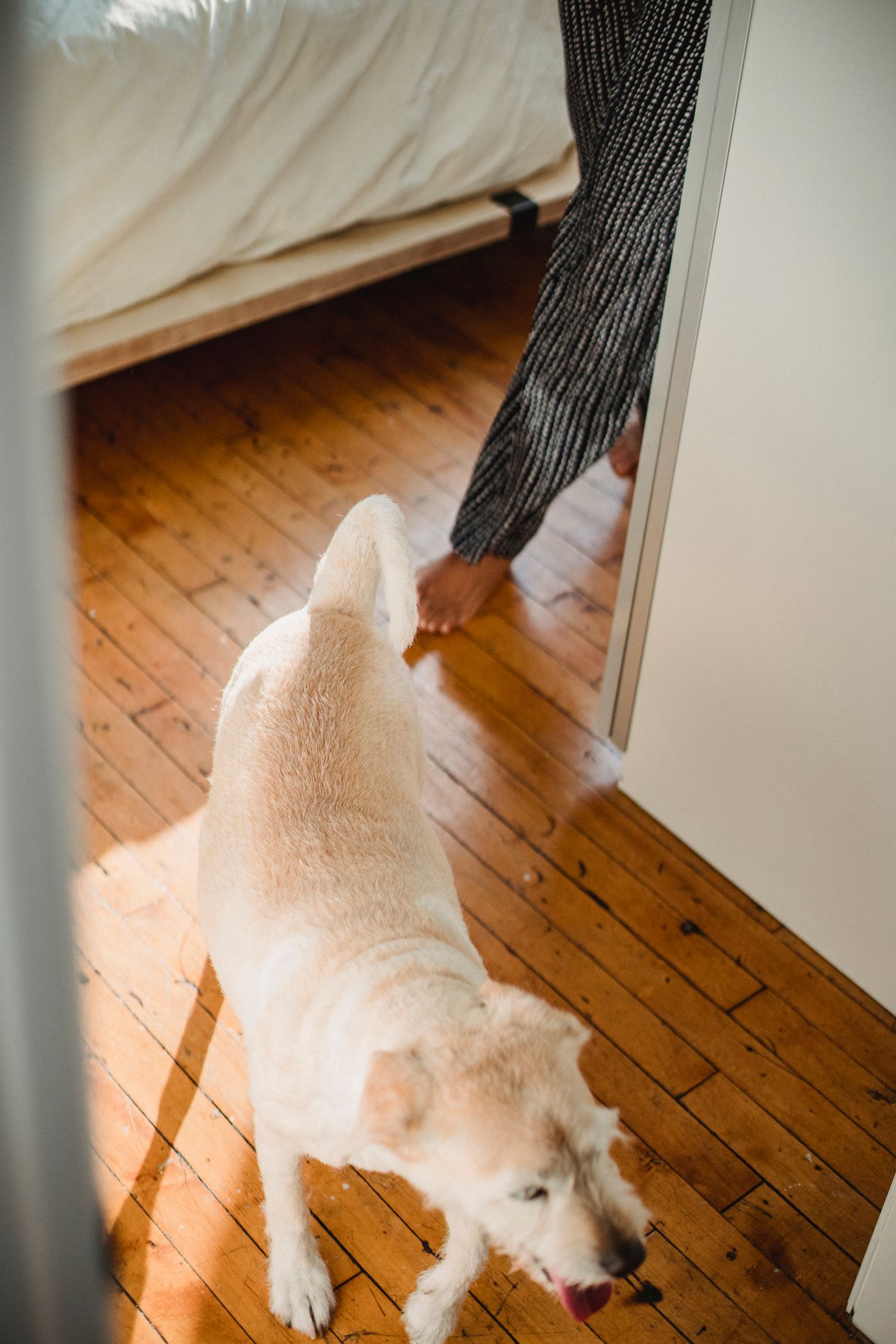
Choose an easy moment to invite movement
Start when your dog is awake, comfortable and already likely to approach. Stand a short distance away with a suitable reward ready. Use a cheerful recall word once as the dog begins moving toward you, then reward close beside you. This pairs the word with a successful journey. Avoid starting while the dog is asleep, absorbed in a meal or trying to get away from something uncomfortable. Your first lesson should not compete with a difficult situation.
Make arriving beside you worthwhile
Deliver the reward close enough that the dog actually reaches you rather than stopping halfway. Keep your body welcoming and avoid looming forward to grab a collar. After rewarding, allow the dog to move away again. You can rehearse a brief comfortable collar touch separately, but do not add unexpected restraint to every return. The complete behavior is approaching and arriving safely, not merely looking up when a word is called.
Add a little distance within the room
Move a few steps farther away after several easy returns. Keep doors to distracting spaces closed and give the dog a clear path. If they hesitate, step closer or turn slightly sideways rather than repeating the cue louder. Another person can help keep the setting quiet, but should not hold the dog tightly and create a struggle before release. Voluntary movement keeps the game easier to understand and share.
Keep the indoor skill enjoyable
Practice a small number of returns in different quiet parts of the home. Avoid calling the dog only for baths, nail care or the end of something they enjoy. If you must collect them for an activity, approach calmly instead of using an unfinished recall cue as a trap. Indoor success is a starting point, not evidence that outdoor recall is ready. Continue using suitable leads and secure spaces while gradually teaching in more distracting environments.


