
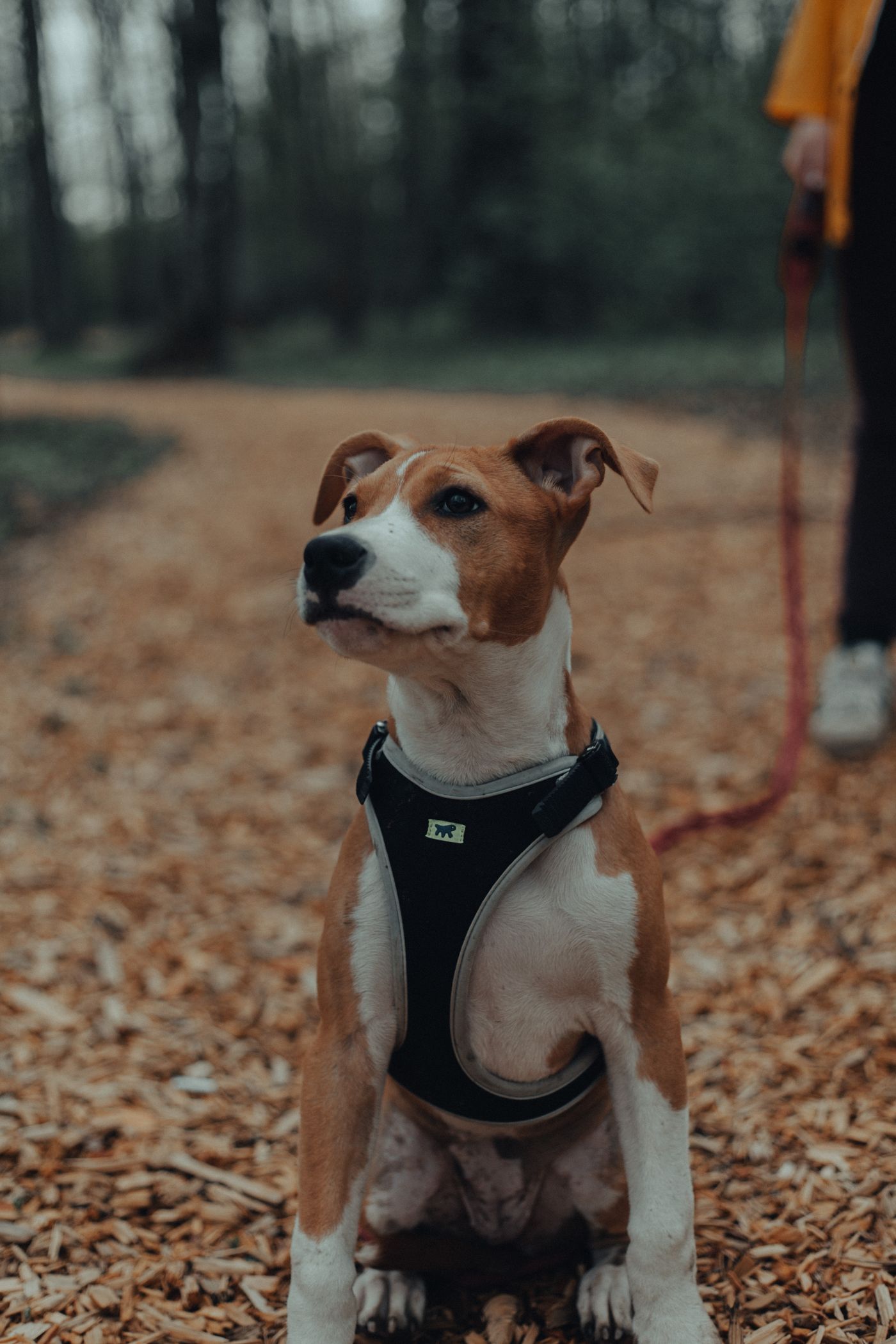
Notice the attention already happening
On a quiet familiar route, watch for your dog naturally looking back or turning toward you. Mark the moment and offer a suitable reward near your side. You do not need to call their name first. By rewarding a choice they made, you give occasional contact with you a useful history. Keep your own attention available; it is easy to miss these small glances while checking a phone or talking continuously.
Deliver the reward without tangling the walk
Pause in a safe spot if needed, with the lead arranged away from your feet. Reward at a comfortable height and allow the dog to look away again. Avoid holding food beside your face for long stretches, which teaches a different exercise and can make ordinary walking awkward. The goal is a shared connection that fits exploration. A glance can be enough information to coordinate a turn or move toward a quieter patch of ground.
Use the environment as part of the reward
After a check-in, you might invite your dog to investigate a safe verge or continue toward a favored sniffing spot. This makes attention to you compatible with enjoying the surroundings. Do not use every glance to end exploration or drag the dog away from something harmless. Where a situation requires movement, give a familiar cue and choose a clear route. Check-ins support communication, but they do not transfer responsibility for traffic awareness to the dog.
Adjust when the surroundings become absorbing
If your dog stops checking in on a busy stretch, consider the level of distraction before demanding more eye contact. Increase distance from activity and reward easy engagement in the calmer area. Keep walks varied enough for sniffing and ordinary looking around. A dog should not have to stare at you to earn every forward step. Notice whether your timing and the chosen route make shared attention easier, then repeat those useful conditions.


