
Start with very little to compete against
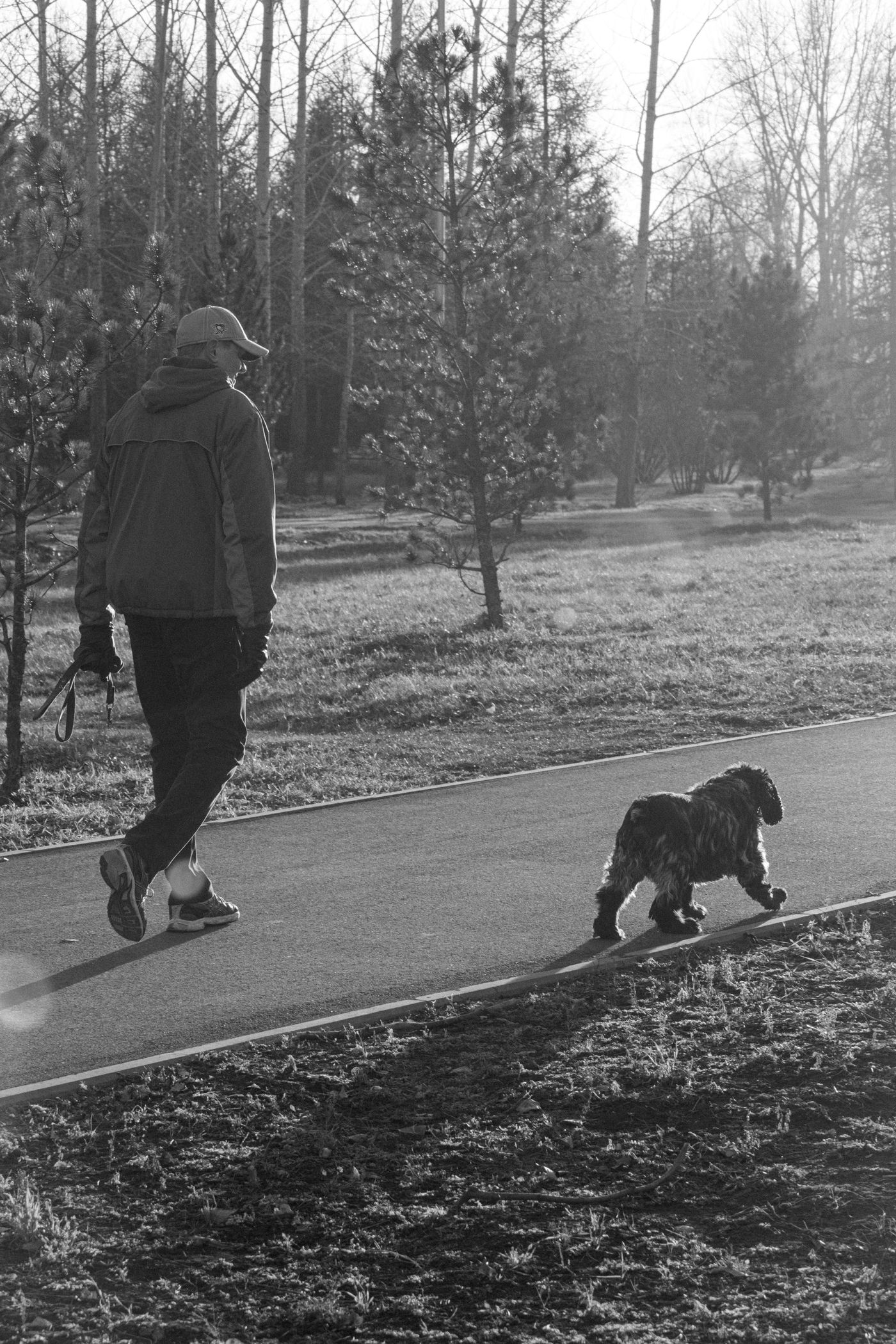
Choose a quiet room, driveway or suitable garden area with reliable footing. Fit comfortable walking equipment and prepare small suitable rewards. Stand with enough slack that the lead is not already pulling the dog into position. Reward being near you, then take one or two steps. The aim is a relaxed connection, not a formal heel with the dog's head fixed toward your leg throughout every outing.
Place rewards where you want the dog to arrive
Reward beside you when the dog moves with you and the lead remains loose. Feed from a comfortable height rather than making a small dog jump or a larger dog twist sharply. Begin with frequent rewards because several ordinary steps are already useful progress. If the dog crosses in front of you, stop safely and reset your position. Keep the lead clear of legs instead of using it to steer the dog through complicated turns.
Respond to tension by simplifying
When the line tightens, pause without jerking it and consider what pulled the dog's attention. Wait for an opportunity to move together with slack, or change direction toward an easier area. Reward the renewed connection. If every step immediately produces pulling, the setting is too difficult for useful practice. Move closer to home, increase distance from activity or practice at a quieter time. Simply repeating stops for an entire frustrating walk does not guarantee clearer learning.
Allow exploration alongside practice
Use short stretches of walking together between suitable sniffing stops. A dog does not need to ignore the surroundings to walk politely. You can use a familiar release to indicate that reaching a safe verge is available, while still managing roads and other animals. Gradually extend the number of easy steps as the dog succeeds. Keep essential daily outings manageable with quieter routes rather than expecting the unfinished skill to carry every difficult situation.


