
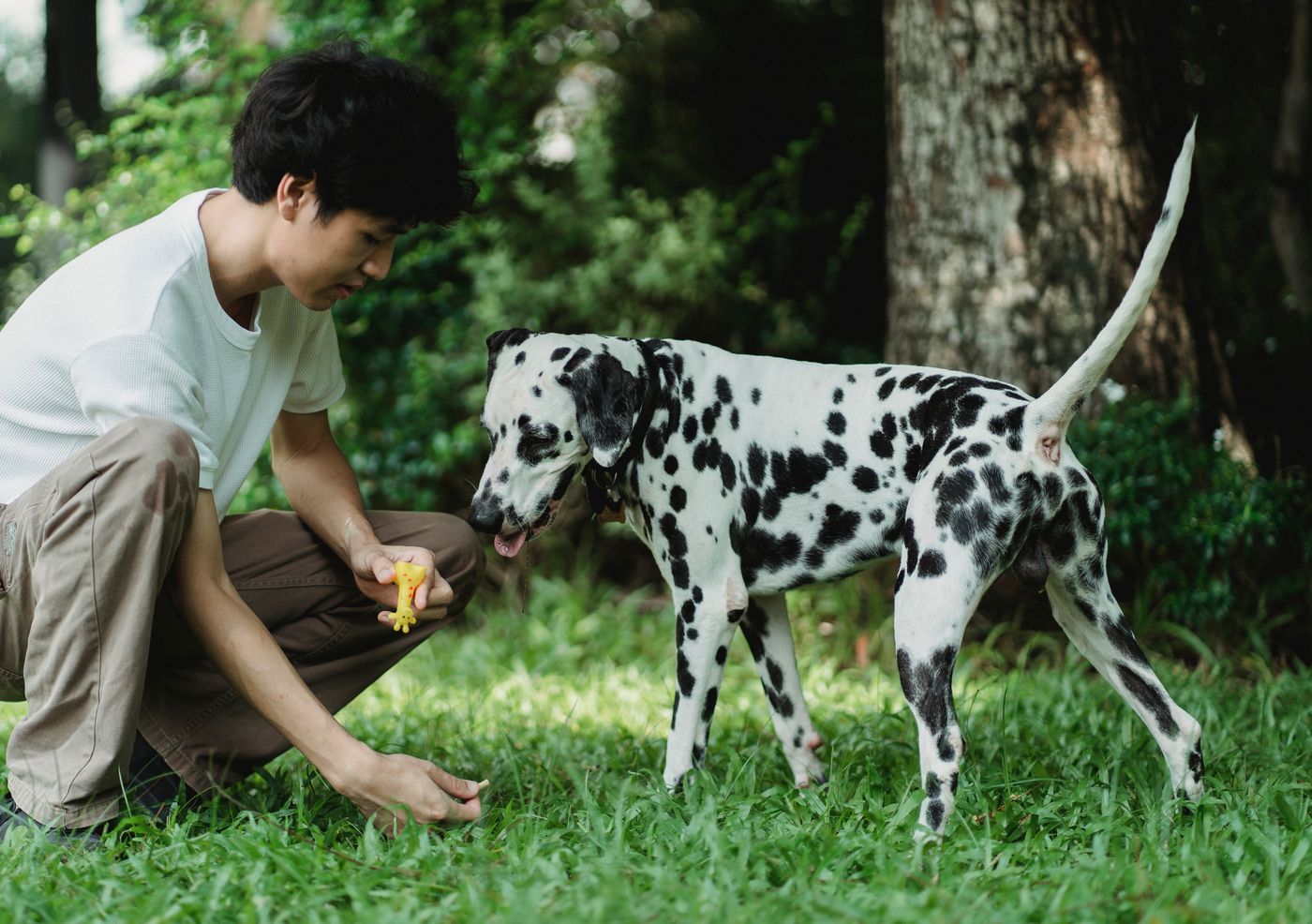
Start with secure footing and an easy posture
Choose a non-slip mat in a quiet place where the dog can stand comfortably. Reward standing near you before adding touch. Keep your own position beside the dog rather than leaning over their back. If a sit or lie-down happens, allow it and reset without lifting the body into place. The purpose is a cooperative moment for simple care, not holding a rigid stance while the dog struggles to understand.
Introduce one small touch
Move a hand toward an area your dog already accepts being touched, such as the shoulder. Briefly touch, remove your hand and reward. Start with less contact than you think is necessary. Watch the whole dog for changes in posture, movement and engagement. If they step away or become tense, stop touching. At the next session, make the movement smaller or begin from farther away rather than following them with your hand.
Keep body areas as separate lessons
Comfort with a shoulder touch does not automatically extend to paws, ears or a brush. Introduce new equipment and locations gradually, with opportunities to investigate first. A few easy repetitions are more useful than progressing around the entire dog in one session. Avoid trapping the dog between your body and furniture. Give them room to turn away, and reward returning voluntarily when they choose to do so. Participation should remain a real option.
Use the practice honestly during care
Before wiping a small muddy patch, briefly rehearse the familiar touch and see whether the dog remains comfortable. Pause between actions instead of using the trained stance to complete everything without interruption. Pain, established handling fear or aggression requires veterinary assessment and appropriate professional support. Urgent medical care may need a different professionally directed approach. Ordinary practice should build comfort over time, not be presented as a way to avoid necessary veterinary help.


