
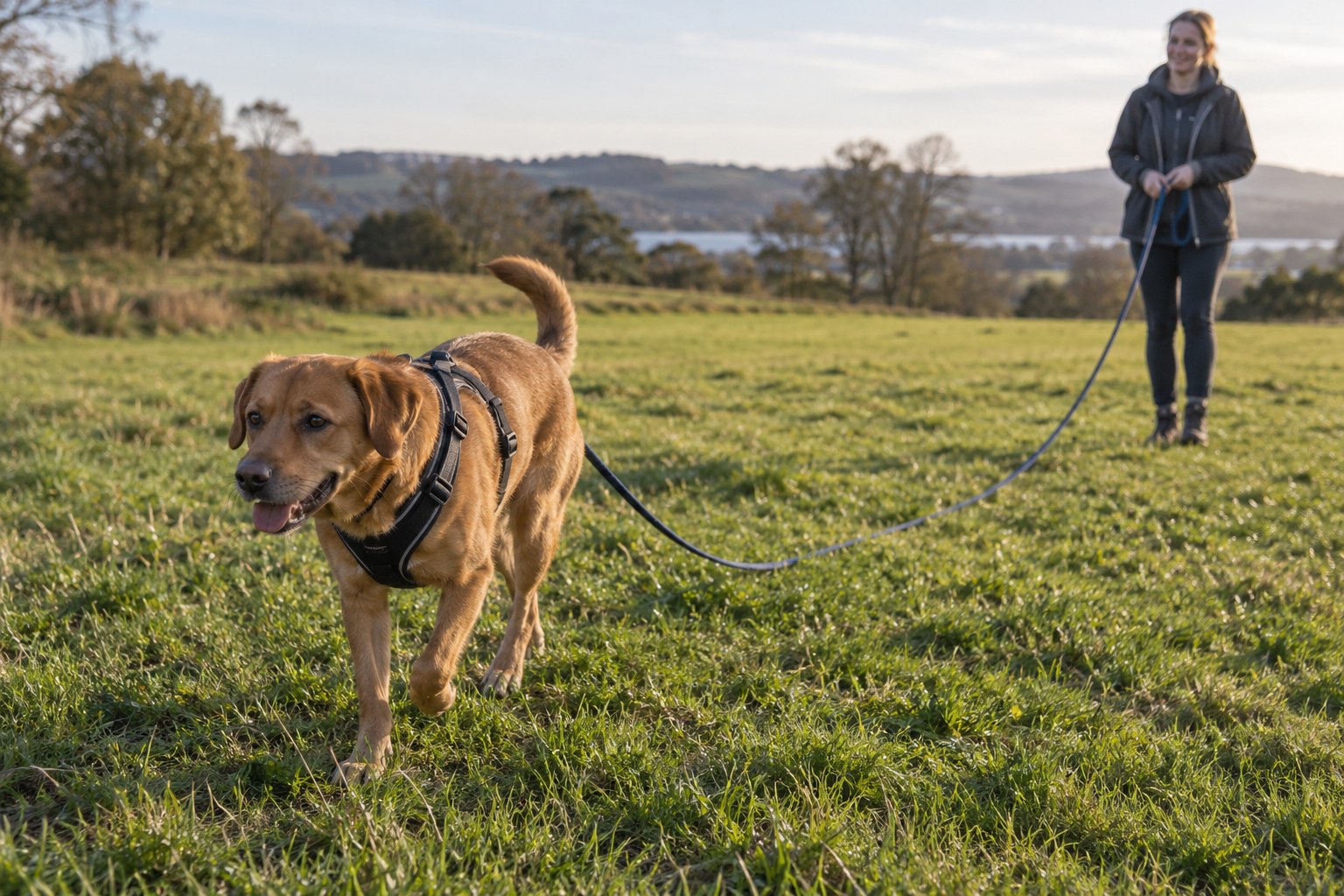
Choose equipment and ground together
Use a line you can manage comfortably and attach it to a well-fitted harness suitable for the purpose. Select a clear area away from roads, livestock, cyclists and groups of dogs. Check the ground for objects that could snag the line. A long line is not a good choice simply because a path is long; narrow busy routes leave little room to manage it. Follow the equipment maker's instructions and get practical fitting help if uncertain.
Rehearse handling before adding distance
Keep the line arranged so it does not wrap around your hands, legs or the dog's body. Wear suitable footwear and handle the material carefully to avoid friction injuries. Start with a modest working distance rather than using its full length immediately. Prevent the dog accelerating to an abrupt stop at the end. This is managed practice, not a way to physically reel a dog in after an ignored cue.
Call during an achievable moment
Wait for a pause in exploration and use the familiar recall cue once. Reward generously when the dog comes all the way back. Then, when appropriate, release them to explore again. If the dog is intensely focused on a distant animal, increase space and simplify the situation rather than repeatedly calling. Move closer while safely managing the line and reward renewed attention. Choose easier moments next time so successful returns remain the main experience.
Finish before handling becomes messy
Shorten the working distance when people approach and pause practice before the line creates a trip hazard. Do not allow dogs to wrestle or chase together while trailing lines that could entangle them. After the outing, inspect the line and harness for wear and remove mud according to care instructions. Keep using controlled spaces until you have assessed recall across realistic distractions; one successful afternoon does not make every off-lead setting appropriate.


