
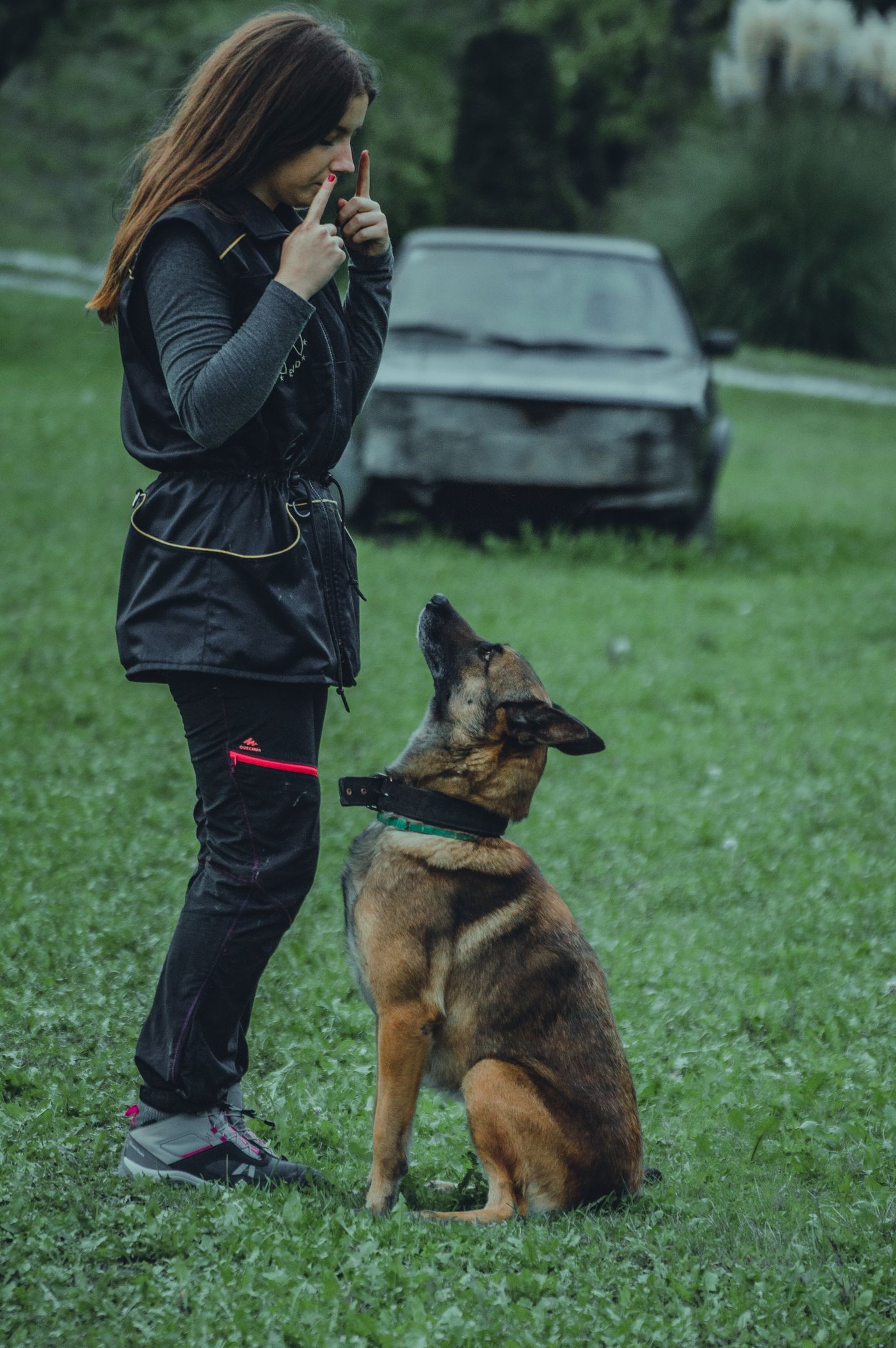
Begin where sitting is easy
Choose a non-slip surface with room for the dog to change position. A cold wet pavement may be a poor classroom even if your dog sits readily on a rug. Watch for a naturally offered sit and mark it as the dog's bottom reaches the floor, then reward. This approach avoids physically arranging the body. If sitting seems newly awkward or the dog repeatedly avoids it, discuss the change with your vet rather than practicing harder.
Guide gently if needed
You can hold a suitable reward near the nose and move it slowly a little upward and backward, allowing the dog to follow. Keep the movement small; holding food high overhead often encourages jumping. If the dog backs away or stretches instead, reset rather than pushing down on the hips. Some dogs find capturing a naturally offered sit clearer than following a lure. Choose the method that leaves the dog comfortable and successful.
Separate the cue from the food display
When the movement becomes familiar, introduce “sit” just before the action you can reliably predict. Gradually make the hand movement smaller and deliver the reward after the response instead of always displaying it first. Do not remove the reward simply because you are hiding it. Give a release or invite another easy movement between repetitions so the dog understands when each attempt begins and ends. Avoid rapid sequences that turn practice into repeated exercise for its own sake.
Use sitting selectively in daily life
A brief sit may help while you organize a lead, but standing quietly can be equally useful. Do not insist on sitting beside every passing dog, on an uncomfortable surface or when moving away would create needed space. Practice in a few easy locations before expecting the cue in a busy place. Reward clear responses and shorten the request when the setting changes, rather than repeating the word with increasing force.


