Look at preferences separately
Notice what each dog enjoys and how they rest after different activities. One may prefer a longer exploratory outing while another is comfortable with a shorter route and more pauses. Age, health, confidence and experience all matter. Avoid reducing the comparison to an energetic dog and a lazy dog, which can hide useful differences.
Ask your veterinarian about suitable activity when health or mobility is involved. Keep a brief practical note for each dog if several people share care. Individual information helps a helper choose an appropriate outing rather than assuming dogs living together have identical needs.
Create separate opportunities
Where practical, arrange some individual walks, play or gentle training. Plan support for the dog staying home so separation does not create another difficulty. If separate outings are not currently manageable, adapt shared routes with comfortable pauses and an easy return, then provide suitable individual activity at another time.
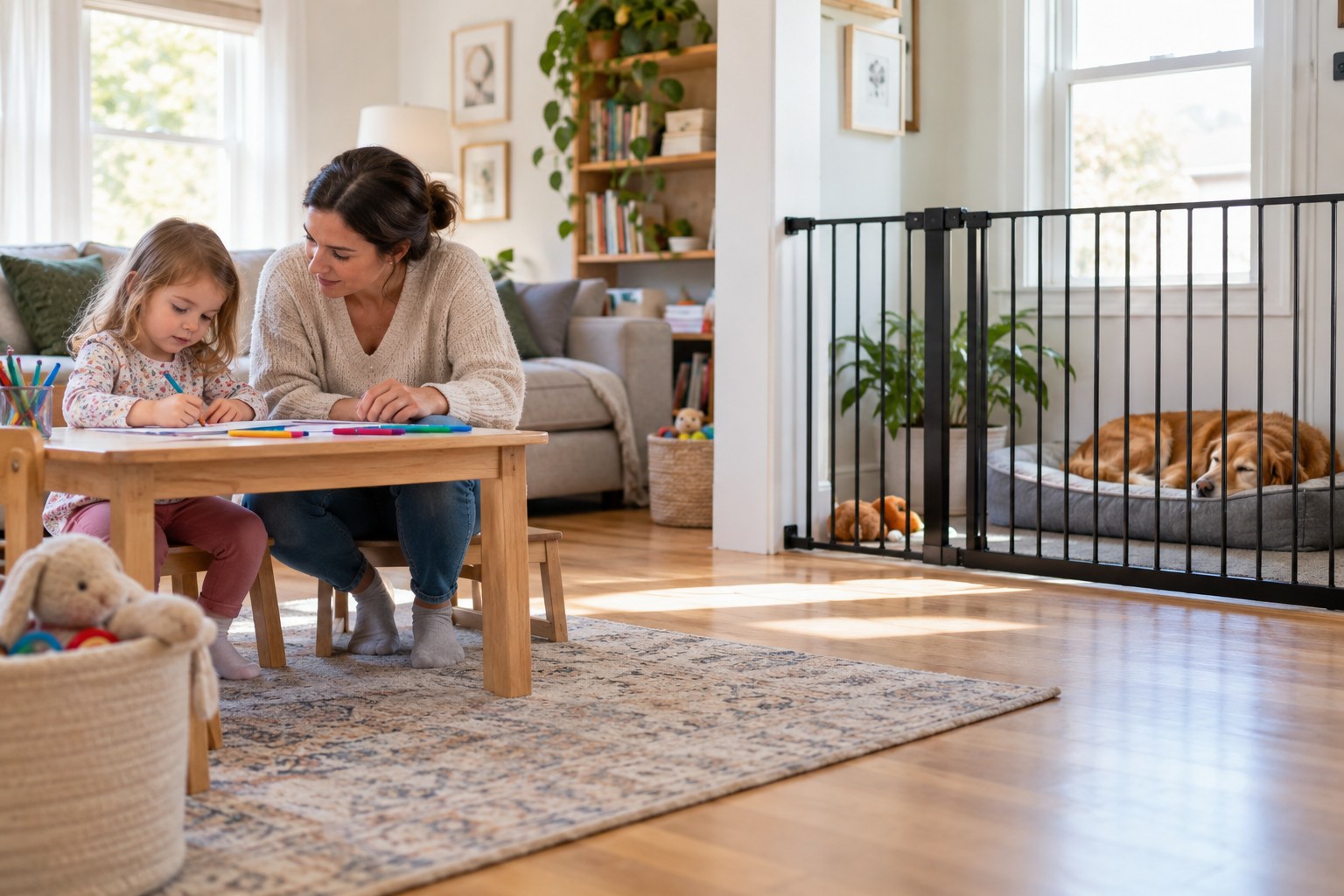
Use space or barriers appropriately for food activities and valued toys. A dog resting should not have to defend their bed from a housemate who wants to play. Supervise interactions and interrupt pressure by calmly creating distance, rather than expecting the quieter dog to enforce all boundaries.
Make shared time genuinely shared
Choose activities both dogs can enjoy comfortably, such as a quiet familiar route, relaxed company or separate beds in the same room. Watch for one dog repeatedly avoiding the other or being unable to disengage. Shared living does not require every activity to happen side by side.
Review the arrangement as needs change. A previously compatible pace may become unsuitable after a health change or a shift in confidence. Adjust responsibilities and ask for support rather than trying to tire one dog out enough to match another. A balanced household gives each dog access to appropriate activity and protected rest, while keeping the human workload realistic enough to maintain.