
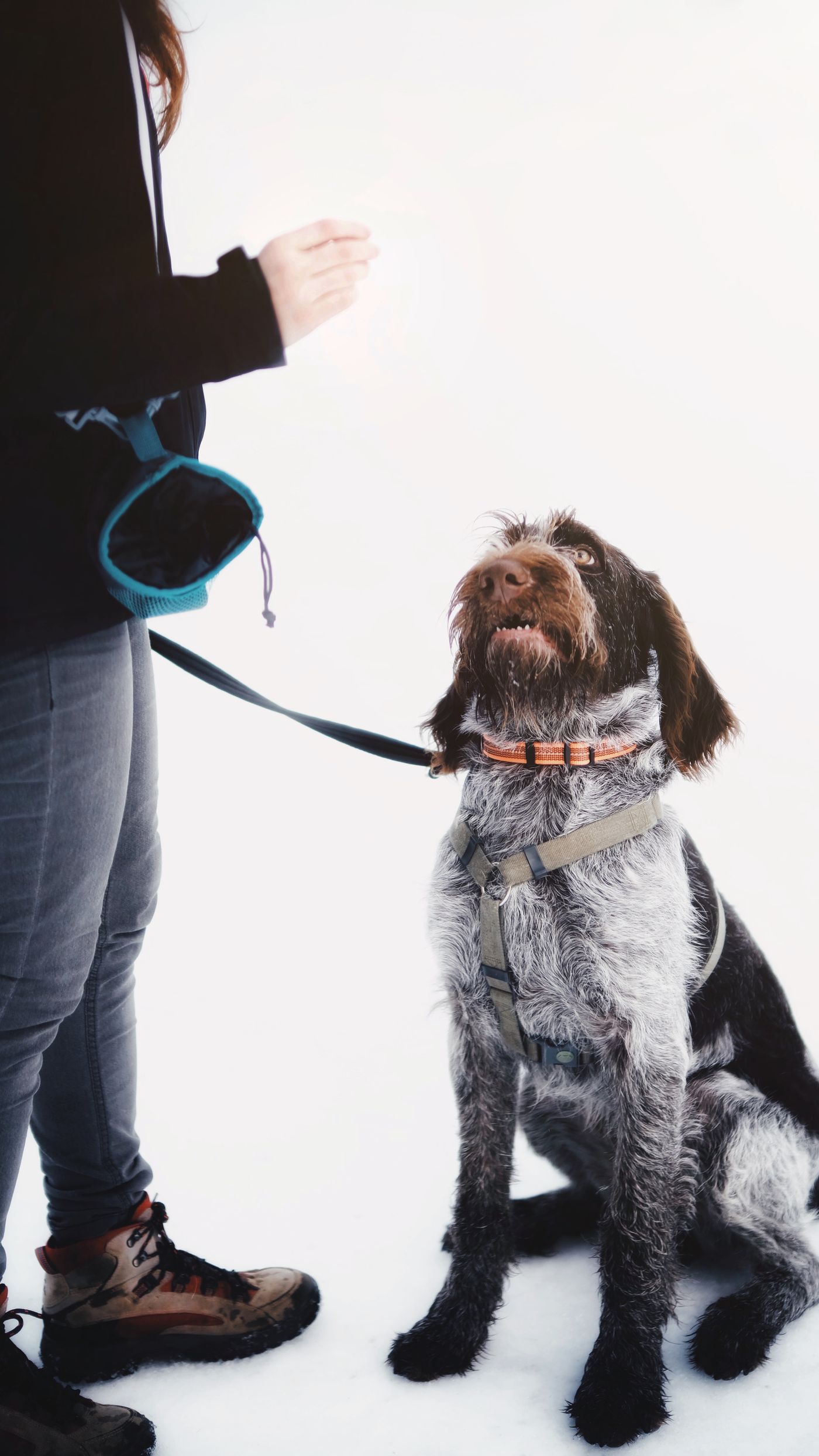
Identify which demand increased
Think about the last easy repetition and the first difficult one. Did you move farther away, wait longer, change surfaces or allow another person into the room? These are separate changes even when they happen within a minute. Return to the last comfortable setup if possible. A dog who followed after your second step may need a smaller distance, not a louder stay cue. Writing down the change can make the adjustment more obvious than relying on an impression that the dog suddenly stopped listening.
Also check your reward delivery. Delays and awkward placement can make a previously clear exercise harder to follow.
Reduce one variable and reward promptly
For distance, move closer. For duration, reward sooner. For distraction, find more space or a quieter moment. Keep the revised attempt simple enough that you can identify success immediately. If several easy attempts still look uncomfortable, stop and check practical needs rather than stripping the exercise down indefinitely. Rest, footing, temperature and unfamiliar equipment can all affect participation. Training is only one part of the situation, and an exercise does not need to continue because you planned to finish it.
Avoid using repeated food lures to keep a dog engaged in an environment they are trying to leave.
Choose the next step from the response
After an easier success, you can repeat that level or finish. There is no requirement to reattempt the failed version immediately. At the next session, change the challenge in a smaller amount and watch whether the dog remains willing. If a familiar movement becomes newly difficult or your dog shows a broader change in behavior, consult your vet rather than treating the problem as a training plateau. Appropriate professional support can help distinguish a teaching issue from a situation that needs a different plan.


