Choose the resting place before unpacking food
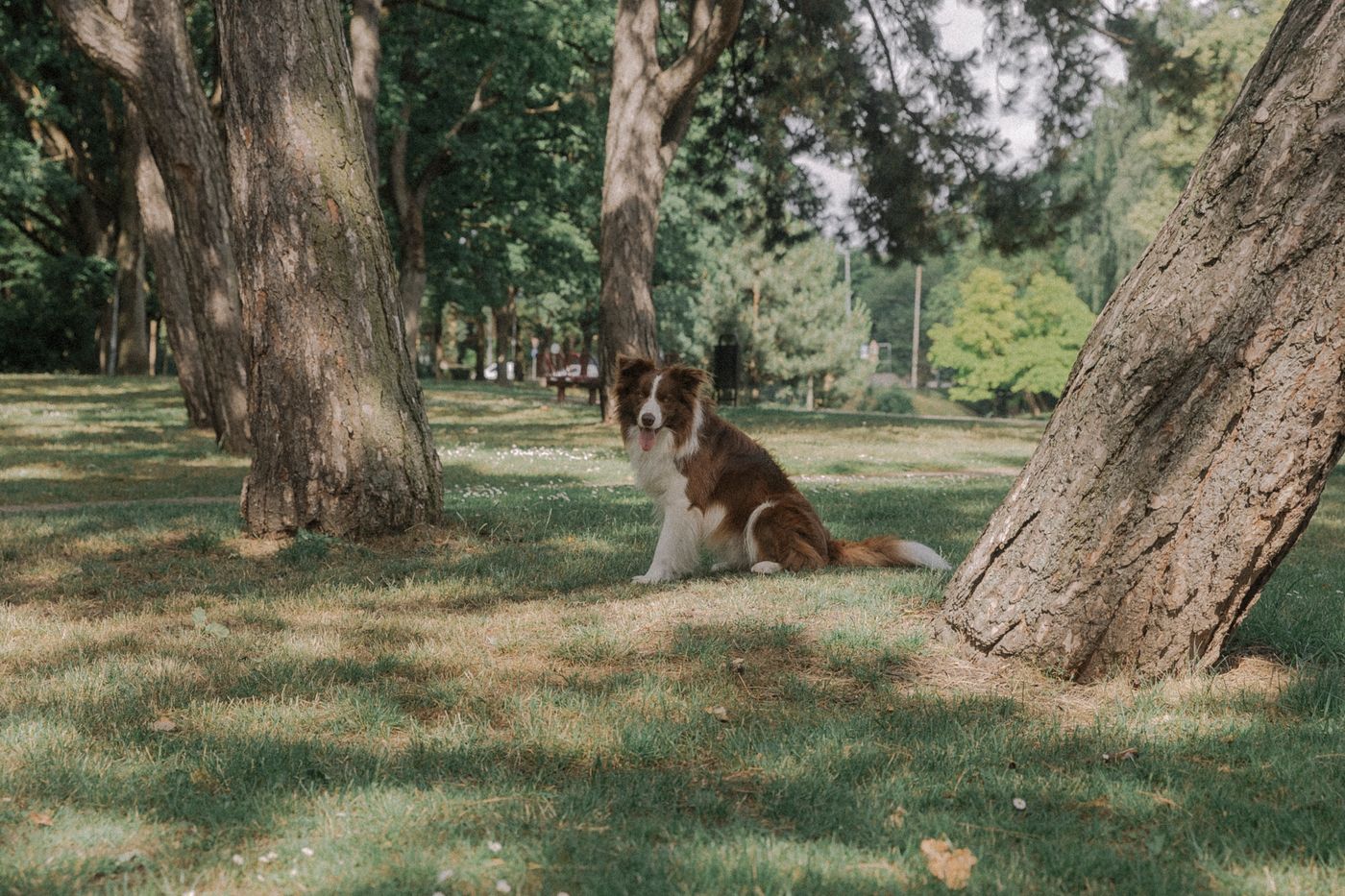
Look for a permitted spot with stable shade, room away from passing paths and safe ground. Shade changes as the sun moves, so a patch that works on arrival may not last through lunch. If conditions are too hot or crowded for your dog, choose another plan rather than relying on a blanket to make the setting suitable.
Bring fresh water and a familiar resting mat if your dog uses one. Arrange the lead so it cannot cross the walkway or wind around picnic furniture. A person must still supervise; attaching a lead to a loose chair or leaving it tangled under bags is not a secure arrangement.
Keep the picnic menu under human control
Put food in closed containers and collect scraps as you go. Agree that nobody feeds the dog from the shared meal without the responsible adult’s knowledge. This avoids a confusing mixture of foods and makes it easier to prevent access to things that are unsuitable for dogs.
Place rubbish, skewers, packaging and leftovers out of reach immediately. Do not leave a bag of waste beside the dog while assuming it will remain ignored. If you bring a dog-appropriate reward or activity, use something familiar that can be supervised without creating competition with visiting dogs. It should not occupy the only person who is meant to be watching children or cooking.
Build in an unhurried departure
Notice when the environment changes: a nearby ball game, an approaching dog or a growing queue may remove the space you initially had. Reposition or leave while you can do so calmly. Your dog does not need to remain beside a busy picnic until everyone else finishes socialising.
Pack rubbish and food first while one person continues supervising. Check the ground before moving the dog through the area where people were eating. A brief walk back by a quieter route can be a better ending than another active game. For the next picnic, remember which practical detail helped most: reliable shade, a smaller gathering or a shorter visit.