Identify when the door stays open longest
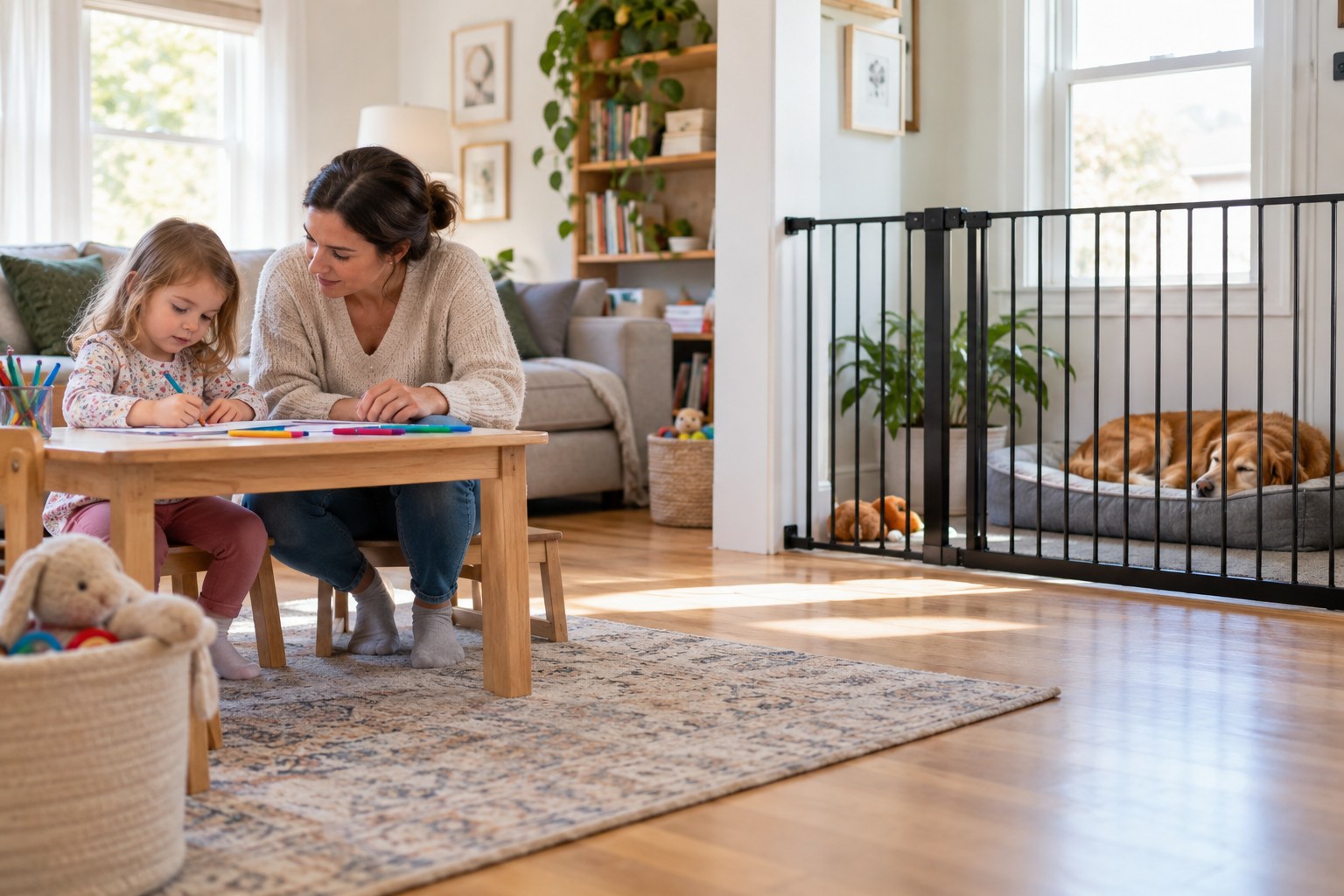
Notice the ordinary situations: carrying shopping, greeting visitors, moving a bicycle or helping a child with shoes. These moments often involve occupied hands and divided attention. Choose a secure barrier or separate room that keeps the dog away from the entrance before the activity starts.
Check the barrier’s actual suitability, including height, gaps and how it closes. A lightweight obstacle that can be pushed aside is not the same as secure separation. Give the dog a comfortable place to wait, with enough room that waiting does not mean being squeezed behind bags or furniture.
Give everyone the same opening sequence
Use a simple household order: locate the dog, secure the agreed space, then open the external door. Tell visitors to wait while you complete it. If two adults are carrying items, name who is responsible for the dog instead of relying on an unspoken assumption.
When the dog needs to leave with you, prepare the lead and equipment away from the open doorway. Check that everything is attached correctly before using the exit. A familiar waiting cue can be helpful, but physical arrangements should not depend entirely on the dog responding perfectly to a word during a busy moment.
Check the return as carefully as the departure
On coming home, keep the dog managed until the external door is closed. Put parcels or shopping somewhere that does not force you to reopen it immediately. If a gate or second door forms part of the arrangement, check its latch instead of assuming it caught behind you.
Practise any doorway teaching separately in a safe setup using rewards and small steps. Do not use a live open road-facing doorway to discover whether a new cue works. Review the routine when a sitter, guest or new household member takes over. The arrangement should be easy to explain in one or two sentences and strong enough to cover the moments when everyone has something else in their hands.