
Start with a very short pause
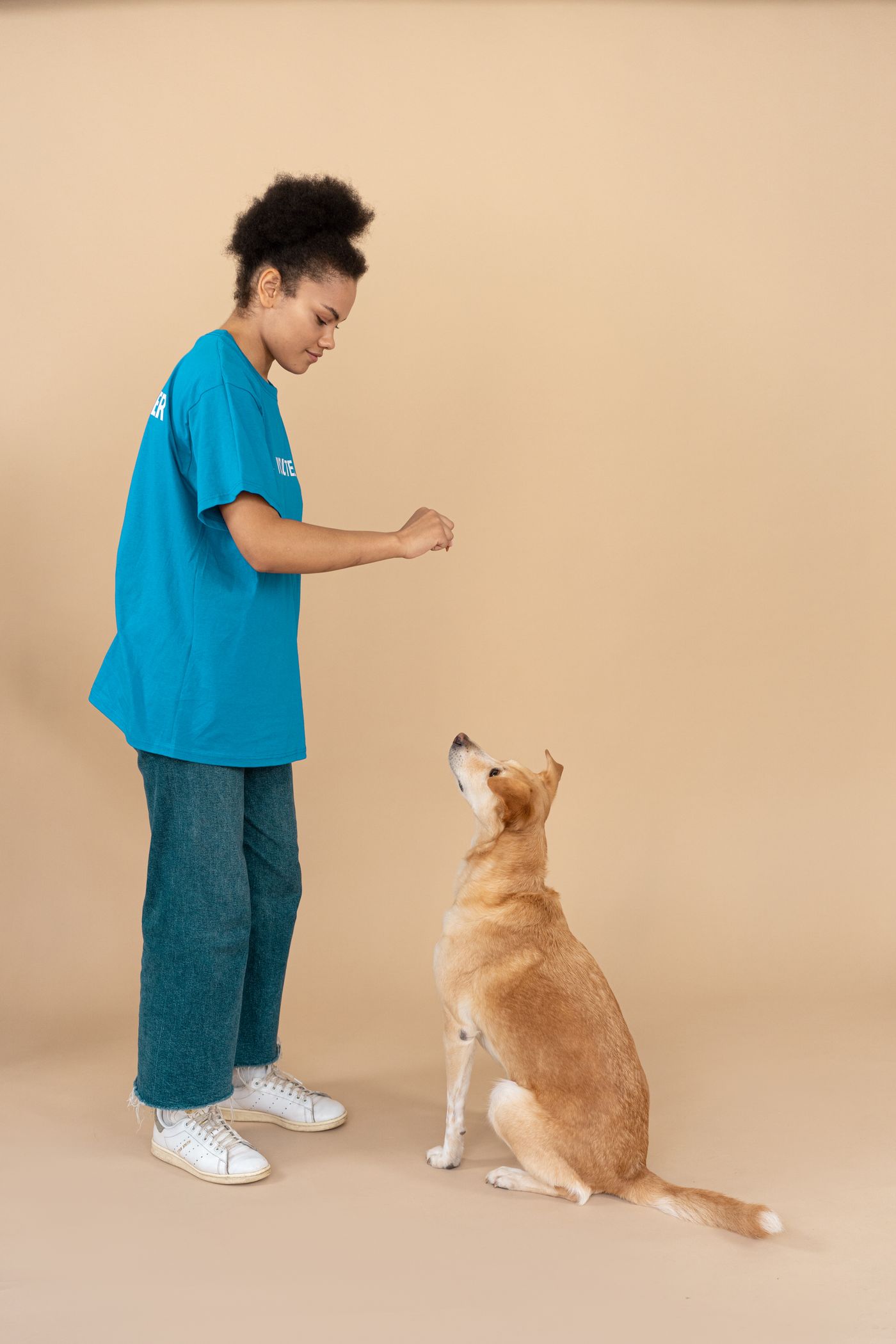
Choose an easy familiar position, such as standing on a mat or sitting beside you. Reward the position, then say a distinct word such as “free” and invite a small movement away. You might take one gentle step yourself. Do not pull the dog off the mat or startle them into moving. The first pause can be almost immediate; you are teaching the ending, not testing how long the dog will remain still.
Make the ending consistent
Use the same word in ordinary practice and avoid accidentally saying it during unrelated conversation. Delivering a food reward in place should not always end the exercise. Sometimes reward the dog where they are, pause briefly and then release. This helps separate “that was useful” from “you can leave now.” Keep the distinction simple for everyone involved, especially if several family members teach the same mat or waiting behavior.
Avoid creating a race away
A release need not launch the dog toward something exciting. Begin with a calm step into clear space and let the dog choose an ordinary next activity. If every release means charging through a door, remaining in position can become more difficult. Practice well away from roads and external exits. Physical barriers and lead management still provide safety; a learned word cannot guarantee that a dog will remain stationary around every distraction.
Use it when the task has an ending
Release words are useful for planned brief positions, but they should not turn resting into a rule that prevents the dog from meeting normal needs. A dog comfortably sleeping on a bed need not wait for permission to get water. Keep formal practice distinct from ordinary relaxation. If the dog leaves before your cue, shorten the next pause and clarify your timing instead of returning them physically and repeating the exercise more sternly.


