
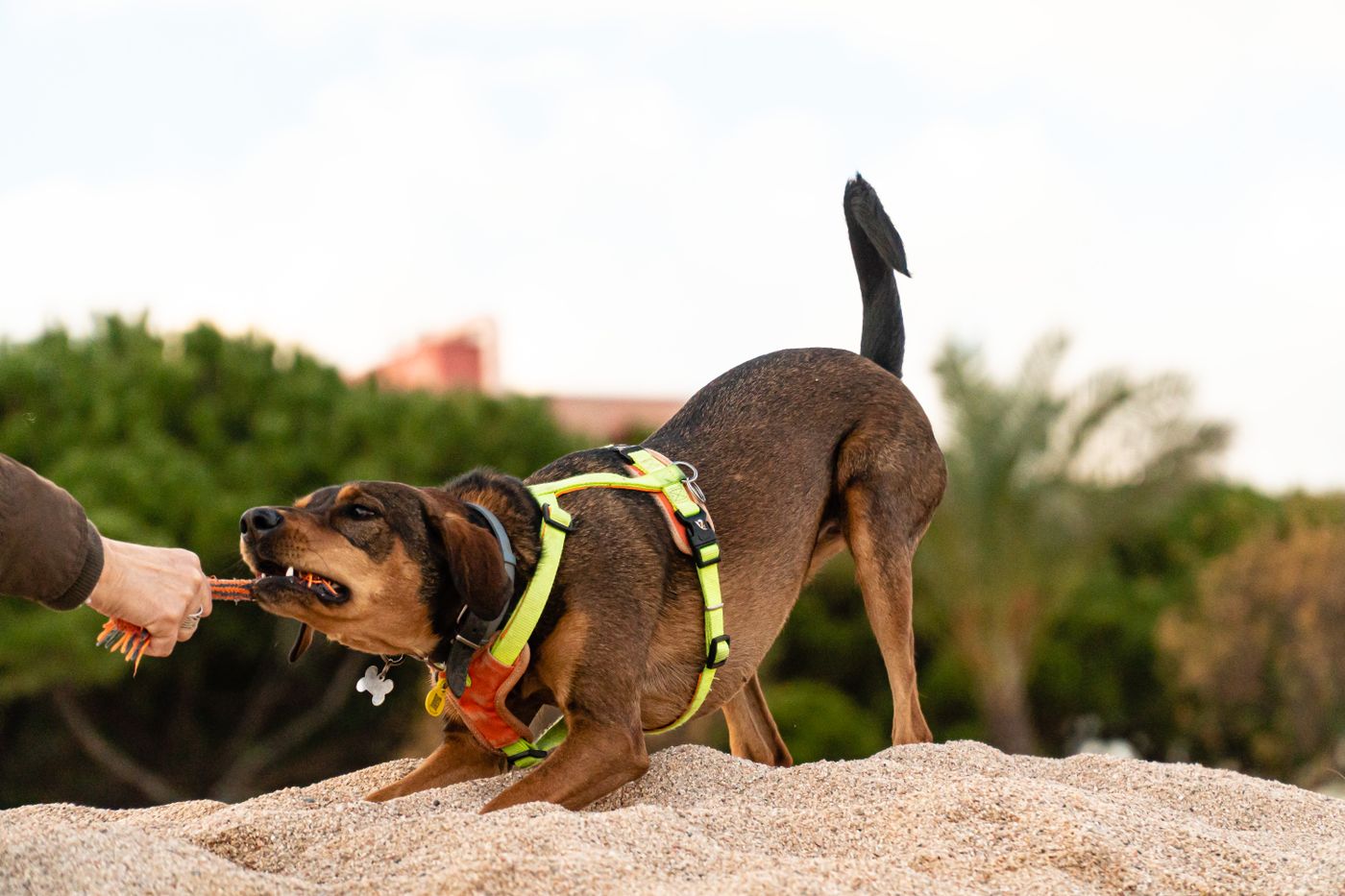
Begin with a low-pressure object
Choose a familiar toy your dog enjoys but does not guard. Work in a quiet area with no other animals competing for rewards. Let the dog pick up the toy, then offer a suitable reward nearby. When they voluntarily release the object, mark and deliver the reward. Avoid starting with stolen food, treasured chews or something dangerous. Those situations add urgency and are poor conditions for teaching a new exchange pattern.
Make letting go predict something good
After the dog releases, calmly pick up the toy when it is safe and offer it back for another brief game. Returning the object sometimes helps distinguish trading from permanent confiscation. Do not repeatedly pretend to return it and then pull it away. If the dog stiffens, hovers over the item or becomes uncomfortable with your approach, stop practicing and seek qualified advice. A trade game is not a treatment plan for established guarding.
Add the word to a familiar action
Once release happens readily, say “drop” just before the moment you expect the toy to leave the mouth. Reward clearly, then reset. Over time, make the offered reward less visually prominent while still delivering it after success. Avoid repeating the cue while the dog grips harder. Use an easier toy or a quieter setting instead. Keep your hands away from the dog's mouth rather than using the cue as permission to reach inside.
Keep real-life situations manageable
Store tempting household objects out of reach while the skill develops. If the dog has something unsafe, prioritize safe management and obtain professional advice appropriate to the immediate risk rather than staging a training experiment. Practice ordinary exchanges regularly with safe toys so the cue has a positive history. End while the dog remains comfortable sharing the game. A few willing releases are more useful than continuing until either of you becomes possessive or frustrated.


