
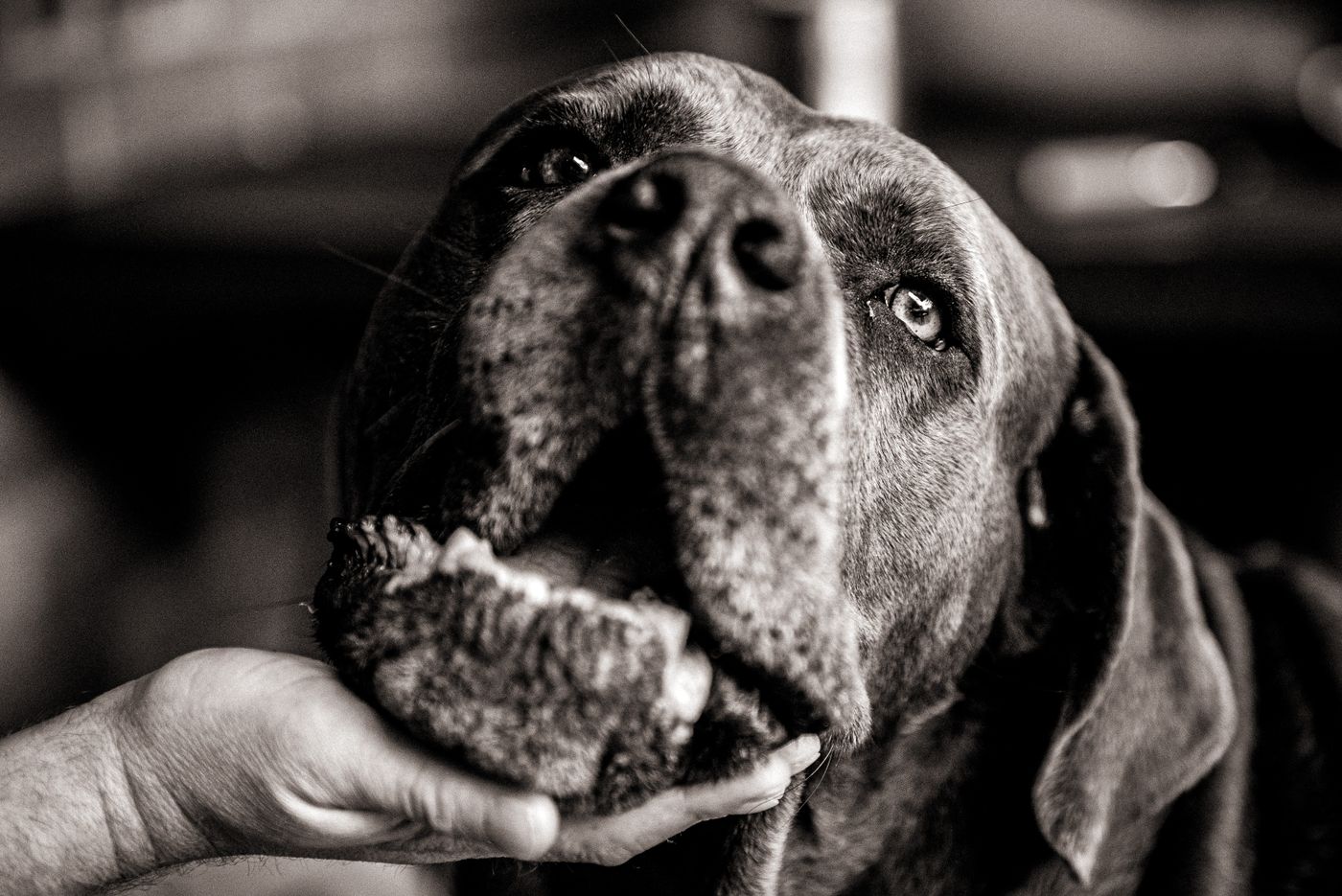
Teach the resting action without adding care
Offer a relaxed open palm at a comfortable height below your dog's chin, or use a stable padded surface. Reward investigating and then a brief voluntary chin contact. Keep the surface still rather than lifting it into the jaw. At first, reward the lightest comfortable rest and let the dog move away. Do not hold the muzzle or close your fingers around it. This beginning is simply about choosing a position.
Build a tiny duration
After repeated easy contacts, delay the reward for a very brief moment while the chin remains comfortably supported. Increase gradually and return to short successes often. Add a cue only when the action is becoming predictable. Avoid asking the dog to reach upward or twist the neck to maintain contact. Your hand should suit the dog's height and position, so the exercise does not require effort merely to stay balanced beside you.
Make withdrawal change what you do
When the dog lifts their head, stop the practice movement. If you continue touching regardless, the chin rest loses its value as a clear participation signal. Once the basic behavior is familiar, introduce one tiny ordinary handling action, such as moving your free hand nearby. Reward comfortable participation and pause on withdrawal. Add actual touch only in small, separately assessed steps. Do not jump from a brief chin rest to a prolonged grooming procedure.
Keep the limits clear
This exercise is useful for cooperative everyday practice, but it does not prove that the dog accepts every kind of handling. Watch the rest of the body and the wider situation as well. A dog repeatedly withdrawing needs an easier setup, not a firmer hold under the chin. For painful procedures, established fear or urgent treatment, consult the veterinary team about an appropriate plan. Practice at home should support care rather than delay or replace it.


