
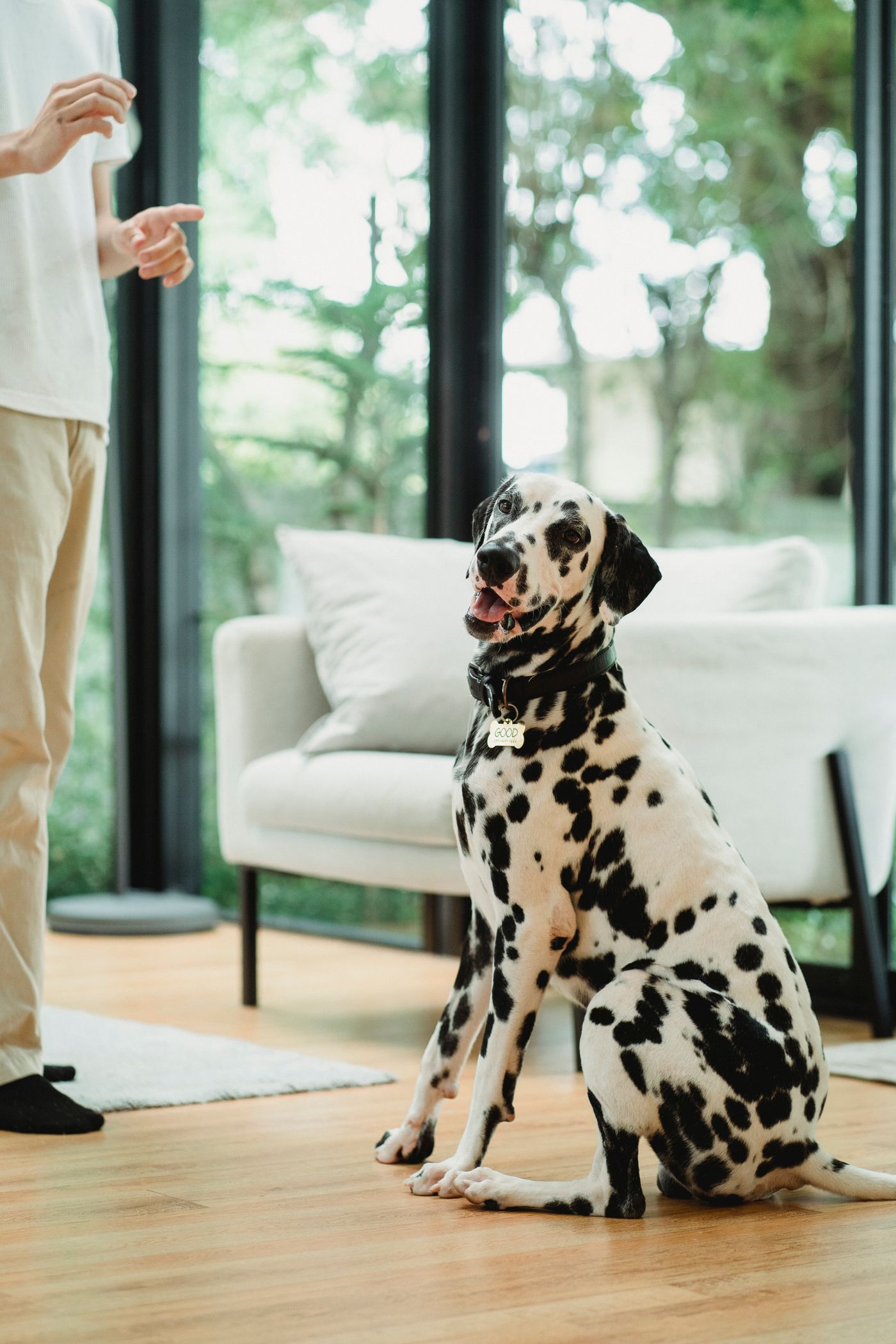
Arrange a greeting that can succeed
Ask one familiar adult to help in a quiet space. Keep the first approach brief and allow enough room for the dog to move away. If needed, use a suitable barrier to prevent an enthusiastic rush while you organize the exercise. The helper should approach calmly rather than waving hands overhead or calling excitedly. Prepare a reward low enough to deliver without inviting a leap. Four paws on the floor is the goal; sitting is optional.
Reward before the jump happens
As the person approaches and the dog remains grounded, mark and reward near floor level. The helper can pause or offer a brief interaction if the dog welcomes it. Stop touching after a moment and see whether the dog chooses to continue. If jumping starts, reduce the excitement and increase space rather than pushing, kneeing or gripping the collar. Try the next approach from farther away with an earlier reward for remaining grounded.
Make the human rules practical
Visitors need one clear instruction, such as waiting outside the barrier until the dog has settled. A complicated speech delivered while everyone enters is unlikely to help. Keep rewards ready before opening the door and avoid asking guests to test the training unexpectedly. If a guest cannot follow the plan or the dog becomes overwhelmed, give the dog a comfortable separate area. Managing a busy arrival is sensible even while greeting skills are improving.
Practice more than the front door
Rehearse with different willing adults in easy settings before expecting success at a lively reunion. Change the person's movement or location gradually. Some dogs prefer no greeting at all, which is a legitimate outcome. Children should not be responsible for teaching this exercise or absorbing a dog's enthusiastic approach. Adults must manage the space and interaction. Keep each practice short enough that the dog can remain comfortable and the helper can stay consistent.


