Use the outside route
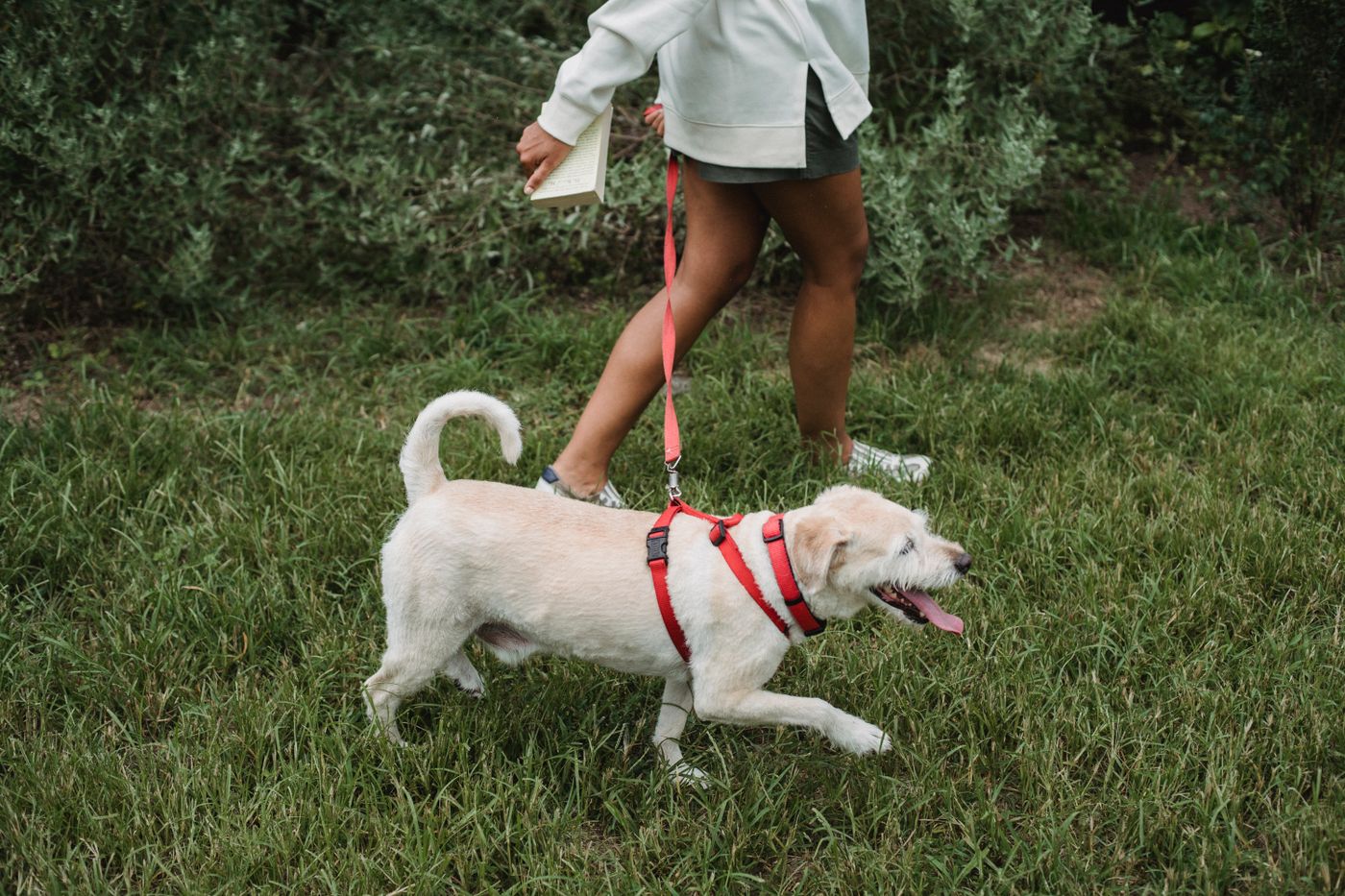
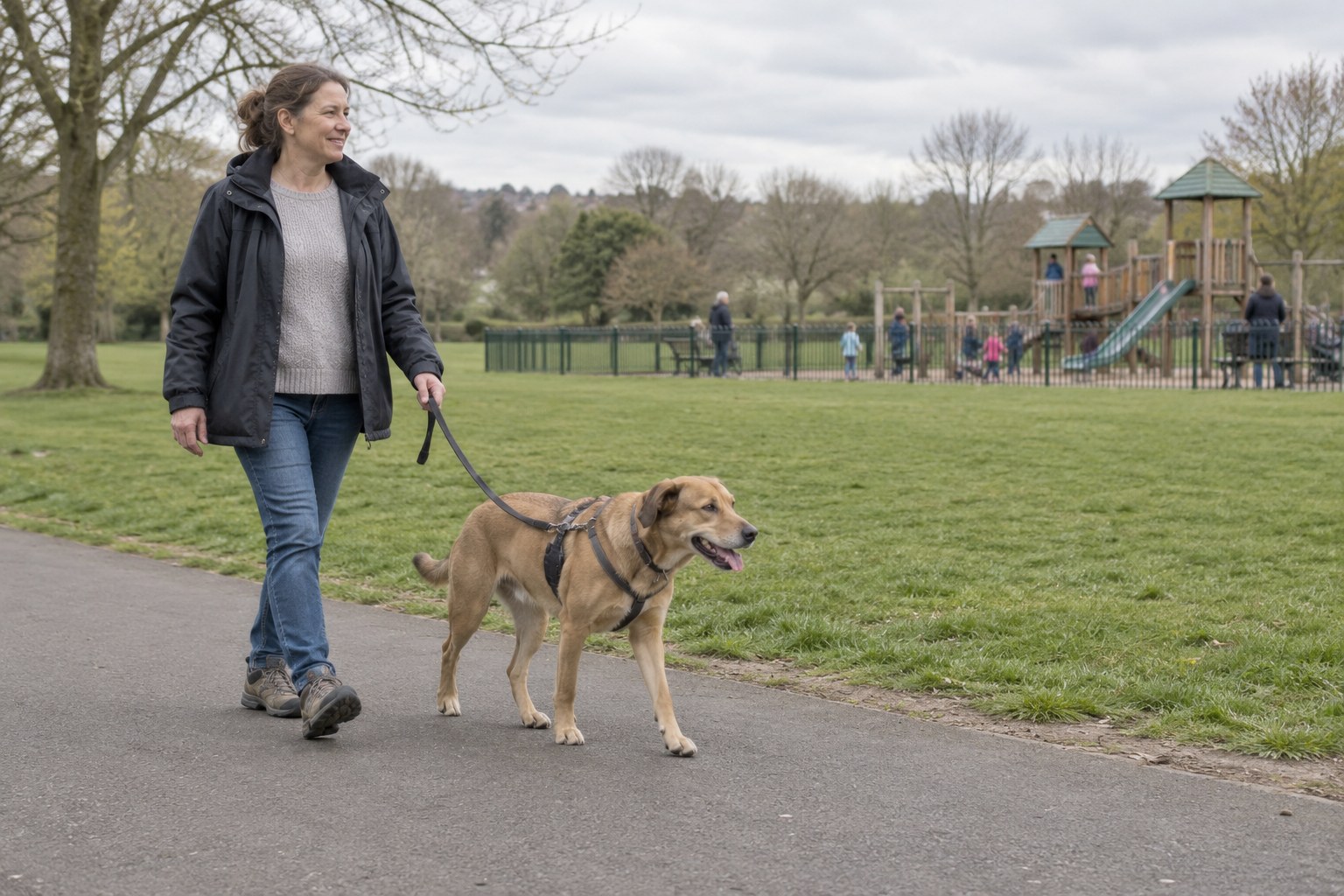
Read local signs and respect areas where dogs are not permitted. Even where a nearby path allows dogs, avoid walking tight against a fence when children are running along it. A little more distance can prevent repeated face-to-face encounters through railings and gives everyone a clearer boundary.
Do not use the playground perimeter as a place to tie a dog while you go inside. Supervision and control need to continue, and a tethered dog may have no way to move away from approaching hands. If you are responsible for both a child in the playground and a dog outside, arrange another adult or choose a different outing.
Respond to interest without offering a greeting
Children may ask to stroke the dog. You can politely say that the dog needs space today; there is no obligation to agree. Keep moving calmly or stand at a comfortable distance while a responsible adult guides the child. Avoid asking a child to deliver food or perform a greeting as an impromptu training exercise.
If your dog is watching the activity closely or struggling to move on, increase distance before the situation becomes harder. A familiar cue and an easier route are more useful than repeatedly asking for stillness next to the fence. Reward an appropriate response where suitable, without inviting children to crowd around the reward pouch.
Choose a different stop for rest
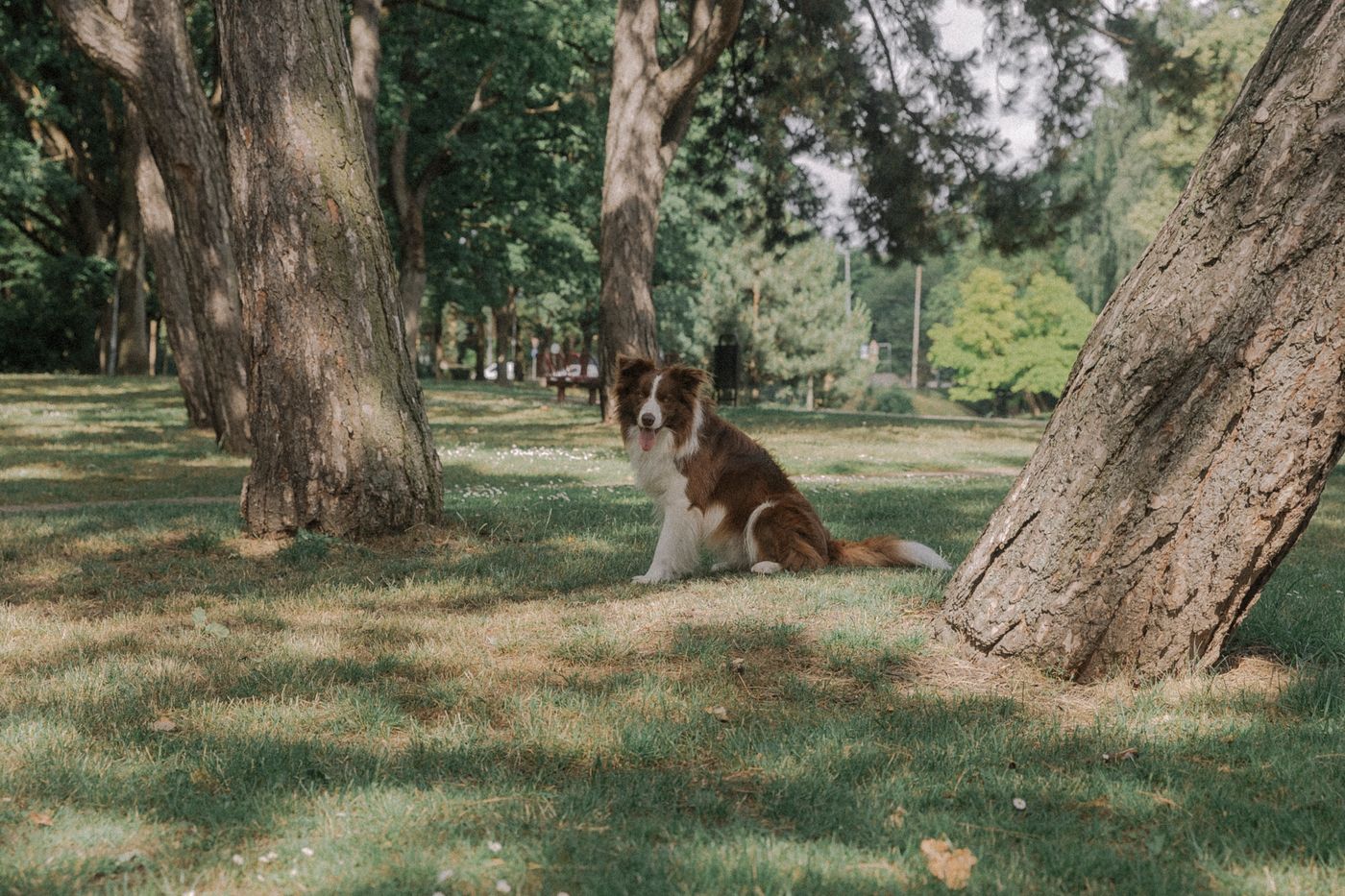
Find a resting place away from play equipment, ball games and the main entrance. Keep the lead organised so it does not cross a path. A bench with an open approach and room to leave is often easier than a corner surrounded by running children.
For regular walks, note when the nearby playground is busiest and whether another route offers more space. You can still share public areas considerately without placing your dog in the most intense part of them. If close contact with children is a recurring concern, manage distance and seek qualified guidance rather than arranging unsupervised practice with visiting families.