Read the route as a series of surfaces
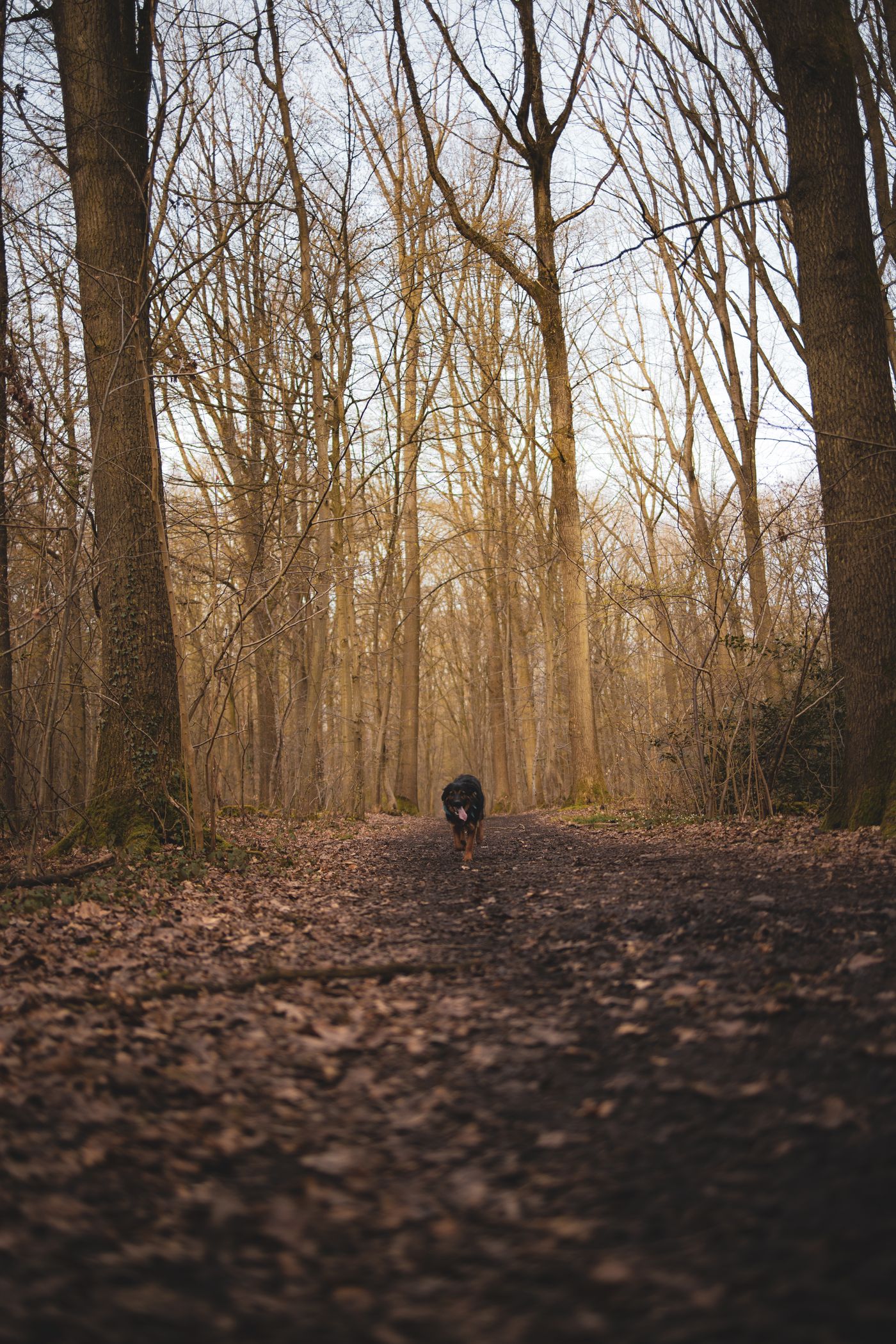
Check whether the trail includes steep steps, loose stones, boardwalks or muddy slopes. A short distance on paper may still be demanding if the surface repeatedly changes. Consider both your footing and your dog’s ability to move comfortably without being pulled or hurried.
Look for current closures or forestry notices at the entrance. Machinery, fallen branches and temporary diversions can make yesterday’s description unreliable. Use the land manager’s official information when available, and keep to permitted paths rather than creating a shortcut through undergrowth to avoid an inconvenient section.
Choose a clear point for turning back
An out-and-back walk can be easier to adjust than a loop with no short return. Decide where you will reassess before continuing: a junction, a broad clearing or a familiar bridge. Save the map you need before relying on a mobile signal, and tell someone your plan when the setting warrants it.
As you walk, notice how easy it would be to return over the ground you have just crossed. A descent that feels simple on the outward route can become a difficult climb later. Choose the shorter option while both of you are comfortable rather than waiting for fatigue or a change in weather to decide for you.
Keep exploration within the path’s limits
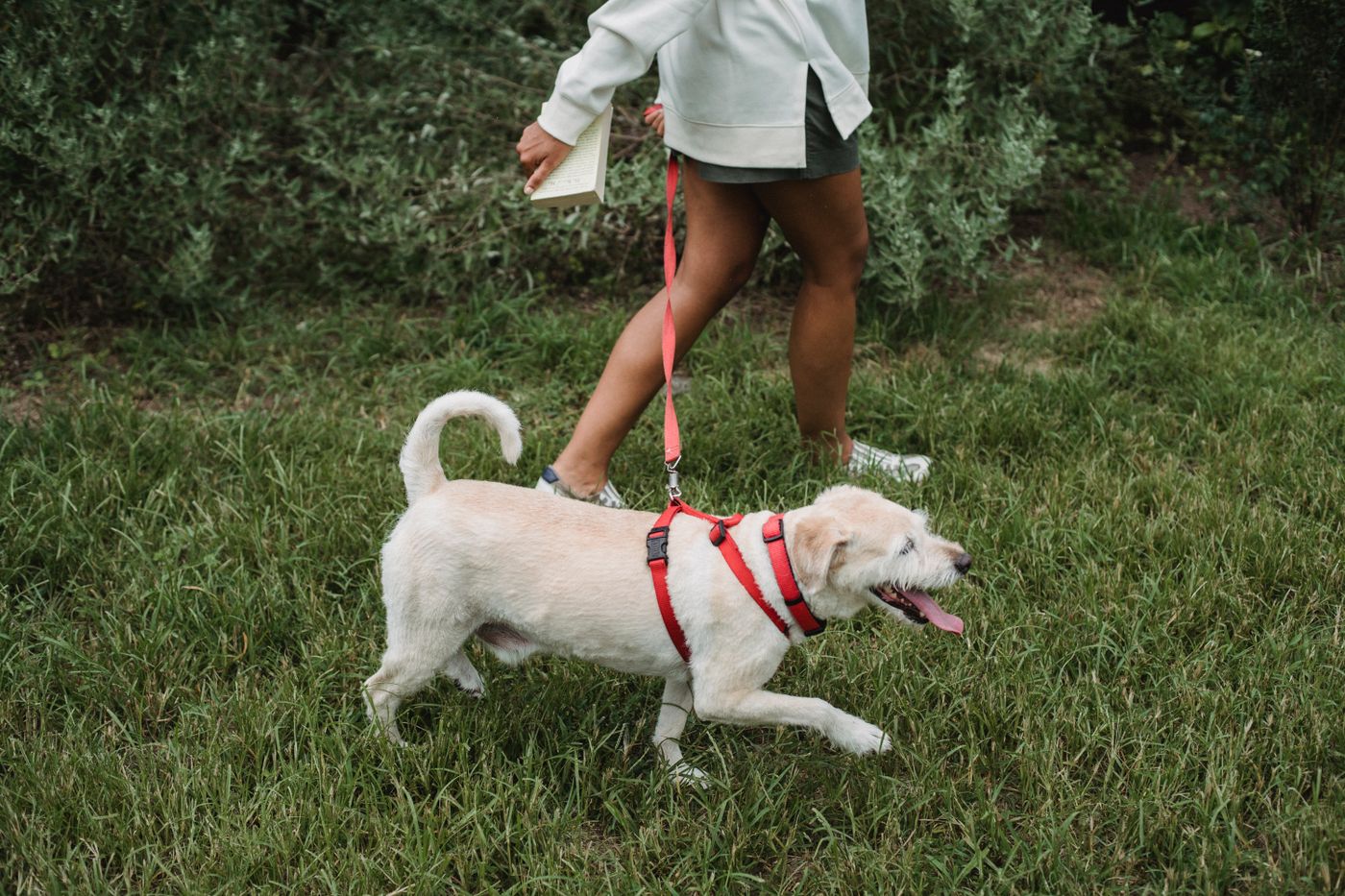
Give your dog time to sniff suitable places without allowing pursuit of wildlife or access to unknown mushrooms, litter or work areas. Follow local lead rules and shorten the managed distance near blind corners where cyclists, horses or other walkers may appear. Extra lead length is useful only when you can use it without tangling around trees or people.
On returning, check equipment and remove ordinary loose debris through comfortable handling. Record one or two practical route details for next time, such as a narrow bridge or a good turnaround spot. You can gradually build a small collection of reliable woodland walks instead of repeatedly choosing the longest advertised circuit.