Store for the order of use
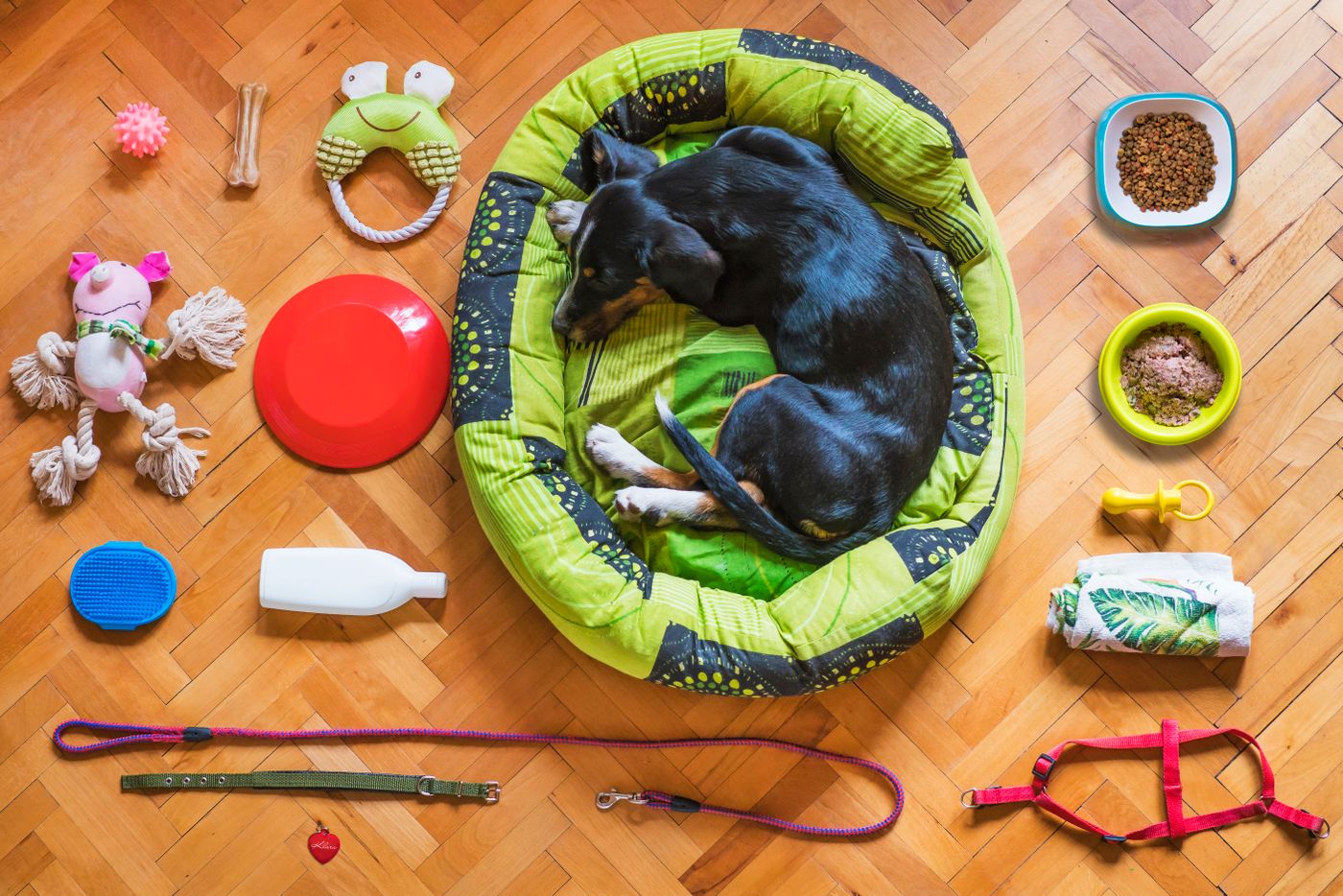
Stand at the door you normally use with the dog and list the items needed before it opens. Usually that means a lead or harness, waste bags, suitable rewards and perhaps a towel for the return. Keep those essentials together rather than distributing them among several rooms. The best location is one you can reach while the outside door remains securely closed.
Use hooks or a closed container above the dog’s reach. Hanging straps can invite chewing or become tangled around a curious animal. Avoid balancing heavy boxes over the dog’s resting place, and keep the floor clear enough that a person can turn without stepping over equipment.
Separate clean, wet and edible items
Give damp gear somewhere ventilated to dry before it returns to storage. A muddy harness pushed into a closed basket can leave everything else dirty and makes damage harder to notice. Keep a small washable tray or separate bag for items awaiting cleaning.
Store food rewards in an appropriate closed container and follow their storage instructions. Do not leave a pouch full of food hanging where the dog can pull it down. Medicines and household cleaning products belong in their own secure storage, not in an open walking basket simply because they are also used for the dog.
Make the station understandable to another carer
Label unfamiliar equipment and place current contact information somewhere a trusted carer can find it. A short note explaining which lead attaches to which harness can prevent improvisation. Keep identification information current through the relevant provider rather than relying on a handwritten note alone.
Try the arrangement on an ordinary outing. If you repeatedly put the lead down to search for bags, move the bags. If the dog crowds the cupboard, prepare equipment before inviting them over. Review the contents occasionally and remove broken clips, unsuitable toys and old paperwork. Useful storage stays small enough that the right item is immediately visible.