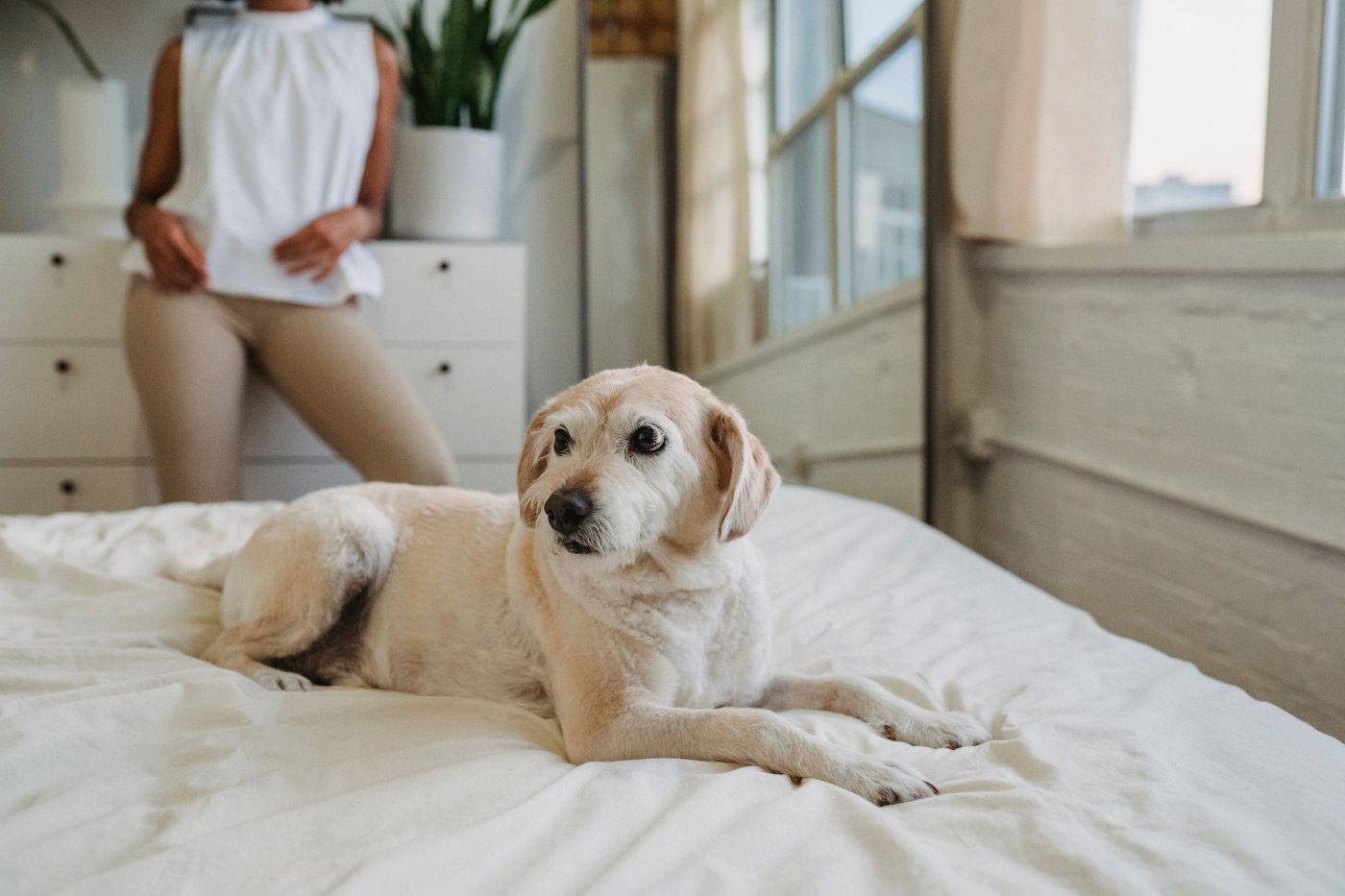
Choose the right moment
Delay nonessential visits while your dog is still learning the household. When a visit does make sense, invite one person who can follow instructions rather than arranging a welcome gathering. Choose a time when the dog is not already coping with a delivery, meal or busy family activity.
Explain the plan before the visitor arrives. Ask them to enter quietly, avoid leaning over the dog and sit where you indicate. It is easier to agree on this beforehand than to correct excited greetings at the threshold. Have a separate comfortable space ready if the dog needs distance.
Manage the doorway first
Keep the dog safely away from the open outside door during arrival. A secure barrier or another adult can help, provided the arrangement is familiar and comfortable. Let the visitor put down belongings and settle before considering any interaction. Bags, dangling straps and food should be kept out of reach.
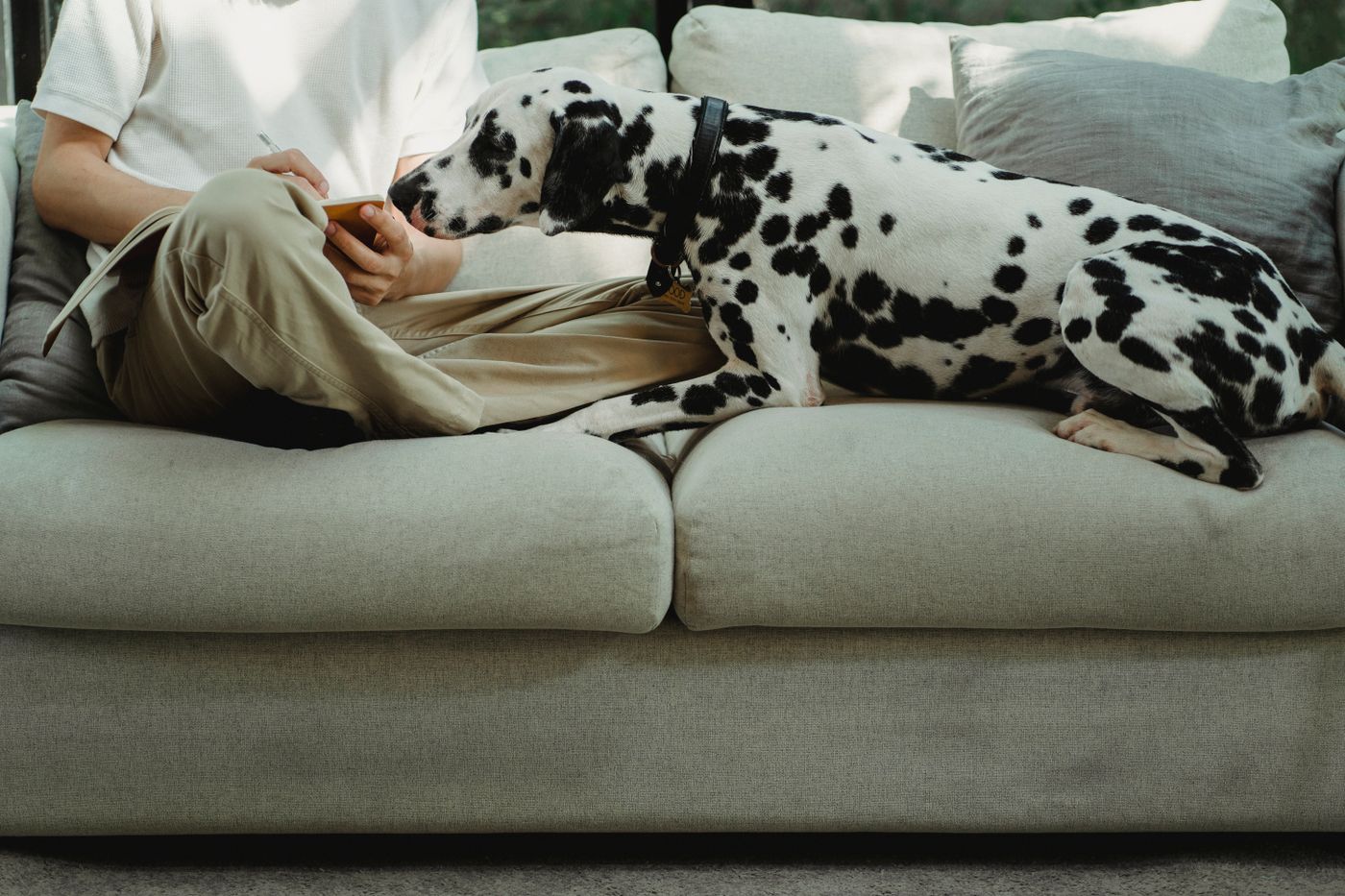
Allow the dog to observe or approach at their own pace. The visitor can remain seated with hands relaxed rather than offering a hand directly into the dog's face. If the dog investigates, avoid turning that moment into an immediate cuddle. A greeting can end after a sniff, and it can also consist entirely of comfortable distance.
End before politeness becomes pressure
Watch the whole interaction. Repeated withdrawal, tension or difficulty settling are reasons to create space, not to ask the visitor to try harder. Keep conversation calm and shorten the visit if needed. Do not prevent the dog from leaving just because the guest has travelled to meet them.
Afterwards, note which arrangement worked: the chair position, quiet entry or absence of direct attention. Repeat those helpful details next time. If someone cannot follow the plan, keep the dog comfortably separated instead of using the visit as training practice. The goal is an uneventful introduction that leaves the dog able to rest afterwards, not proof that they will welcome every person immediately.