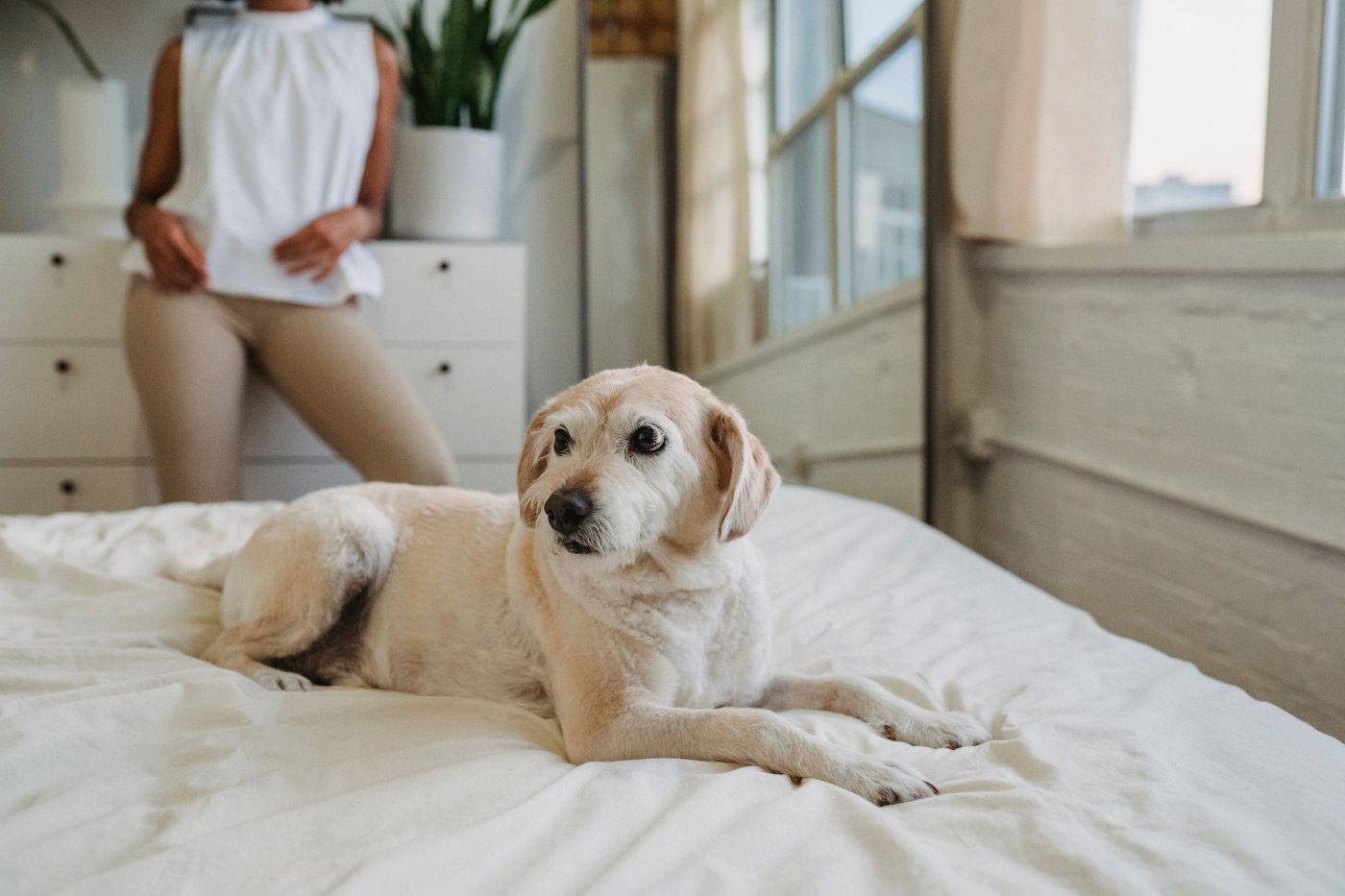
Prepare the nighttime route
Choose a comfortable sleeping area with fresh water and a safe route to an appropriate toilet location. Remove clutter from that route and have a lead, keys and suitable clothing ready if you will need to go outside. Quiet preparation reduces the chance of turning a necessary nighttime outing into a bright, noisy event.
Ask the previous carer what sleeping arrangement is familiar. If the dog has never used a closed crate, bedtime is not the moment to shut them into one for the first time. A carrier or crate requires its own gradual introduction and must suit the dog using it.
Offer nearby support
A new dog may find being alone in an unfamiliar house difficult. Arrange human proximity initially when needed, using a safe setup that lets both of you rest. If you want the dog to sleep farther away eventually, work towards that gradually when they are comfortable rather than imposing the final arrangement immediately.
Keep late-evening activity modest. Offer a suitable toilet opportunity and allow time to settle afterwards. Avoid repeatedly waking the dog to check whether they are asleep. At the same time, do not ignore ongoing distress because somebody has told you that all new dogs must cry themselves quiet.
Respond to the need you observe
If the dog wakes, consider practical needs: toileting, temperature, water, discomfort or uncertainty about the setting. Keep any necessary interaction calm and return to the resting arrangement without starting a play session. Different ages and histories bring different nighttime needs, so an exact schedule borrowed from another dog may not help.
Record a few useful details the next morning rather than judging the whole night as success or failure. Did hallway noise interrupt sleep? Was the bed beside a draught? Did nearby company help? Make one sensible adjustment at a time. Persistent difficulty, apparent pain or a concerning change warrants advice from your veterinarian or the organisation supporting the adoption.