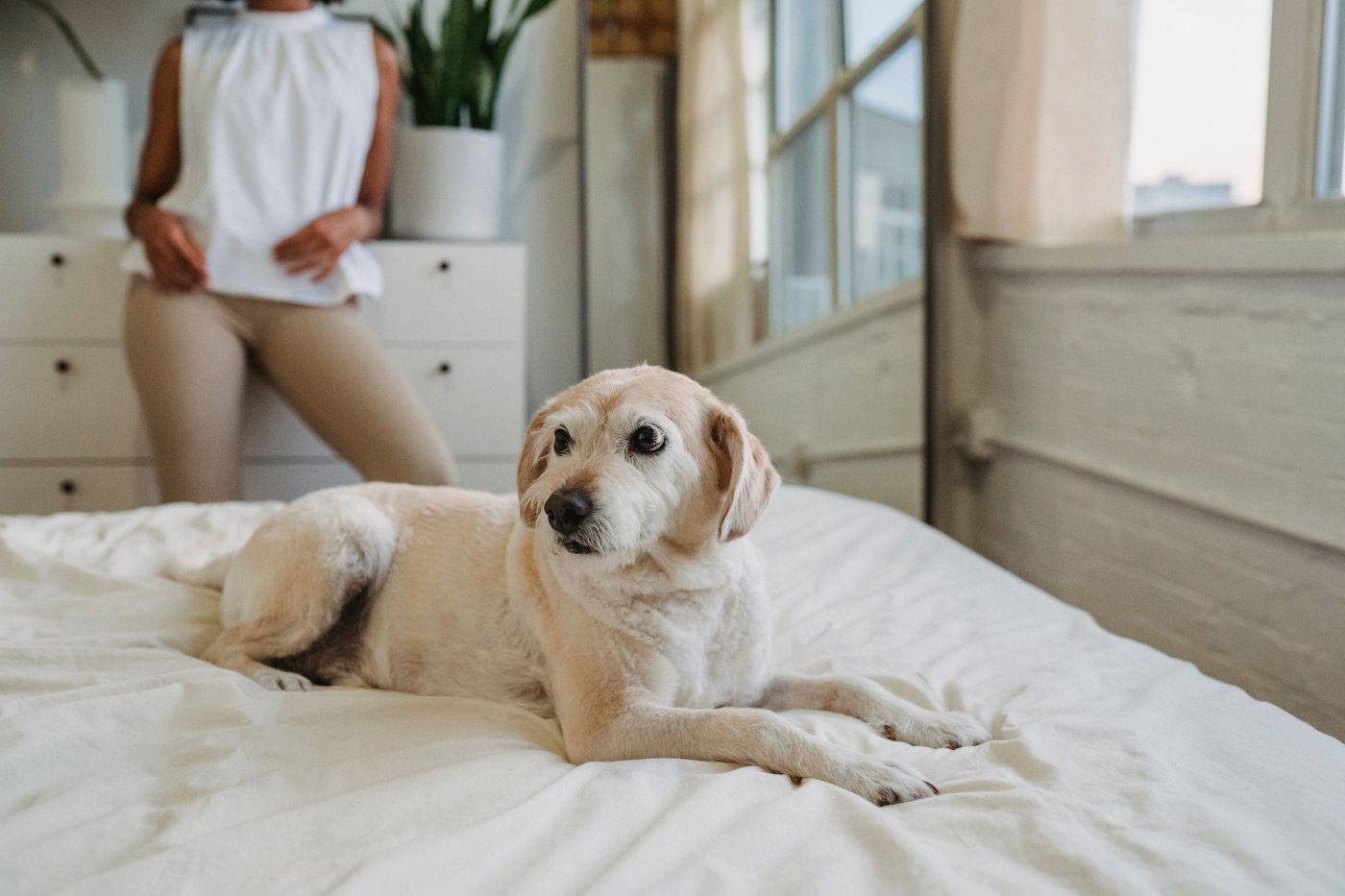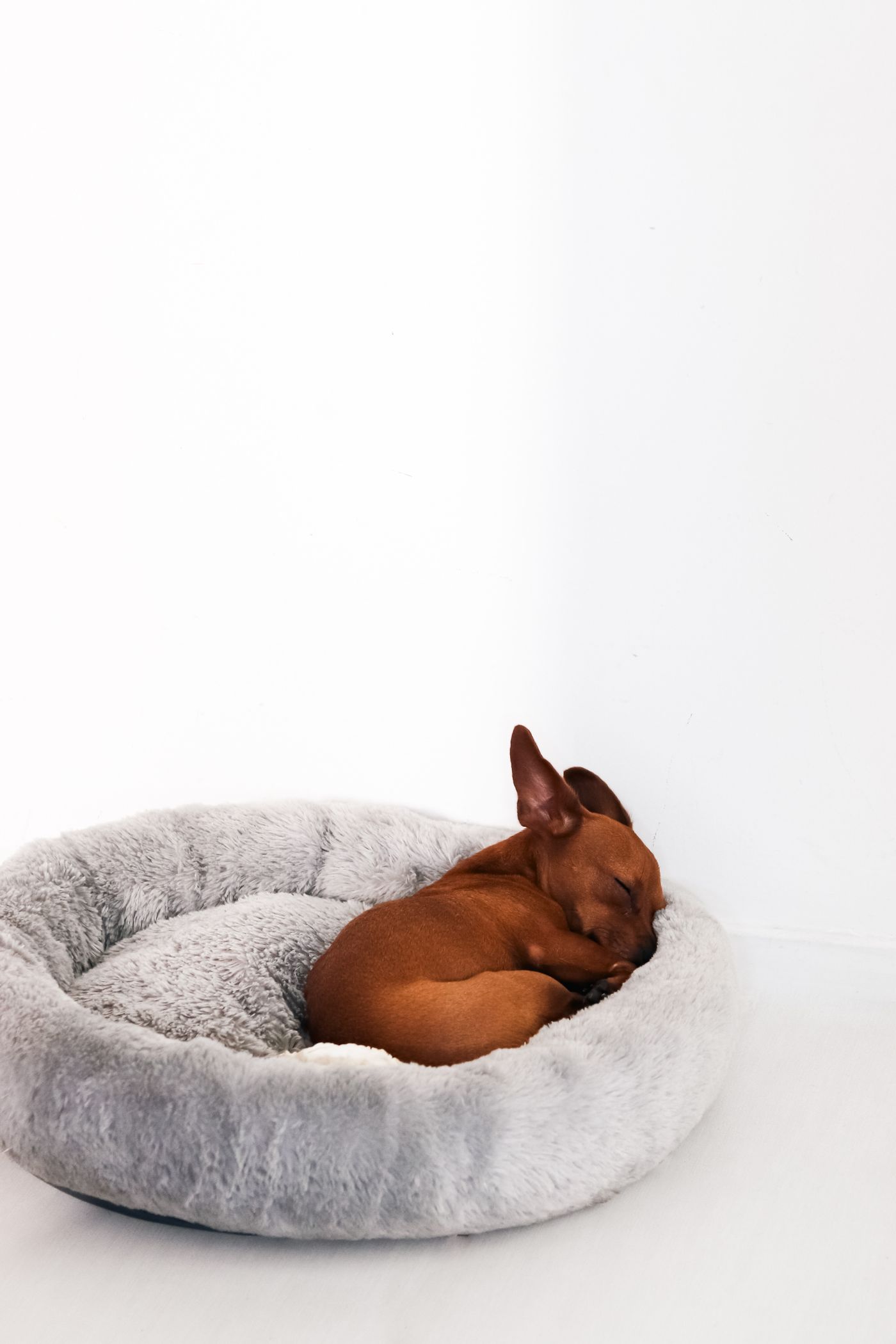
Observe the shape of rest
If you can, ask the previous carer whether the dog curls tightly, stretches out or changes position frequently. Measure the available floor space before shopping, including room around the bed. A surface that only fits a curled dog may feel restrictive when they want to lie on their side with legs extended.
Raised edges suit some dogs and obstruct others. Consider whether stepping over a deep bolster is easy for this individual. If movement seems uncomfortable, ask your vet about suitable support rather than assuming a product described as orthopaedic solves the problem. A simple accessible resting surface can be a sensible first choice.
Choose a position worth keeping
Look for a quiet spot with a view of normal household life but without constant passing feet. Avoid wedging the bed behind a door that opens against it. Check for radiators, cold draughts and direct sunlight, then revisit the spot at another time of day.
Place the bed so the dog can enter and leave without approaching another animal's food or sleeping space. Tell children and visitors to leave the dog alone there. Comfort depends on predictable access to rest as much as it depends on the thickness of the filling.
Make cleaning manageable
Check whether covers can be removed, how they must be washed and how long the filling takes to dry. A washable top layer and a spare cover reduce the need to dismantle the whole setup after every muddy outing. Keep zips and loose material out of reach if the dog investigates them with their mouth.
Let the dog discover the bed without pushing them onto it. They may initially choose the floor beside it, especially as temperature or confidence changes. Notice their choices over several quiet periods before buying more equipment. If the bed is repeatedly avoided, consider location, warmth, surface and access rather than treating its use as an obedience task.